What to expect
Dr. Strangelove turns nuclear deterrence into a closed system powered by vanity, procedure, sexual panic, and technological momentum. Stanley Kubrick stages the War Room as monumental theatre while Peter Sellers’s multiple performances fracture authority into incompatible voices. The comedy is severe because the military machinery continues functioning even when nearly everyone recognises the catastrophe. Ken Adam’s production design, rapid tonal control, and the collision of documentary-like flight sequences with grotesque dialogue created the definitive nuclear-age black comedy. Its satire remains potent wherever institutions confuse flawless procedure with rational purpose.
How to ease in
Some period references and stereotypes are abrasive, but the central logic is clear: a single irrational order enters systems built to resist interruption. Track the three main spaces—the bomber, the air base, and the War Room—and how slowly information moves between them. Laughter and dread are meant to arrive together.
Heads-up
The end of the world is managed by men who cannot manage a meeting.
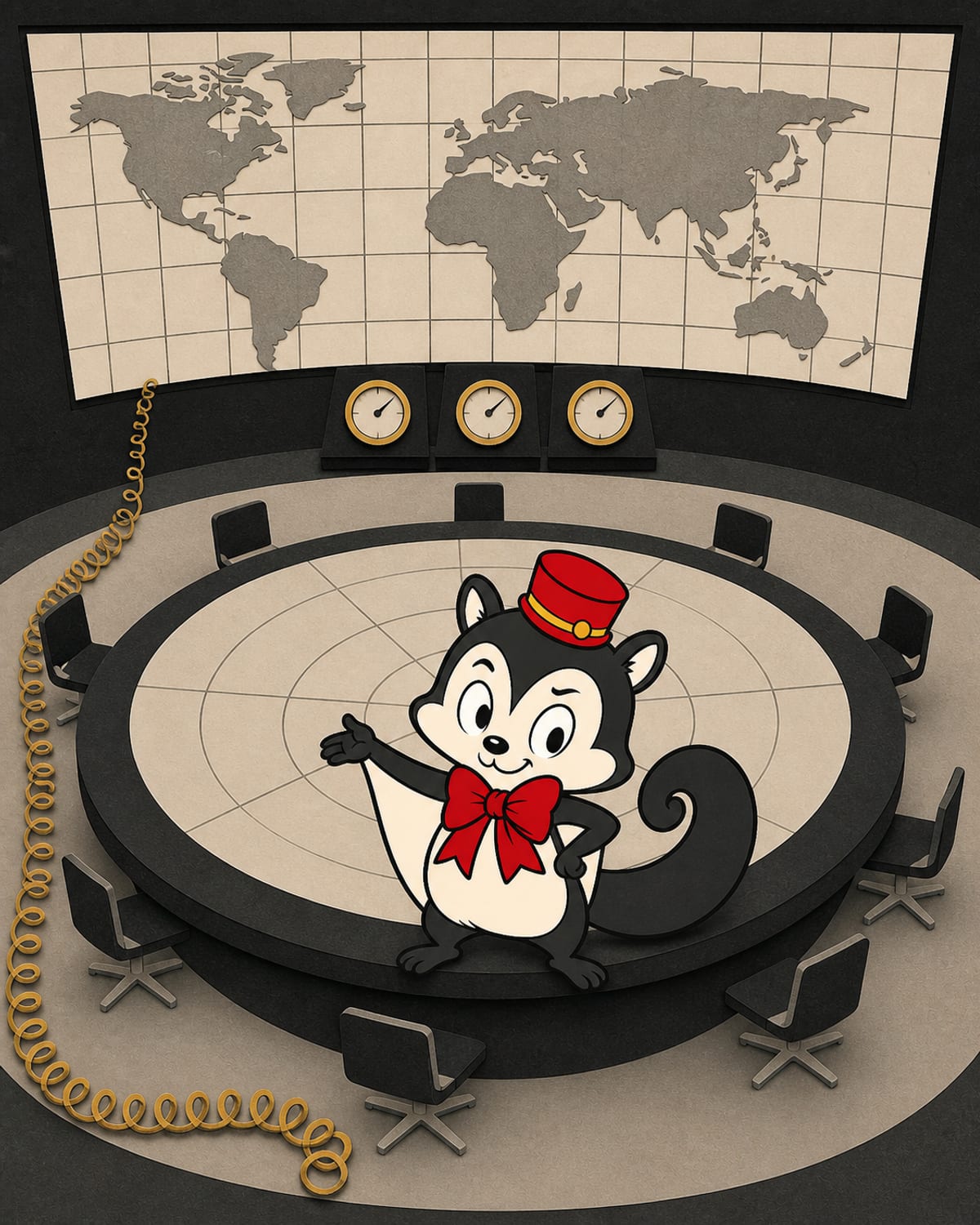
The War Room looks built for control, yet every polished surface amplifies helplessness. Kubrick’s joke is not simply that foolish men hold power.
Open the note ↓
The War Room looks built for control, yet every polished surface amplifies helplessness. Kubrick’s joke is not simply that foolish men hold power. It is that the system has been designed so thoroughly that human recognition arrives too late to matter.
— Momo

Credits & versions
- Cast
- Peter Sellers — Group Capt. Lionel Mandrake / President Merkin Muffley / Dr. Strangelove · George C. Scott — Gen. Buck Turgidson · Sterling Hayden — Brig. Gen. Jack D. Ripper · Slim Pickens — Maj. T. J. “King” Kong
- Screenplay
- Stanley Kubrick · Terry Southern · Peter George
- Cinematography
- Gilbert Taylor
Version map
Ways to watch and read
| Action | Search destination |
|---|---|
| Watch | Check availability on JustWatch |
| Rent | Search rentals on Apple TV |
| Read | Search books on Bookshop.org |
U.S. search destinations · Links checked 2026-07-27 · Stock, editions, prices, and availability can change · Disclosure
Where to go next
Want a gentler, shorter, or stranger next film?
Ask Momo for something like this →
Momo is on shift. Visit Momo Cinema →