What to expect
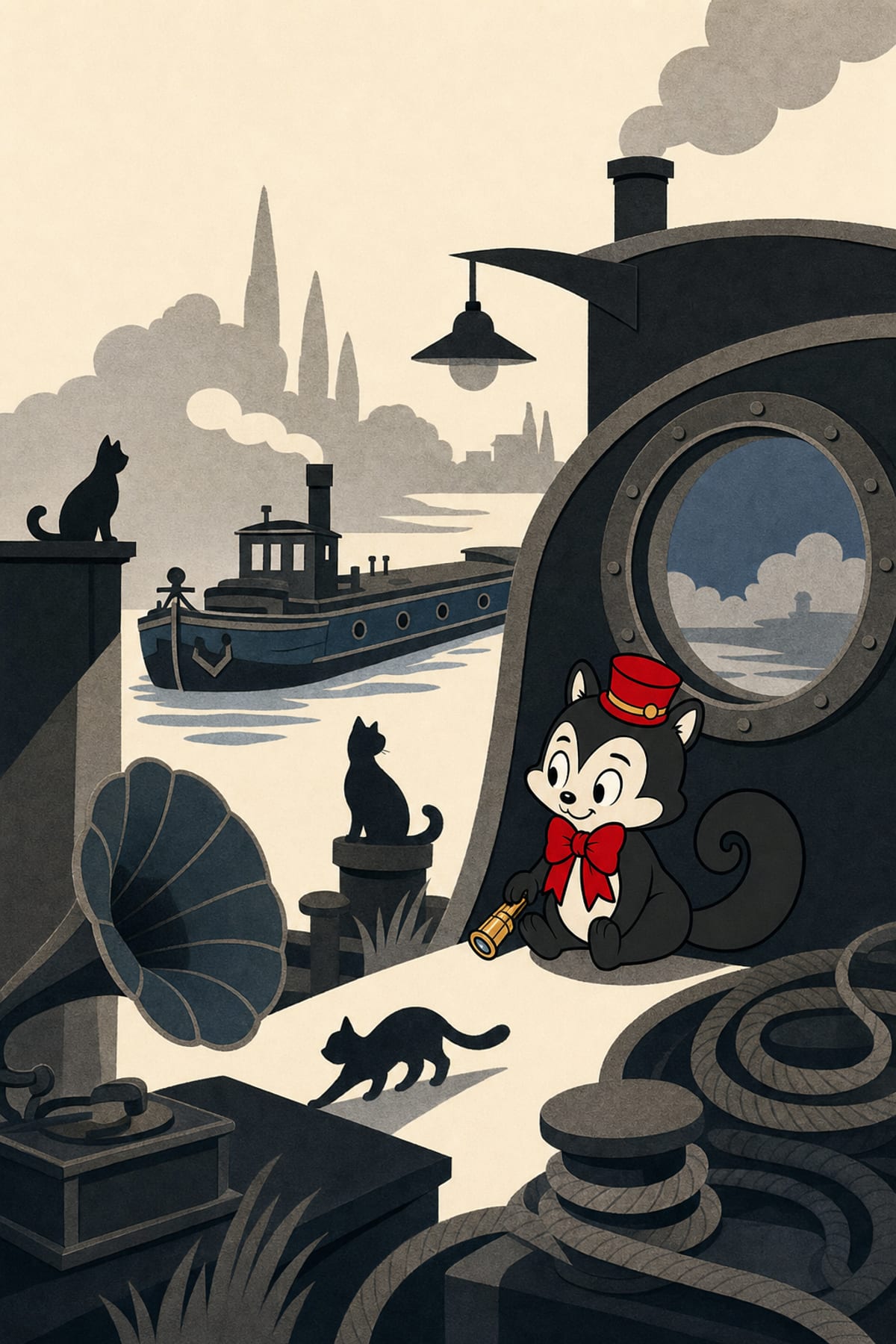
L’Atalante transforms a simple marriage story into a tactile poem of work, desire, jealousy, and reconciliation. Jean Vigo films the barge as both home and confinement, filling it with cats, machinery, waterways, and Père Jules’s astonishing collection of objects. Boris Kaufman’s photography can be rough, luminous, documentary, or dreamlike within a single movement. The film’s troubled release history nearly obscured it, but later restorations revealed an influence that extends through French cinema and beyond. Its romance endures because marriage is shown not as an ending but as an unstable environment two people must learn to inhabit.
How to ease in
The plot is slender and the transitions can feel abrupt, partly because of the film’s production and release history. Let texture guide you: water, fog, metal, bodies, music, and clutter carry emotion. Père Jules may first seem like comic interruption, but his cabin and loyalties become central to the film’s generous world.
Heads-up
A newly married couple drifts between a cramped barge and the promise of Paris.
The barge is too small for fantasy, so fantasy escapes into water, fog, and Père Jules’s impossible cabin. I love how the film treats marriage as navigation: closeness does not remove distance, but it gives two people a vessel in which to cross it.
Open the note ↓
The barge is too small for fantasy, so fantasy escapes into water, fog, and Père Jules’s impossible cabin. I love how the film treats marriage as navigation: closeness does not remove distance, but it gives two people a vessel in which to cross it.
— Momo

Credits & versions
- Cast
- Jean Dasté — Jean · Dita Parlo — Juliette · Michel Simon — Père Jules · Louis Lefebvre — Kid
- Screenplay
- Jean Vigo · Albert Riéra
- Production
- Jacques Louis-Nounez
- Cinematography
- Boris Kaufman · Louis Berger · Jean-Paul Alphen
Version map
Where to go next
Want a gentler, shorter, or stranger next film?
Ask Momo for something like this →
Momo is on shift. Visit Momo Cinema →