What to expect
The Apartment carries the timing and wit of Billy Wilder’s comedies into a story shaped by loneliness, workplace power, and moral compromise. Jack Lemmon’s C. C. Baxter lends his apartment to executives conducting affairs, hoping access will accelerate his career. The arrangement becomes intolerable when Shirley MacLaine’s Fran Kubelik is revealed as more than an anonymous visitor. Wilder and I. A. L. Diamond balance sharp dialogue with visual ideas—the vast insurance office, a cracked mirror, a key passed between hands—that make systems of exploitation visible. Its romance works because decency must be chosen before it can be rewarded.
How to ease in
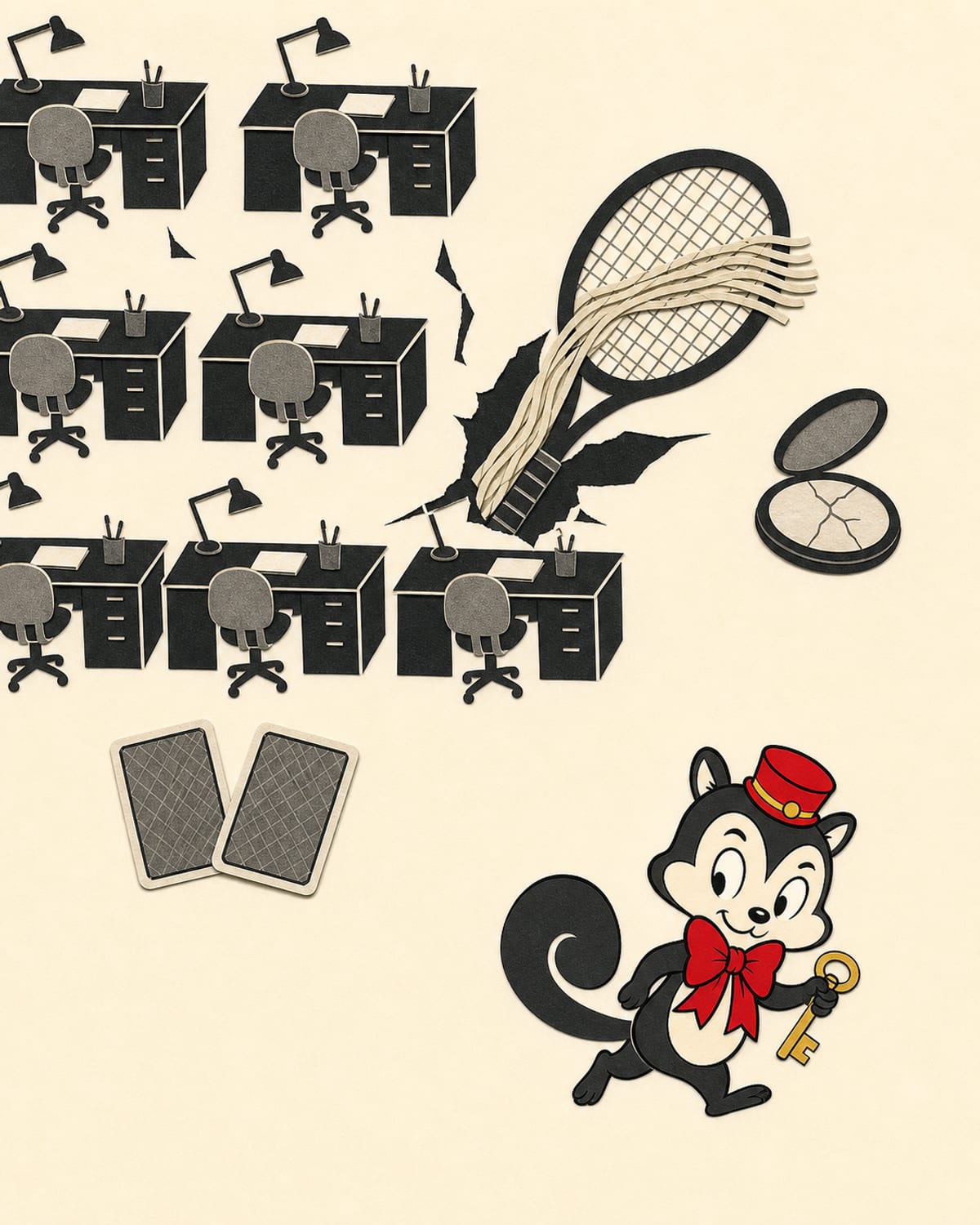
The film is funny, but its central crisis is serious and should not be treated as a temporary tonal detour. Watch the movement of keys, mirrors, and office cards; ordinary objects reveal who controls private space. Baxter’s growth is measured less by winning Fran than by refusing the structure that has benefited him.
Heads-up
A borrowed apartment exposes the private cost of corporate advancement.
The apartment begins as borrowed space even when Baxter is alone inside it. I like how the film slowly returns ownership through decisions rather than possessions.
Open the note ↓
The apartment begins as borrowed space even when Baxter is alone inside it. I like how the film slowly returns ownership through decisions rather than possessions. A key can serve a career, permit harm, or finally close a door; the object changes when the person does.
— Momo

Credits & versions
- Screenplay
- Billy Wilder · I.A.L. Diamond
- Production
- Billy Wilder · The Mirisch Company, Inc.
- Cinematography
- Joseph LaShelle
Version map
Ways to watch and read
| Action | Search destination |
|---|---|
| Watch | Check availability on JustWatch |
| Rent | Search rentals on Apple TV |
| Read | Search books on Bookshop.org |
U.S. search destinations · Links checked 2026-07-27 · Stock, editions, prices, and availability can change · Disclosure
Where to go next
Want a gentler, shorter, or stranger next film?
Ask Momo for something like this →
Momo is on shift. Visit Momo Cinema →