The Shop Around the Corner: Letters You Don't Have to Answer
How Lubitsch's letters and café meeting place spectators outside the obligation to reply. A close reading of The Shop Around the Corner.
Spoilers for The Shop Around the Corner. The film includes workplace humiliation, financial insecurity and an attempted suicide.
Waiting for a reply is rarely restful when the reply concerns you. An unanswered message can keep a conversation running in your head long after you have put the phone down.
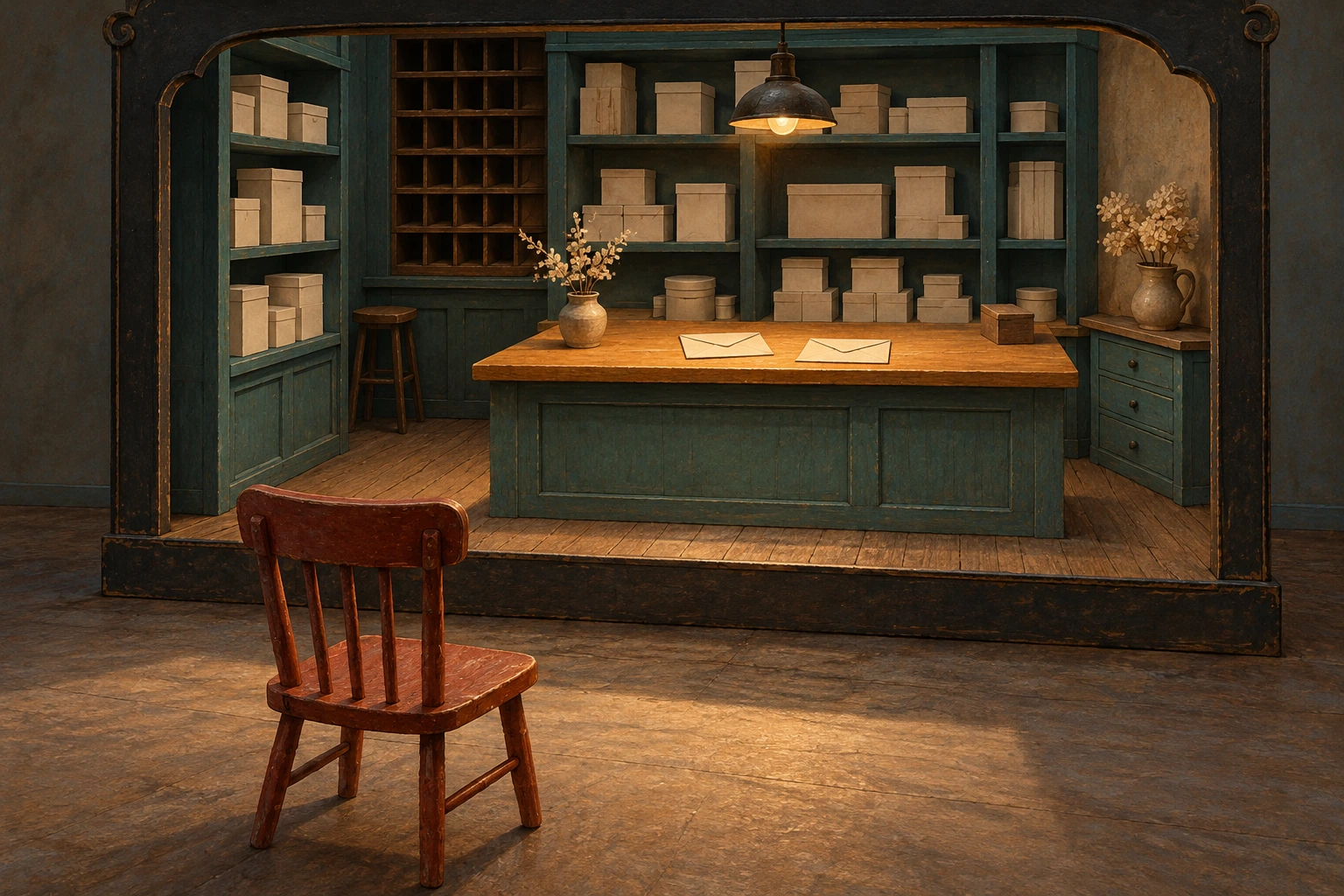
Ernst Lubitsch’s The Shop Around the Corner (1940) gives us another position from which to watch that uncertainty. Alfred Kralik and Klara Novak work together in a Budapest shop. They quarrel in person while falling in love through anonymous letters, unaware that their correspondents are each other. [1] [2]
Their correspondence is full of consequences. As spectators, we can follow it without owing either of them a reply. That difference offers one way to understand why an old film can feel a little removed from the day’s information demands, even when its characters are having a thoroughly awkward time.
The post is not a superior communications system in this story. It is an excellent accomplice to two people who have misunderstood each other.
The person on paper and the person at the counter
Alfred and Klara have divided one another into two people. The correspondent receives their tenderness; the colleague receives their irritation. The shop and the letters allow those versions to coexist. [1]
That is recognisable without any nostalgia for stationery. A thoughtful message and an exasperating encounter can belong to the same person. Writing gives us time to present a version of ourselves, and time to imagine a version of the recipient. Neither version has to survive a difficult working day intact.
The pleasure of the film’s premise is the friction between those accounts. We can hold their affection and their quarrels together while they struggle to do so. A letter becomes interesting for what its writer has left outside it.
This changes the question a message poses. Instead of wondering whether we have said the right thing, we can consider why two people capable of kindness are making such a poor job of recognising it. Their mistake gives us something to examine without asking us to compose the next sentence.

At the café, knowing does not settle everything
AFI’s synopsis gives the meeting a stark sequence: Alfred discovers that the woman waiting for him is Klara, approaches her as her colleague and withholds his identity. She criticises him, and he leaves. [1]
The secret has stopped being symmetrical. Alfred now knows something Klara does not, so the encounter cannot be reduced to two innocent people failing to recognise each other. He has a choice about what to disclose. She is making judgements with information he is keeping from her.
That makes the scene more troublesome than a charming advertisement for handwritten romance. Alfred can hear how Klara regards him while protecting the identity she admires. His advantage invites a question about fairness, even if we want the couple to get together.
For a viewer, more information creates more to think about. The revelation redirects our attention towards how Alfred uses his knowledge. A message’s arrival is not automatically the end of uncertainty: what somebody does with it can become the next difficulty.
There is room to stay with that difficulty. We cannot warn Klara, rewrite Alfred’s introduction or rescue the evening with a tactful follow-up. The film lets us care about a conversation from outside its obligations.

An old shop is no refuge from bad news
The workplace story prevents the letters from enclosing a cosy world. Alfred loses his job after his employer wrongly suspects him of an affair with his wife. The employer later attempts suicide, and is saved. [1]
A shop door and a stack of envelopes do not put these people beyond humiliation, jealousy or danger. Treating their world as simpler would require overlooking what the film has put in it. The distance available to a spectator comes from watching a particular predicament unfold, rather than from discovering an era without distress.
It also helps to separate the film’s age from its black-and-white image. Both AFI and Criterion identify it as a black-and-white production. [1] [2] That visible difference may remind a viewer that this world belongs to another screen tradition. It cannot, on its own, explain the experience of following the letters. A colour film could arrange the same unequal knowledge; a black-and-white film could keep us tense throughout.
Nor does correspondence make the story pleasantly slow by definition. A meeting has to happen, a secret has to be handled and a job can disappear. The characters have deadlines. The useful separation is that their next move does not depend on ours.
What the distance leaves us with
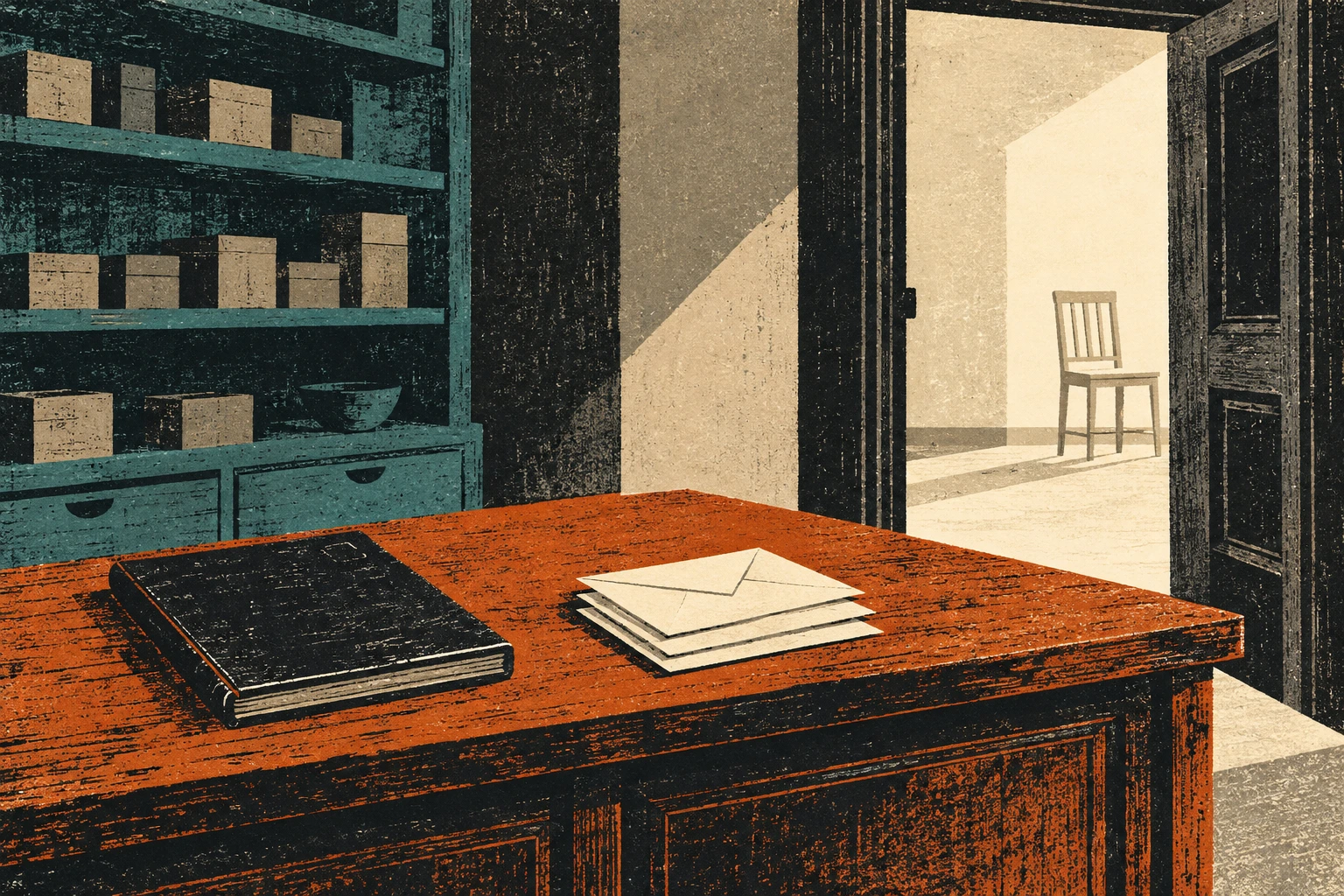
Watching The Shop Around the Corner need not mean withdrawing into an ideal past. Its letters can send us back towards a present-day question: how much of the person answering us are we supplying ourselves?
That question earns the detour. The film changes our position in relation to incomplete information. We can notice a projection, reconsider a judgement and object to a withheld truth without being the person whose reply is due.
Some viewers will find that distance welcome; others will find the deception or workplace cruelty too close to their day. The film offers no dependable result for a tired mind. What it does offer is a specific situation to attend to, with people who are funny, vulnerable and maddening enough to resist becoming a relaxation exercise.
For the duration of their correspondence, an envelope can carry an urgent answer. It is somebody else’s turn to open it.
References
- American Film Institute, The Shop Around the Corner, AFI Catalog of Feature Films, credits, physical properties and synopsis. The synopsis supports the correspondence, café encounter and workplace events discussed here.
- The Criterion Collection, The Shop Around the Corner, film record and synopsis, including the 1940 release year, director, Budapest shop, anonymous correspondence and black-and-white classification.
For the next unexpected question, follow the Journal in your RSS reader.
On screen
Films discussed
- The Shop Around the Corner (1940) · Ernst Lubitsch
Further reading
Read next in the Journal
Want a recommendation shaped around your evening? Ask Momo what to watch next →