See Films Differently Momo Notices
When the Mask Becomes the Face
Why a covered face can make a character more memorable: five designs, from Kylo Ren’s silver lines to the bird-headed Judex and Majora’s Mask.
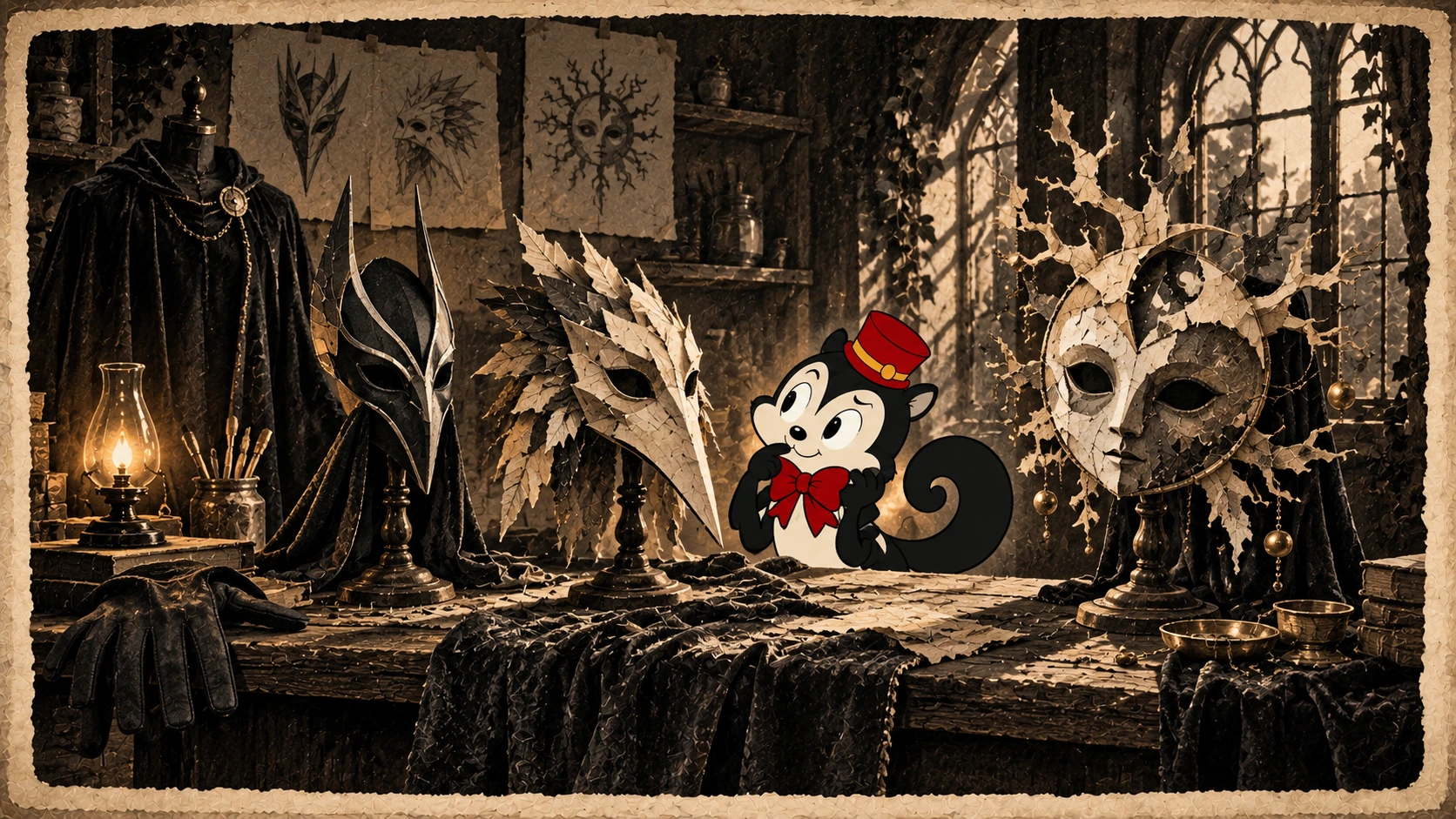
Five designs that make us want to keep looking, even when we cannot see the person underneath.
Kylo Ren’s mask cannot raise an eyebrow. Yet those silver lines keep drawing us towards its eyes.
Light travels across them. The hood gathers darkness around them. A voice arrives from behind a mouth we cannot see. The work normally done by facial muscles has been shared between a surface, a costume and a sound.
A masked character can make us wonder who is underneath. But another pleasure competes with that curiosity: wanting the figure to stay exactly as it is. We become attached to the covered face.
Here are five designs, including one visitor from a game. Their appeal begins with how they look.
Kylo Ren: a face that catches the light
In Star Wars: The Force Awakens (2015), the hard mask sits inside a soft black hood. Against the volume of the fabric, its narrow silver lines look especially precise.
Costume designer Michael Kaplan explained that those silver areas reflect their surroundings, picking up the colour of fire, for example. The shape stays fixed while its appearance changes. [1]
That gives the eye somewhere to go. A completely dark head might have a strong outline; here, the bright lines pull our attention towards the place where we would normally look for a person’s expression. We watch changing light in the space left by a hidden face.
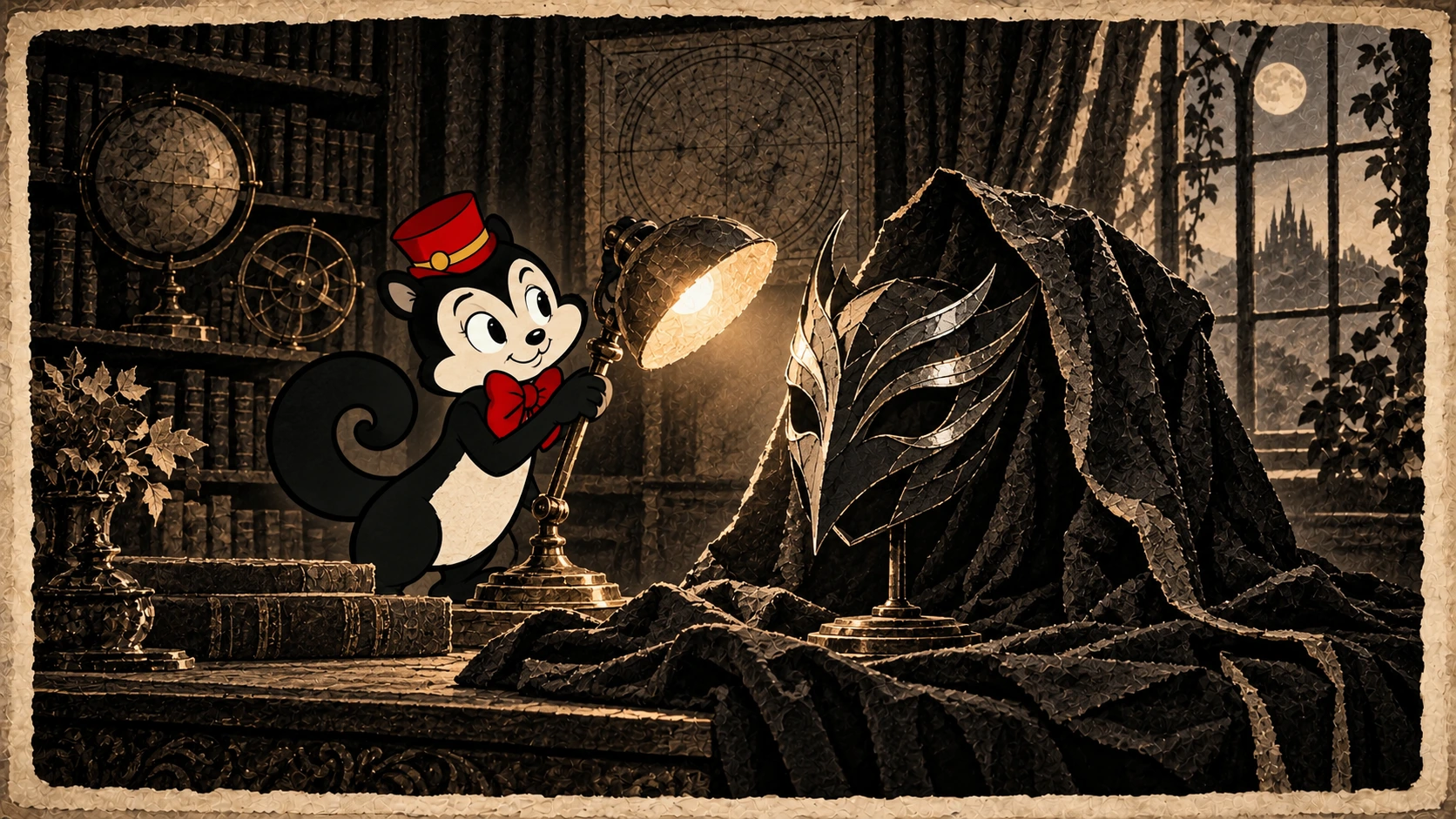
The altered voice adds another surface to the character. [2] It belongs, in our experience of the figure, with the hard covering and the dark clothing. The mask looks good as an object. Put it on a moving body and let that body speak, and it acquires a presence the object alone cannot supply.
Winslow Leach: a bird’s profile at the keyboard
Winslow Leach’s costume in Phantom of the Paradise (1974) makes a less orderly impression.
The silvery mask projects forwards into a beak-like profile. In the image, its dark eye openings appear different in shape; the mouth and chin remain exposed. Glossy black clothing, gloves and a box on the chest extend the design beyond the head. Pressman’s official production image shows the figure at a keyboard, looking upwards. [3]
The slight mismatch is part of the attraction. Bird, machine, musician: the elements resist settling into one familiar category, yet together they make an unmistakable person.
An electronic device also mediates Winslow’s singing voice. [4] Sight and sound both move him away from an ordinary human appearance, while his exposed mouth and position at the keyboard keep a performer within that elaborate construction. The costume seems to belong to somebody with music to make.
Perfectly balanced design has its pleasures. This mask is memorable partly because it feels so peculiar to the body wearing it.
The Lightning: the rest of the outfit matters
The Lightning, the villain of the 1938 serial The Fighting Devil Dogs, makes it difficult to decide where the mask ends.
On the Serial Squadron restoration’s cover, a helmet covers the head, a black cape broadens the figure and a large glove gives the outstretched hand extra weight. A pale, jagged ridge adds another accent to the helmet. [5] The outline of the head, shoulders and extended arm stands out before the details of the face.
There is a pleasing directness to that design. The cape and glove make the head covering the centre of a larger shape. The figure can announce itself from a distance, without waiting for a close-up to explain its menace.
It is a useful reminder for anyone assembling an impressive disguise: budget for the coat.
The original was a twelve-chapter serial. A feature-length recut followed in 1943, so records bearing the same title can refer to different versions. [6]
Judex: human hands beneath a bird’s head
Georges Franju’s Judex (1963) offers a striking combination of a bird’s head and human hands.
Criterion’s account describes the figure entering a masked ball without speaking, wearing an enormous bird’s head and carrying a dove. Channing Pollock, who plays Judex, was himself a magician. [7]
The difference between head and hands is the delight. The head belongs to a bird, the hands perform a recognisably human skill, and those hands are handling another bird. Attention keeps moving between the three.
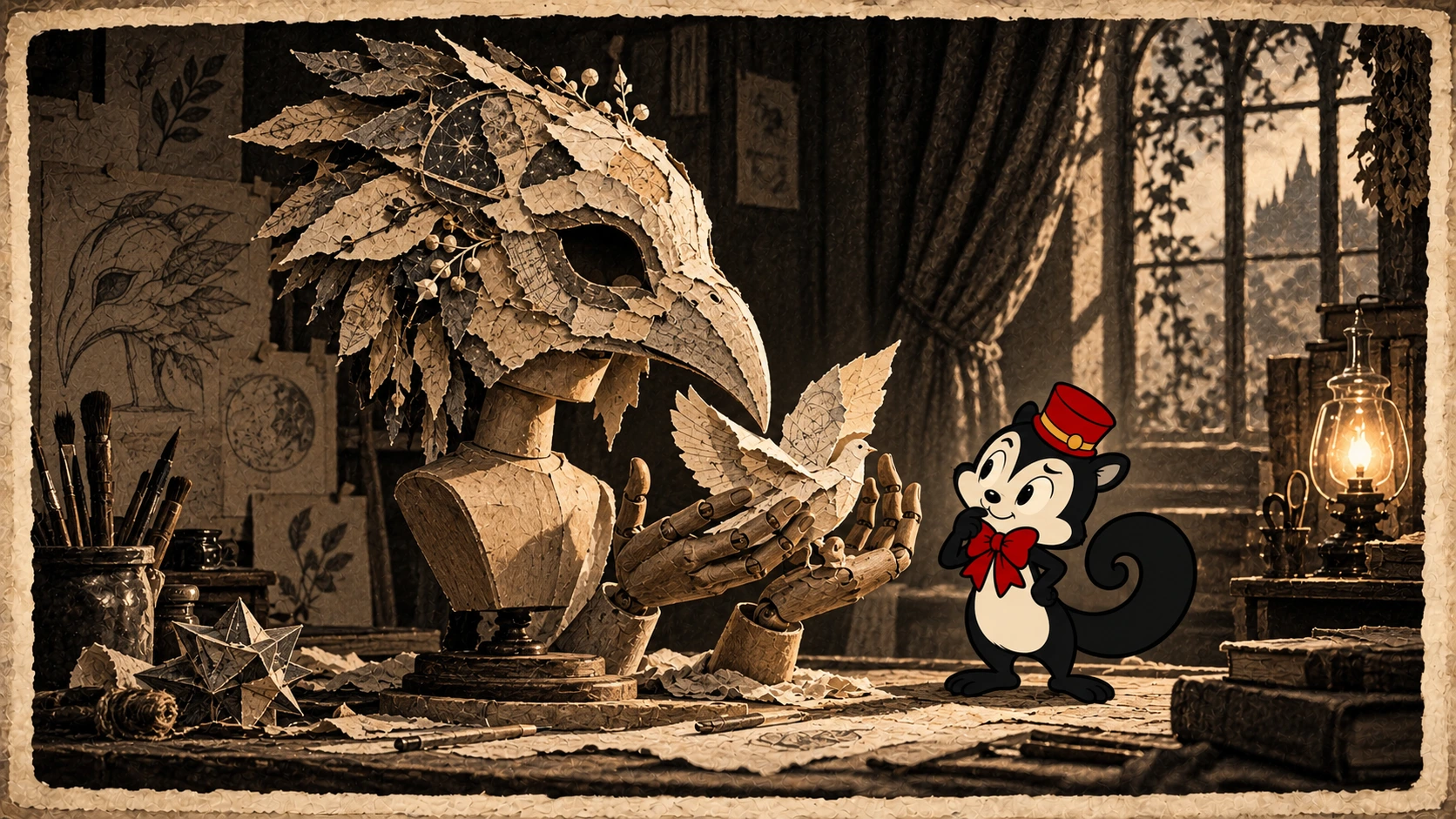
Hang the mask on a wall and it might be an elaborate party accessory. Worn above hands carrying another bird, it becomes part of a more complicated design. The human body connects its separate parts.
This is also a useful exception to the idea of a mask becoming a character’s face. Judex does not wear the bird’s head throughout the film. A brief appearance can still furnish the image by which we remember someone. Time on screen is only part of the equation.
Skull Kid: a face too strong for its body
One guest from outside cinema deserves a place: Skull Kid wearing Majora’s Mask in The Legend of Zelda: Majora’s Mask (2000).
In Nintendo’s instruction-booklet illustration, large eyes and projecting spikes crowd the mask with detail above a slight body. [8] The proportions give the face more visual force than the limbs supporting it.
Make everything equally large and imposing, and the figure might become an ordinary enormous monster. Keep that thin body, and the mask feels excessive. It occupies more attention than an accessory ought to.
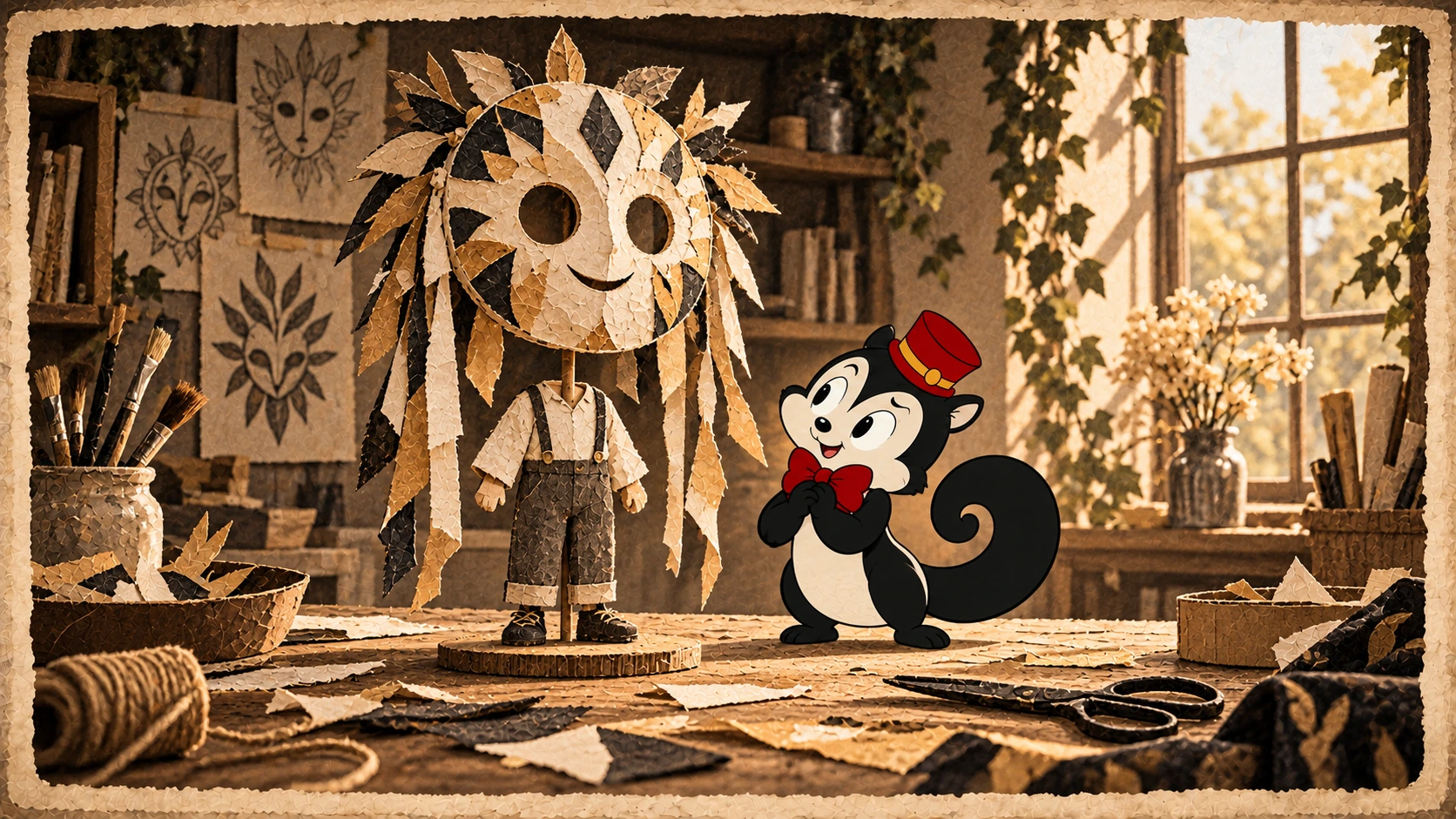
The game’s premise gives the mask a power that even its wearer does not understand. [8] The design can interest us before we know that story. Its proportions have already made the relationship between wearer and covering look unstable.
Still worth looking at
These five designs leave us with several kinds of cool: a narrow gleam, an awkward beak, a commanding outline, a bird-headed magician, a small figure overwhelmed by its face.
They also give us reasons to look beyond the mask. Hands, shoulders, fabric, light and voice become unusually noticeable when a face is covered. The whole figure matters.
Revealing the face underneath leaves those silver lines and beaked profiles intact. The question of identity can be answered while the design remains worth another look.
Momo would like to put in a request for Judex’s bird head. Arrangements for the dove remain undecided.
References & Further Reading
The sources below support production details, story facts and the images discussed. The comparisons and aesthetic judgements are Monocurator’s.
Linked synopses and essays also discuss endings not covered here.
-
TIME Staff, ‘How Kylo Ren’s Terrifying Mask Was Designed to Be Unforgettable to Kids’, TIME, 11 December 2015. Interview with costume designer Michael Kaplan.
-
Amy Richau, ‘The Introduction of Kylo Ren and the Meaning of a Mask’, StarWars.com, 26 January 2018. Official-site commentary.
-
Pressman Film, Phantom of the Paradise. Production-company film page and still.
-
American Film Institute, Phantom of the Paradise, AFI Catalog. Film record and synopsis.
-
The Serial Squadron, The Fighting Devil Dogs. Restoration-release cover image.
-
American Film Institute, The Fighting Devil Dogs, AFI Catalog. Record for the 1943 recut; the history notes identify the original 1938 serial.
-
Geoffrey O’Brien, ‘The Secret Heart of Judex’, The Criterion Collection, 16 June 2014. Critical essay accompanying the film’s release.
-
Nintendo, The Legend of Zelda: Majora’s Mask — Instruction Booklet, ©2000, pp. 6–7. Official character illustration and story information.
For the next unexpected question, follow the Journal in your RSS reader.
On screen
Films discussed
- Star Wars: The Force Awakens (2015) · J. J. Abrams
- Phantom of the Paradise (1974) · Brian De Palma
- The Fighting Devil Dogs (1938) · William Witney and John English
- Judex (1963) · Georges Franju
Further reading
Read next in the Journal
Want a recommendation shaped around your evening? Ask Momo what to watch next →