Adaptation · Nº 01
Why Rebecca (1940) Turns Murder into an Accident
Why did Hitchcock’s Rebecca change murder into an accident? Follow the Production Code dispute and the questions left after Maxim explains the death.
Journal series
A little knowledge can completely change what you see on screen.
Adaptation · Nº 01
Why did Hitchcock’s Rebecca change murder into an accident? Follow the Production Code dispute and the questions left after Maxim explains the death.
Film within a film · Nº 02
The film Norma watches is Queen Kelly. See how Gloria Swanson’s real performance becomes a fictional star’s past, with a modern Minions comparison.
What to watch next · Nº 03
Read No Longer Human? Watch The Face of Another next, and compare Yōzō’s account of clowning with the way Teshigahara shows one man under two appearances.
Film craft · Nº 04
Why does PlayTime’s doorman keep opening a broken door? Separate the passage from the gesture with Don Norman’s distinction between affordances and signifiers.
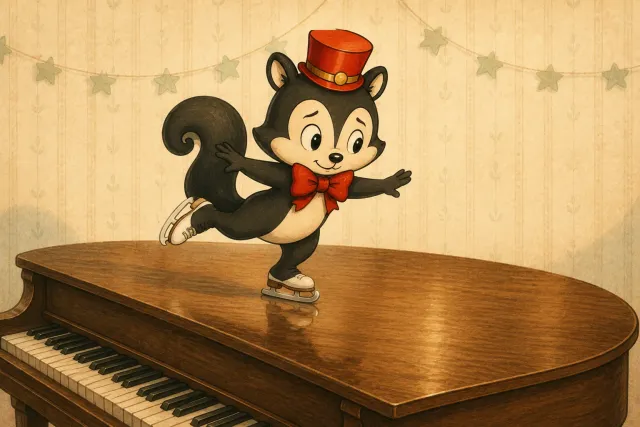
Film craft · Nº 05
Love Toy Story? Discover A Christmas Dream, an eleven-minute black-and-white short where an old rag doll turns a piano into music, skating and play.
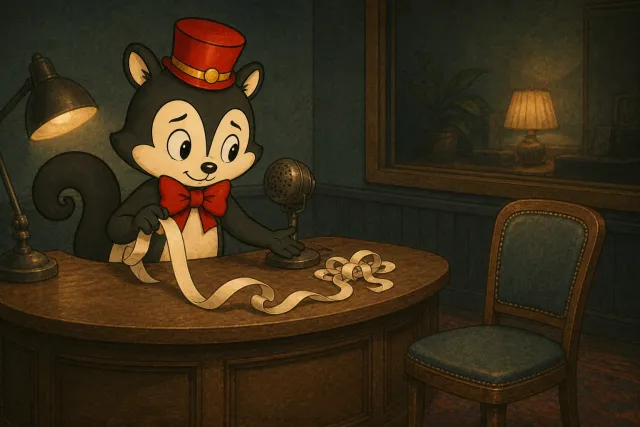
Narrative · Nº 06
Neff confesses, Gillis mocks himself, and Harry Lime jokes about his victims. Read how wit admits failure, manages sympathy and evades responsibility.
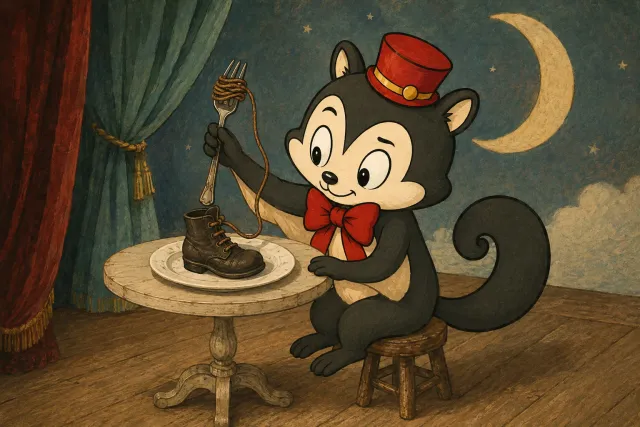
Film craft · Nº 07
Why can Minions make sense without translation? Follow their looks, voices and mistakes alongside Chaplin’s The Gold Rush and Keaton’s One Week.
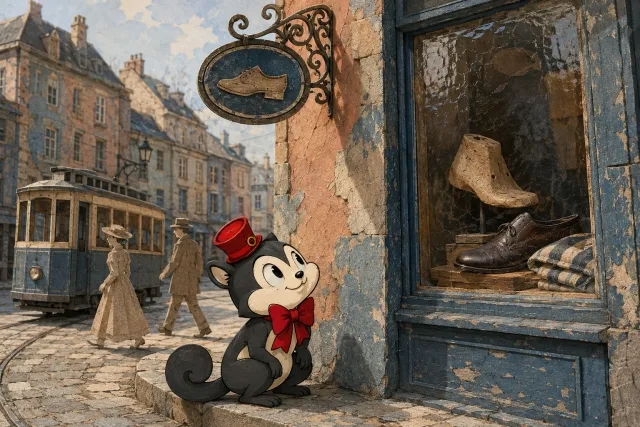
Film history · Nº 08
Why can an old film's shopfronts and passing traffic become as absorbing as its story? Look again with People on Sunday and A Trip Down Market Street.
Film craft · Nº 09
What is deep focus in film? Learn how it differs from shallow focus, deep-space staging and rack focus, with clear examples from Citizen Kane.
Film history · Nº 10
Nitrate is the flammable plastic base of much early cinema. Learn how it differs from safety film, why films disappear, and what restoration can preserve.
Film language · Nº 11
Blue night scenes and amber interiors often belong to a silent film’s original presentation. Compare tinting with toning and learn why restorations differ.
Film history · Nº 12
A talkie is a film with recorded, synchronised speech. See how The Jazz Singer, Blackmail and Modern Times changed what audiences could hear.
Film language · Nº 13
Intertitles are text cards inserted between film images. See how they differ from subtitles, convey dialogue or narration, and change the rhythm of silent films.
Film craft · Nº 14
Why old films look square, what 4:3 and Academy ratio mean, and why the black bars on your TV may be keeping the whole picture intact.
Film craft · Nº 15
Hear the difference between an old-film accent, a performance and a recording, with Cary Grant, Katharine Hepburn and two comedies from 1940.
Film history · Nº 16
What does pre-Code Hollywood mean? Understand the Hays Code, the change in 1934, and the dialogue, endings and restored versions of three films.
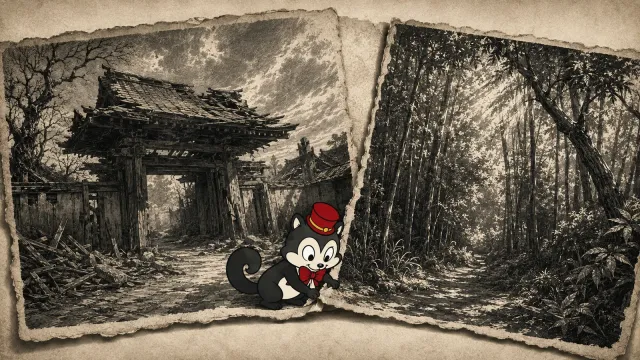
Adaptation · Nº 17
Rashomon draws on two Akutagawa stories. Compare In a Grove with the gate story, and see how Kurosawa changes both — including the film’s ending.
Cinematography · Nº 18
Birdman joins separate takes to look continuous. Compare its hidden cuts with Rope and Touch of Evil, and see what long takes do with space, time and suspense.
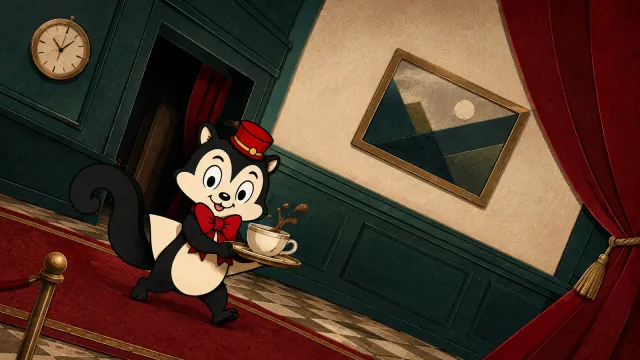
Cinematography · Nº 19
A Dutch angle rolls the camera sideways. See how it differs from a pan or tilt, and how The Third Man and Batman use canted framing for different effects.
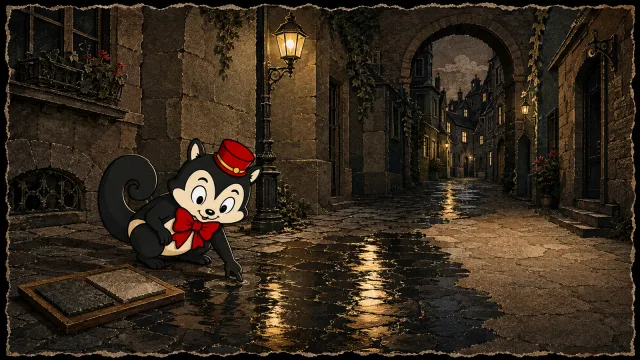
Physics · Nº 20
Why do wet roads look darker yet shine under street lights? Explore the optics, then see the effect in the black-and-white thriller The Third Man.
Film history · Nº 21
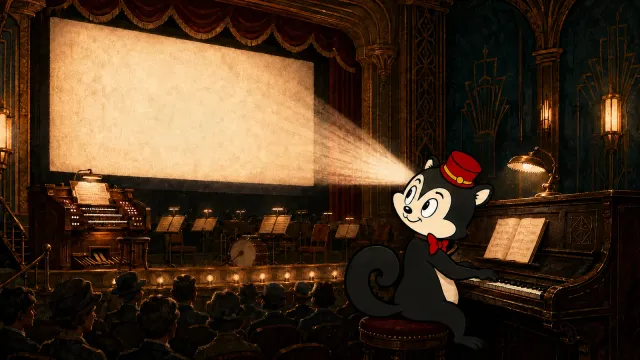
Silent films usually had live music from a pianist, organist, ensemble or orchestra. Learn how cue sheets worked and why modern editions can sound different.
Film history · Nº 22
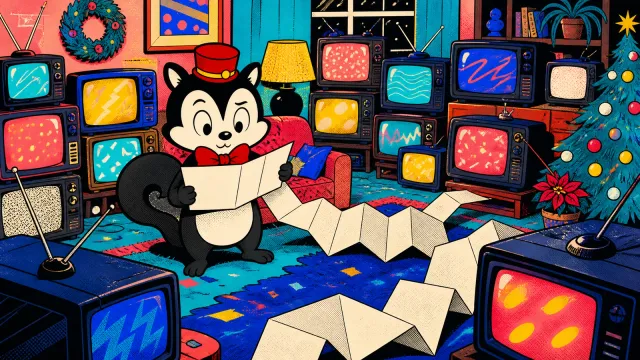
It’s a Wonderful Life became a Christmas ritual through television repetition—then rights control turned its abundance into an annual appointment.
Film craft · Nº 23
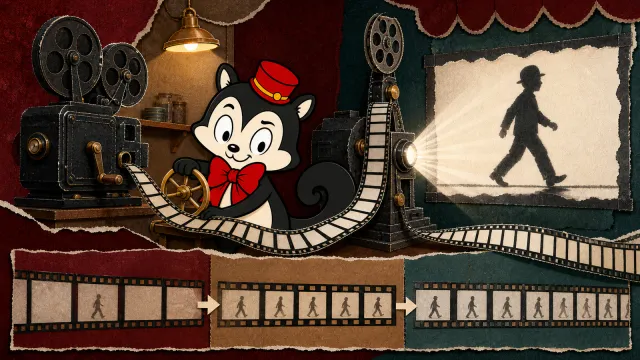
Silent films can look too fast at the wrong frame rate. Learn how capture, projection and restoration shape motion—and why there was no single silent speed.
Film craft · Nº 24
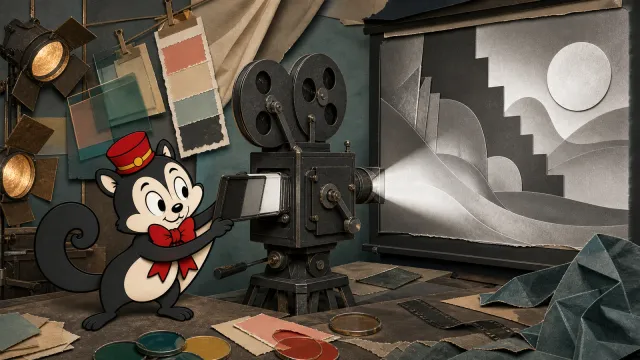
Some Like It Hot was not black-and-white because colour was unavailable. Wilder preferred it; monochrome also protected the disguises and made 1929 cohere.
Start here · Nº 25
Black-and-white films do more than remove colour: they reshape light, faces, texture and space. Here is what to look for, and where a beginner can start.
Film analysis · Nº 26
Why is Casablanca so great? Its romance, wit and music all drive Rick to one ending: he proves his love for Ilsa by helping her leave with Laszlo.
Film craft · Nº 27
Colour was too expensive—but black-and-white made Night of the Living Dead look like news, sharpened its effects and made its ending feel like evidence.
Film analysis · Nº 28
Tokyo Story moves us without villains or grand speeches. Its ordinary delays, quiet rooms and imperfect kindness turn family love into irreversible regret.
Film craft · Nº 29
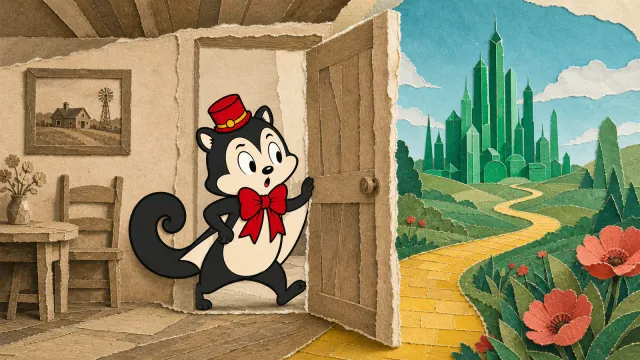
Why does The Wizard of Oz change from sepia to colour? See how the doorway shot worked, why the film saves Technicolor for Oz, and what it changes.
Film analysis · Nº 30
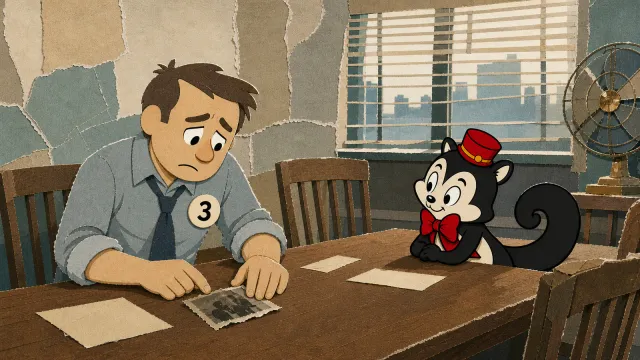
Juror 3 says his son hit him in the face and that they have not seen each other for two years. See why that history drives his final vote.
Cinematography · Nº 31
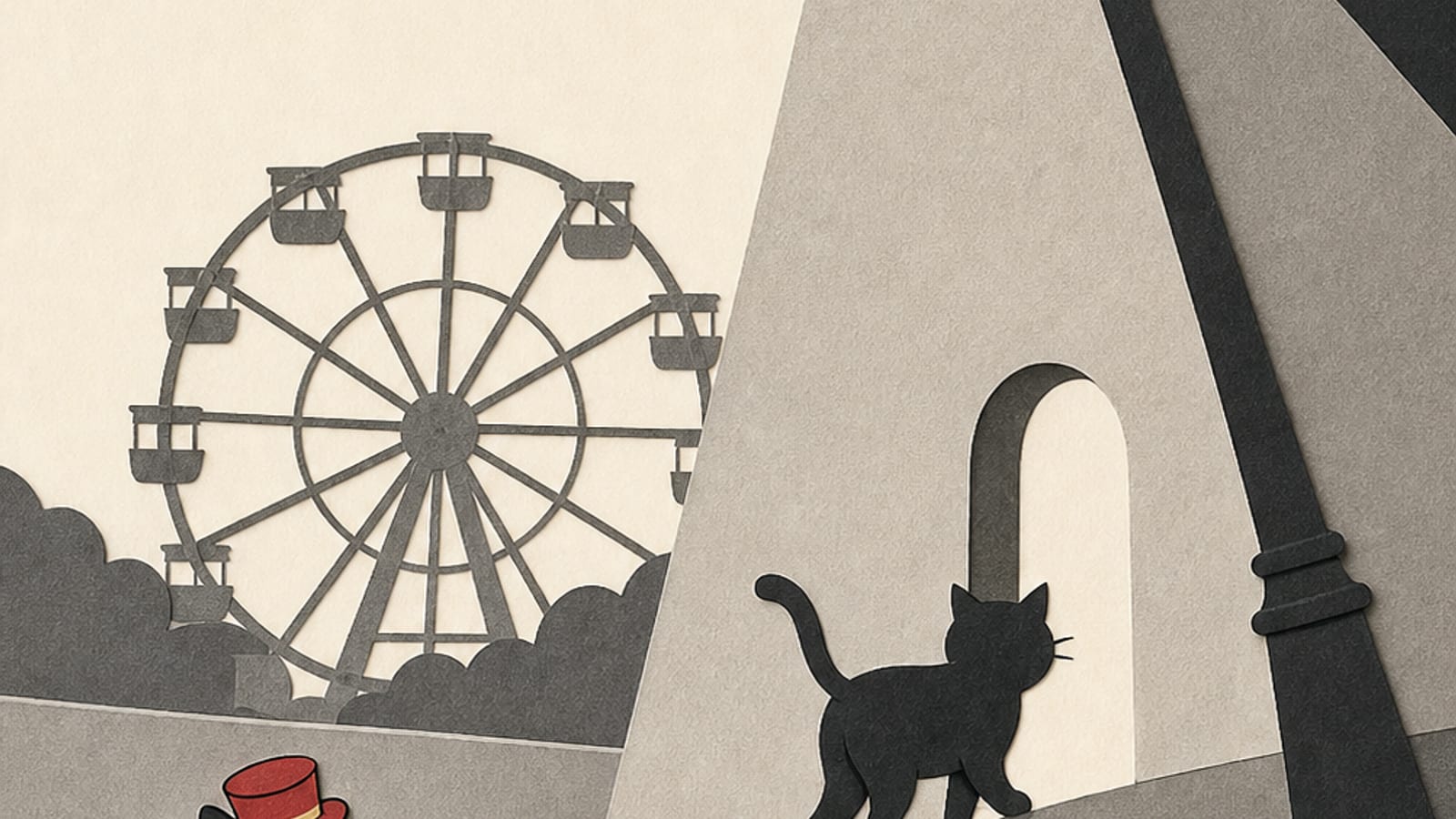
The Third Man uses Dutch angles — a deliberately tilted camera — to make postwar Vienna feel unstable. See how crooked shots alter space, trust and moral balance.
Film Music · Nº 32
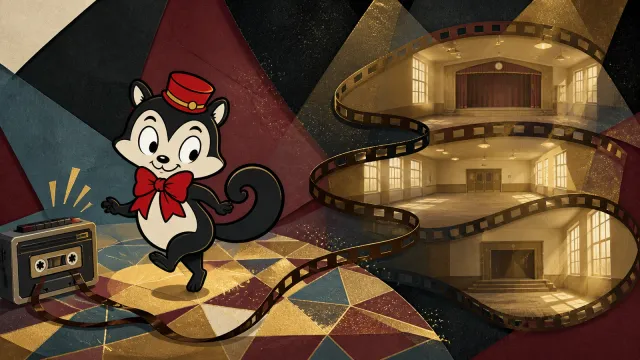
Five unforgettable songs in movie scenes—from Saturday Night Fever and Pig to Sing Street, Love Me Tonight and San Francisco—and what each one changes.
Ethics & Technology · Nº 33
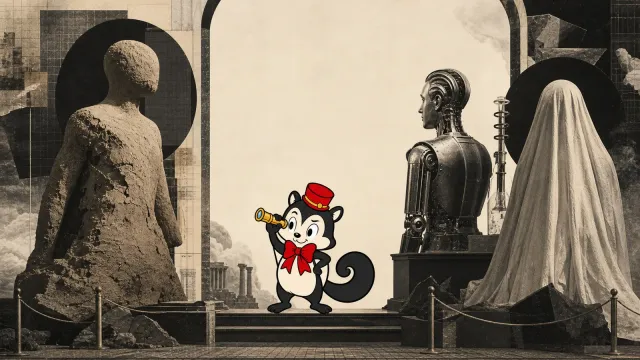
Can AI suffer or have moral status? We do not know. Classic movie monsters show how purpose, resemblance, speech, control and consent distort our judgement.
Physics · Nº 34
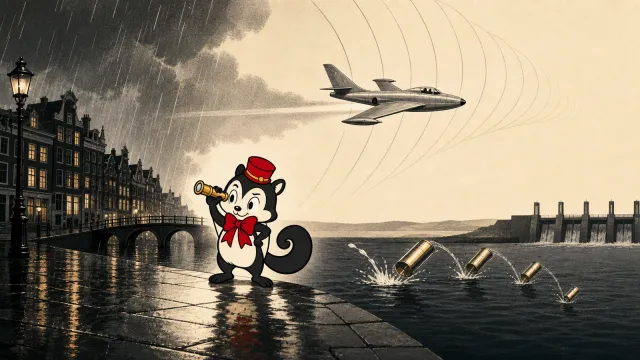
The Dambusters’ bomb combined about 232 mph, a 60-foot release, a shallow impact angle and backspin. Rain and shock waves reveal the fluid mechanics.
Narrative · Nº 35
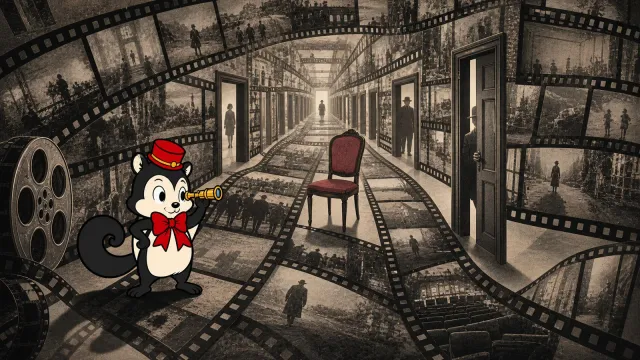
Plot armour is the sense that a story needs a character’s body alive. Narrative survival asks a different question: can the film afford to lose their role?
Art & Preservation · Nº 36
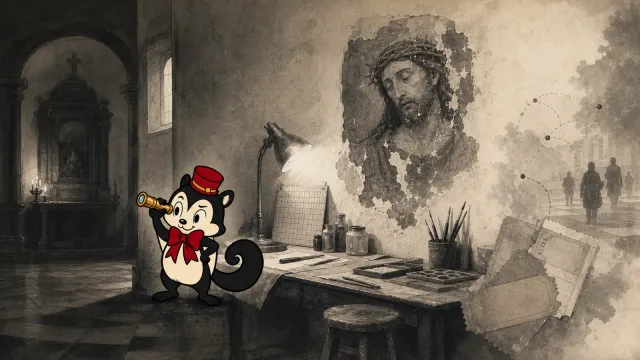
Borja’s 2012 Ecce Homo intervention obscured García Martínez’s painted surface. Viral fame then created visitor and social value—but did not repair the loss.
Perception · Nº 37
Why is Citizen Kane considered a masterpiece—and is it overrated? Its greatness lies in accumulated precision, not guaranteed pleasure or reputation.
Adaptation · Nº 38
Mary Shelley lets the unnamed Creature tell his own story. The 1931, 1935 and 2025 films redistribute his speech and agency — changing who appears monstrous.