See Films Differently Film analysis
Why Does Carrying Water Feel So Heavy in The Naked Island?
A well, a boat, a hill and the crops turn water into work in Kaneto Shindo's The Naked Island. Follow the route, sound and view.
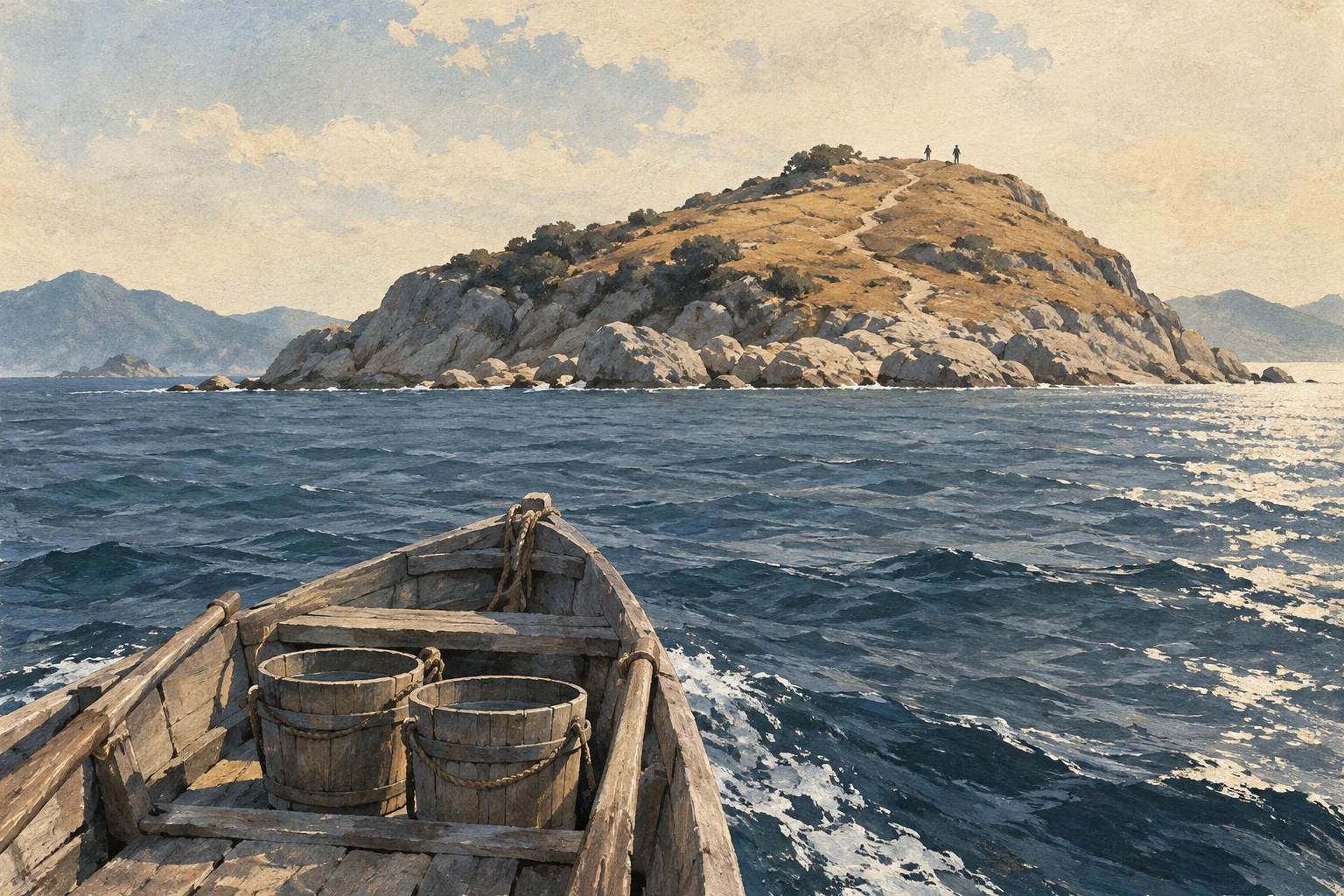
Kaneto Shindo’s The Naked Island (1960) asks us to spend time with a task that most films would compress. A family lives on a small island without fresh water. They row to another shore, fill buckets at a well, row home and carry the water uphill for their crops. The work has to be done again. What changes when a film lets that route occupy so much of our attention?
The question is more specific than whether this is a “slow film.” Speed alone tells us little. Shindo makes an ordinary resource arrive through a sequence of human movements. Water is easy to imagine as a thing the family possesses. The journey makes us notice that possession is temporary and costly. The next bucket still has to travel.
The route is part of the crop
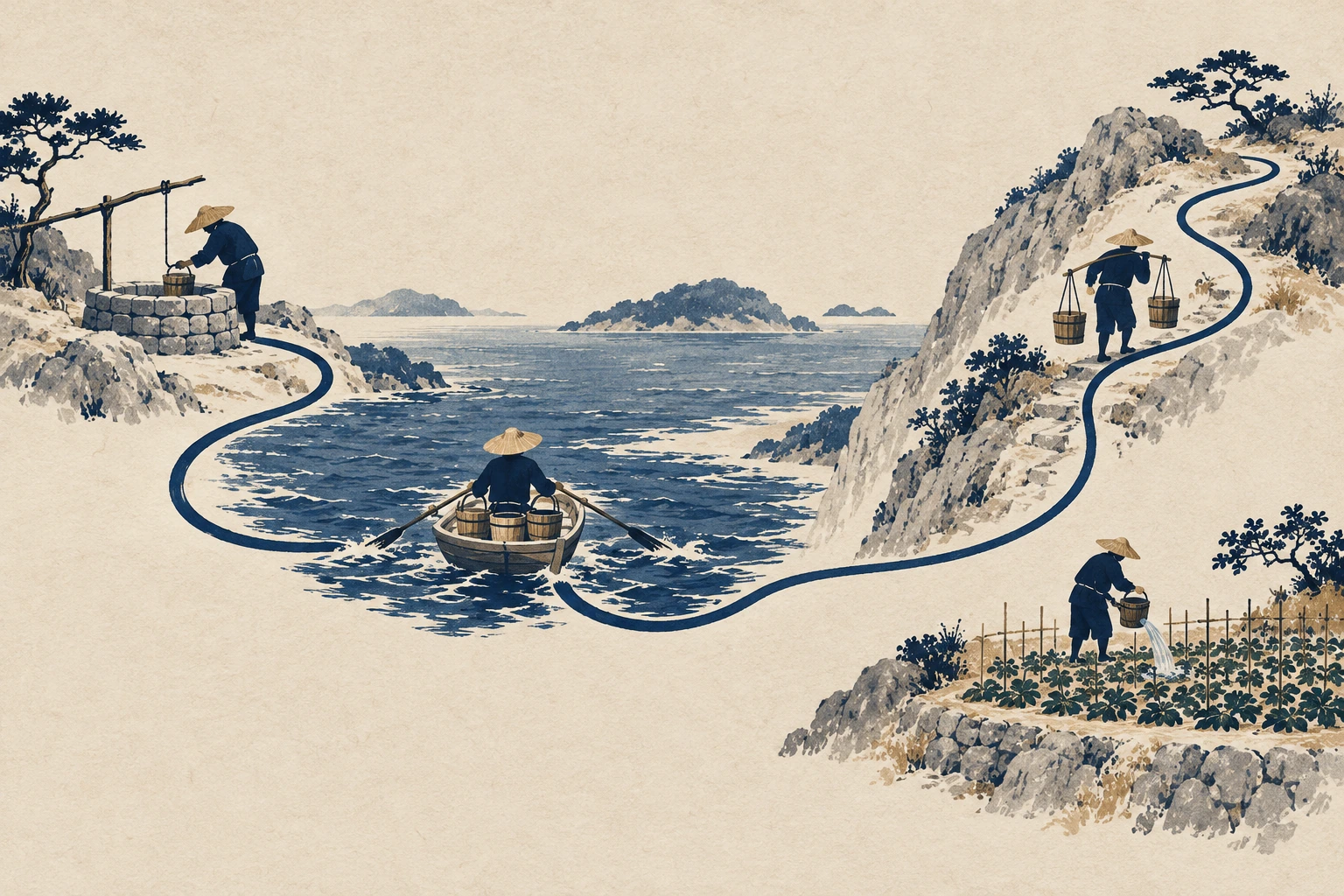
Criterion’s film description gives the essential itinerary: the family must cross to another shore, collect well water in buckets and return to their island. The BFI’s account adds the climb toward the hilltop crops. Those are not four interchangeable images of hardship. Each stage changes what the water requires of the people carrying it.
At the well, water can be gathered. The boat makes it a load that has to cross a gap. The hill makes that load something to raise. The crops finally receive it, but using the water does not eliminate tomorrow’s need. The route turns a simple noun into a series of verbs: find, lift, transport, climb, pour, return. This is my way of reading the film’s described action, not a claim that Shindo planned a six-step lesson.
That distinction matters when we talk about “repetition.” Repetition can sound as though nothing develops. Here it changes what a viewer can count. A single trip establishes the problem; another makes the cost of its solution visible. The same destination does not make the labor disappear. The work’s recurrence, rather than a surprise obstacle, gives the family’s day its shape.
Few words do not mean little sound
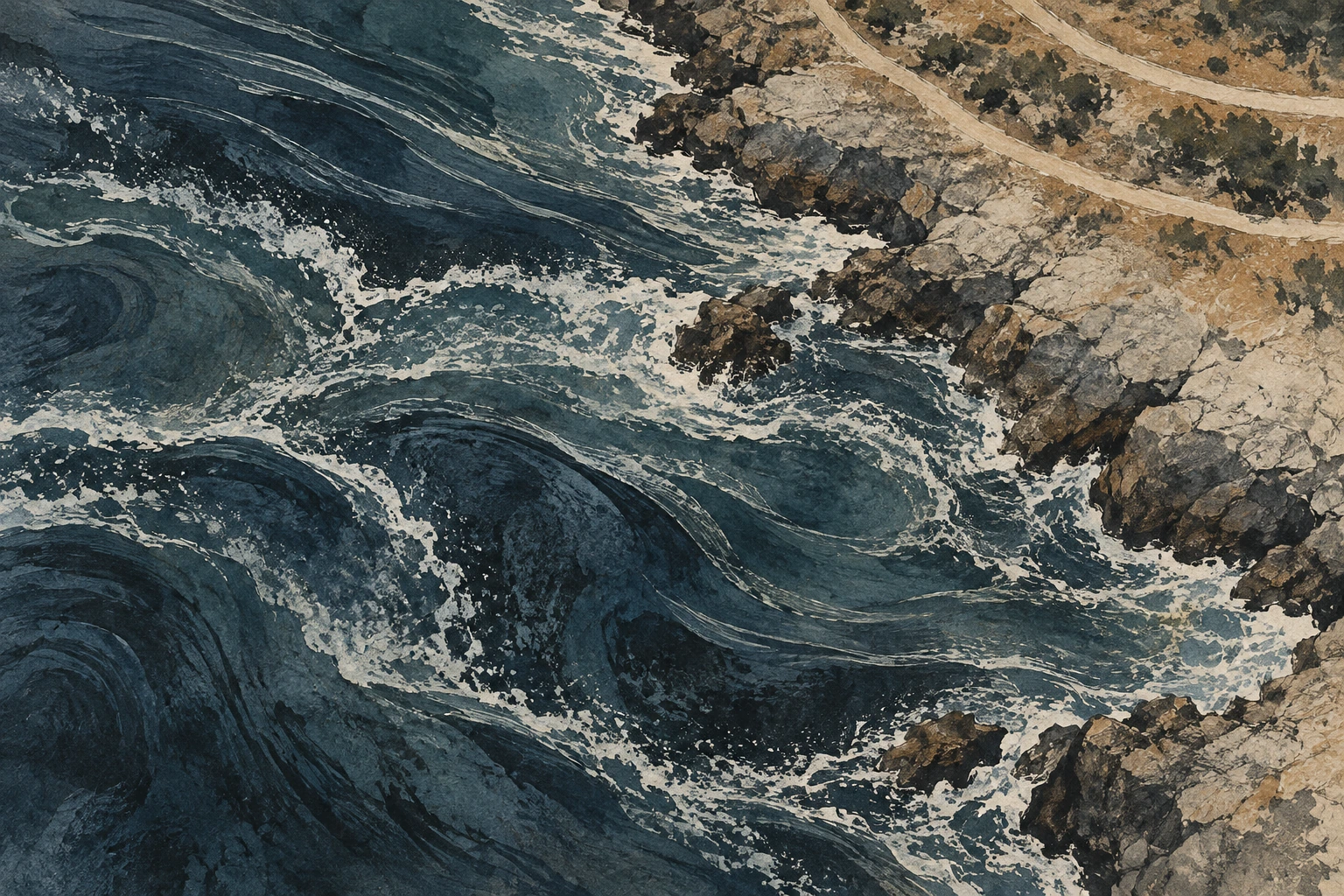
Criterion calls The Naked Island dialogue-free; the BFI describes it as having virtually no spoken dialogue. It would be misleading to turn either description into “silent film.” The BFI identifies waves and wind in the soundtrack, and both institutions draw attention to Hikaru Hayashi’s score. Haden Guest, writing for Criterion, hears a recurring musical theme alongside the cycle of work.
Speech could tell us what the family thinks about the next trip. Its near absence leaves a different kind of information in the foreground: the distance, the load and the fact that the journey has to be repeated. Music and environmental sound do not translate the family into a set of spoken explanations. They give duration and texture to action we might otherwise dismiss as background.
This is also a useful limit on interpretation. A nearly wordless film does not give us permission to invent private thoughts for its characters. We can describe what their work entails and how its recurrence is presented. We should be more cautious about declaring that each person accepts it, hates it or treats it as a noble duty.
The beautiful view has a cost
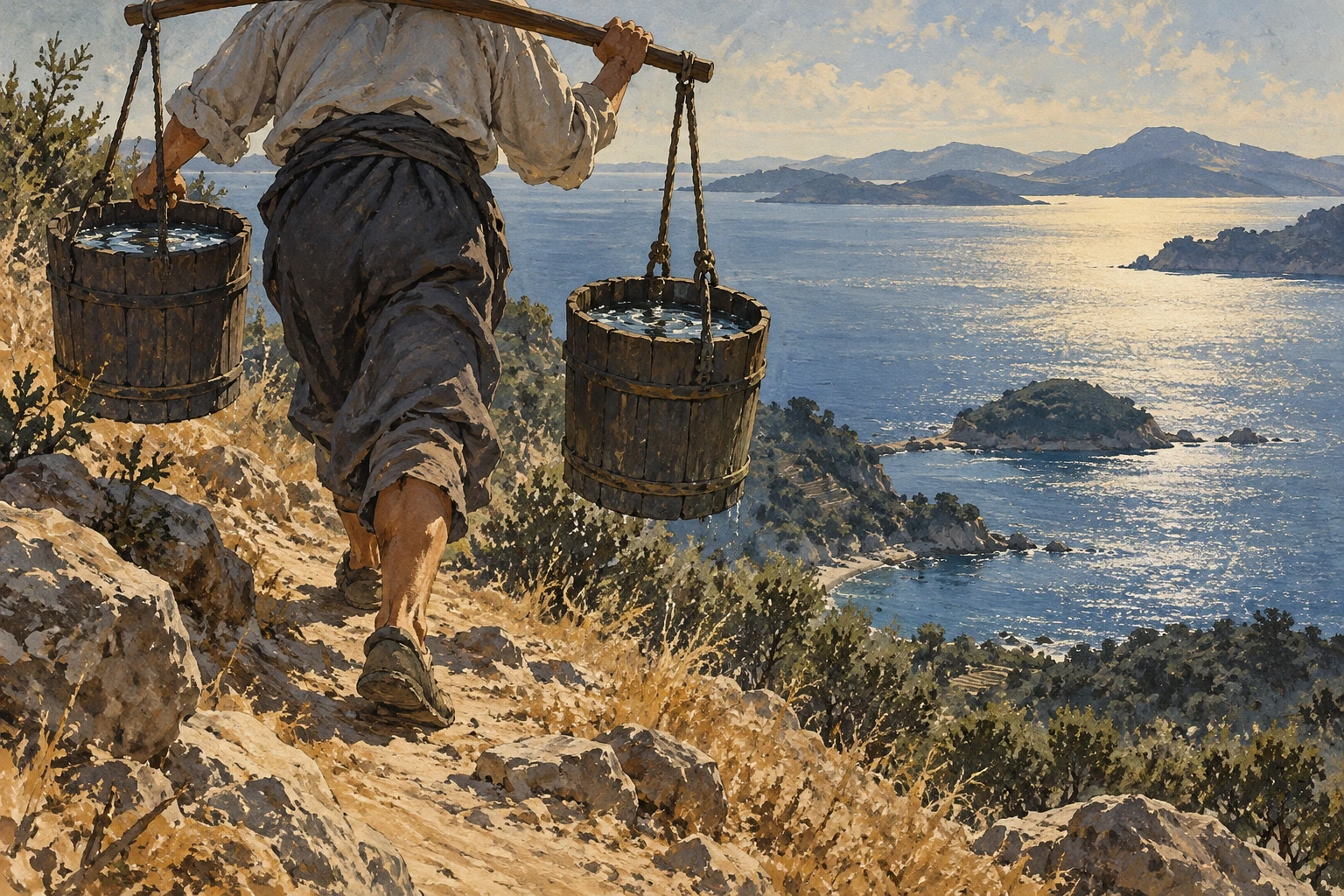
An island can look like a retreat when seen from a distance. This one has no freshwater source for the family. The BFI praises the film’s open vistas while also stressing the weight of full buckets on the climb. Both facts can occupy the same image in our reading: the scene can be beautiful, and the beauty does not carry anything uphill.
That tension is easy to lose in either direction. If we look only at the scenery, we may make the family’s work picturesque. If we look only at exertion, we miss why a film so attentive to difficult routine gives us an expansive place in which to see it. The water route connects the two scales. What is a small bucket within a wide view can be an enormous demand on the person responsible for moving it.
The film is not a transparent record of one actual household. Guest notes that Shindo worked with professional actors on an otherwise uninhabited island; Criterion describes a documentary-like style rather than calling the work a documentary. This lets us take the labor seriously without presenting the staged family as evidence for every island community or agricultural practice.
Watch where the effort moves
On a first viewing, try following one complete water journey without hurrying to extract a symbol from it. Where is the water before the trip? What carries it across the gap? Where does the demand shift from boat to body? When the crops receive it, what has been finished—and what remains to be done? These questions give the repeated action a structure we can notice. They do not require a claim that every cycle is filmed in precisely the same way.
The film’s near absence of dialogue makes this especially useful. Instead of waiting for a character to state the meaning of the work, we can observe what a basic need asks of them. Hayashi’s music and the island’s sounds keep that observation from becoming a mute diagram. The scenery keeps it from becoming only a list of hardships. The task binds sound, place and effort together.
There is a modest but lasting shift in perception here. Water does not become valuable because the film announces its importance. It becomes difficult to take for granted because we have followed what it takes to move it. The next time the family needs it, we know the route.
Sources and reading notes
- The Criterion Collection, The Naked Island film page. Film identity, family, cross-shore water trip, well, score and credited cast/crew.
- BFI, “10 great island films”. The hilltop irrigation route, landscape, wind/waves and limited dialogue.
- BFI, “10 great films with little or no dialogue”. Family of four, recurring water work and score.
- Haden Guest, “The Naked Island: The Silence of the Sea,” Criterion. An attributed critical account of repetition, music and the production’s staged nature. Historical and political readings there are Guest’s interpretations and are not asserted here as Shindo’s single intention.
- Criterion, “The Naked Island: Kaneto Shindo’s Daring Experiment”. Production context and the film’s nearly dialogue-free approach.
This essay is a close reading built from the cited distributor and film-institution descriptions. A particular restoration or full viewing edition is not claimed. The route analysis and viewing questions are Monocurator editorial interpretations; the accompanying images are original conceptual illustrations, not film stills or historical reconstructions.
For the next unexpected question, follow the Journal in your RSS reader.
On screen
Films discussed
- The Naked Island (1960) · Kaneto Shindō
Further reading
Read next in the Journal

Want a recommendation shaped around your evening? Ask Momo what to watch next →