What to expect
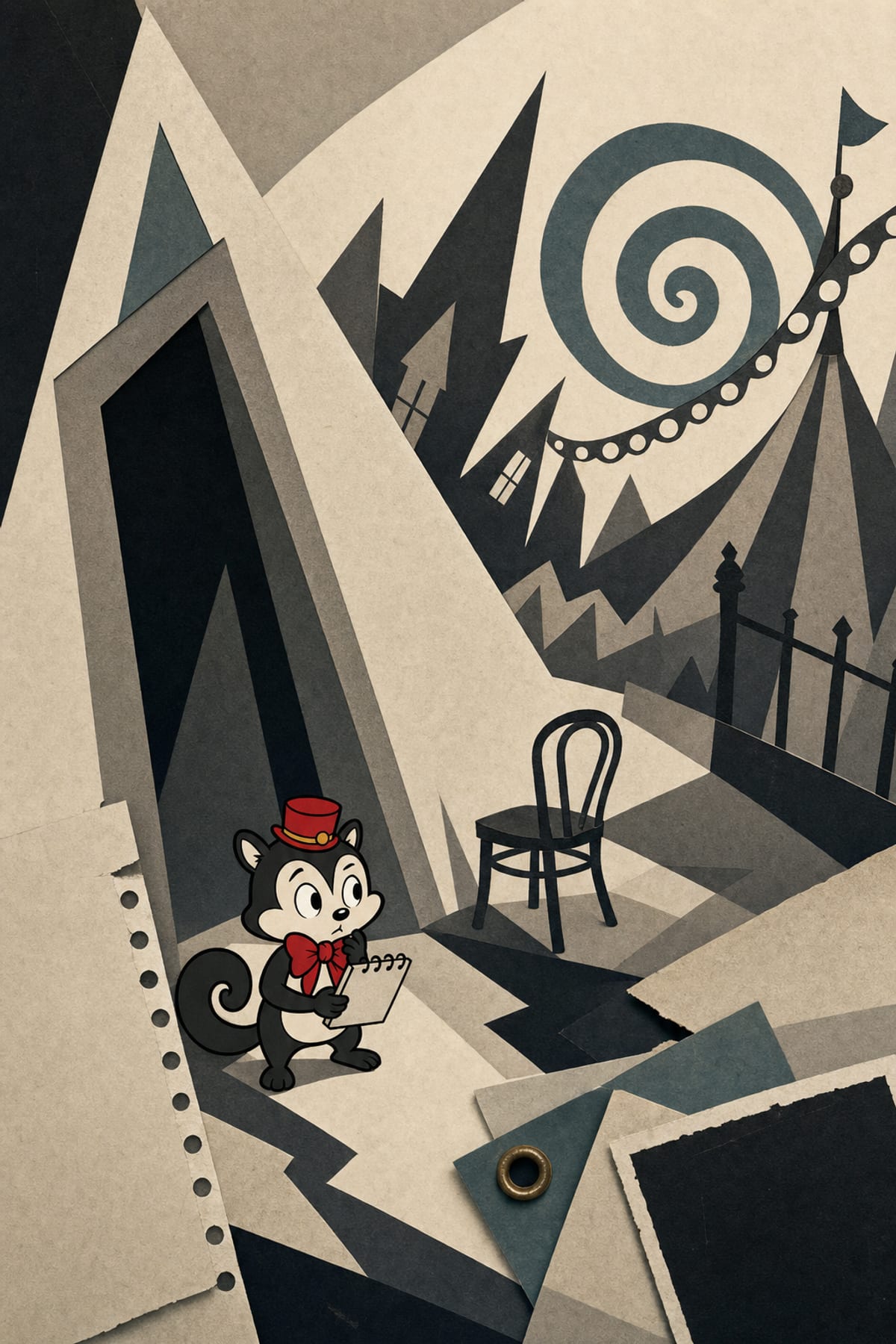
Robert Wiene stages Dostoevsky through angular architecture and psychological enclosure. The expressionist spaces do not illustrate every argument in the novel; they make Raskolnikov’s moral distortion physically difficult to escape.
How to ease in
The adaptation is dense and stylised. Hold onto Raskolnikov, the investigator Porfiry, and Sonya; read the sets as pressure rather than literal realism.
Heads-up
A student convinced of his exceptional right to act commits murder and discovers that an idea cannot contain the consequences.
Raskolnikov begins with a theory that places him above the room, but the sets keep folding him back into it. I watch abstraction become claustrophobia as soon as another person’s suffering enters the argument.
Open the note ↓
Raskolnikov begins with a theory that places him above the room, but the sets keep folding him back into it. I watch abstraction become claustrophobia as soon as another person’s suffering enters the argument.
— Momo

Credits & versions
Version map
Where to go next
Want a gentler, shorter, or stranger next film?
Ask Momo for something like this →
Momo is on shift. Visit Momo Cinema →