ページの操作項目を翻訳しています。作品名は目録の表記のままです。解説本文と出典の説明は英語です。

← 作品一覧に戻る

Courtroom drama

Anatomy of a Murder

上映時間
未確定

A murder trial becomes a contest over which version of motive, memory, and respectability a jury will accept.

購入用の版を探す ↓ 観る前に ↓

Amazon.comで検索 · 広告リンク。購入前に版と対応地域をご確認ください。

言語
English
MysteryTense はじめの一本に最適 · 親しみやすい Courtroom drama
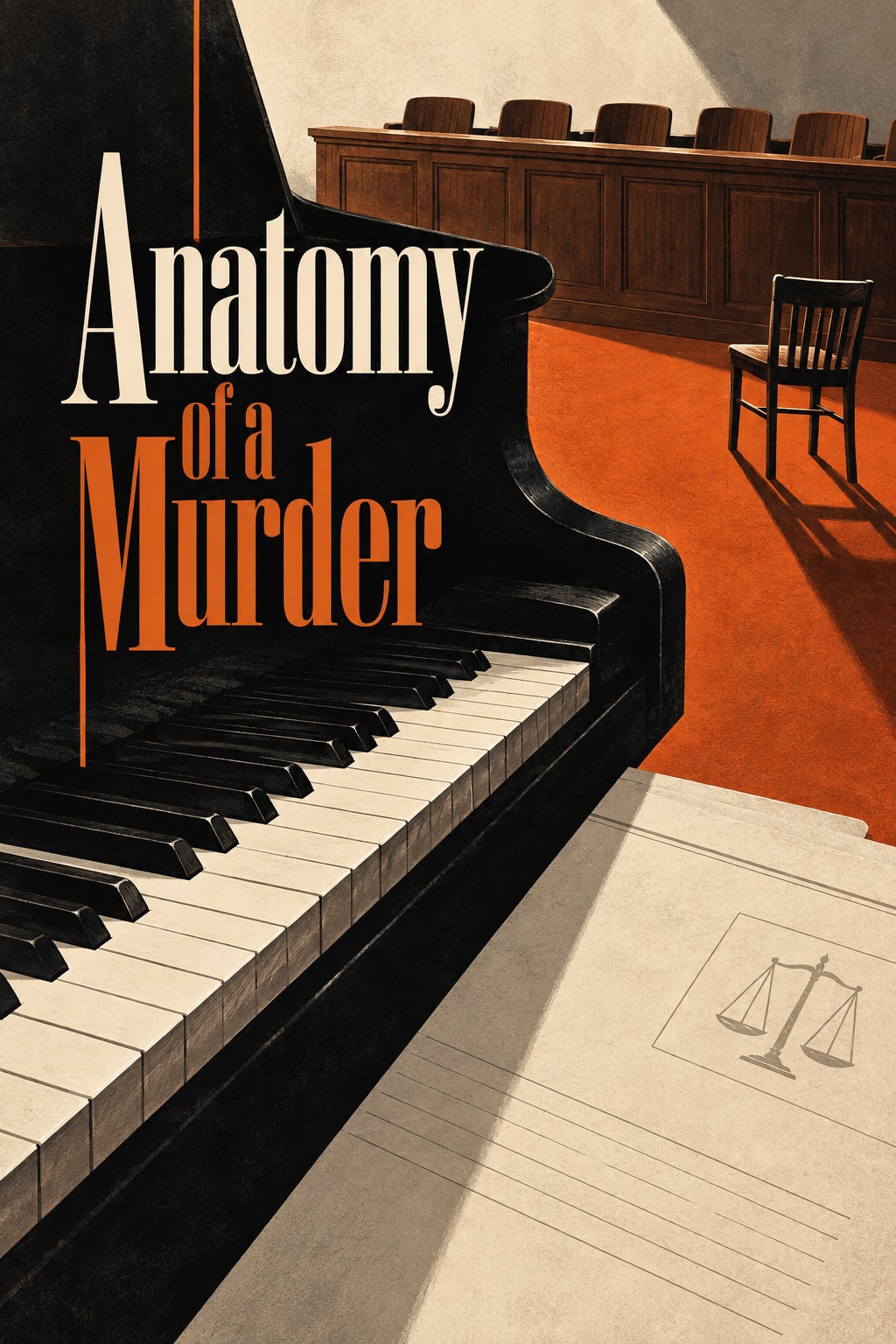
Original illustration for Anatomy of a Murder: A black grand-piano keyboard crosses a pale courtroom document whose angular edge becomes a jury bench; one empty wooden chair and a long shadow.

Image: Monocurator · source · Original Monocurator artwork

Anatomy of a Murder: what does the evidence establish?

Frederick Manion admits shooting Barney Quill. His lawyer, Paul Biegler, builds a defence around his state of mind after Laura, Manion’s wife, reports that Quill raped her. The courtroom has two connected questions to examine: what happened to Laura, and how Manion acted afterwards. AFI’s synopsis follows the development of that defence.

Paul Biegler
James Stewart’s defence lawyer, working with Parnell McCarthy.
Frederick and Laura Manion
Ben Gazzara’s defendant and Lee Remick’s witness to the reported assault.
Mary Pilant
Kathryn Grant’s hotel manager, connected to Quill’s workplace.

Criterion’s cast and story record

Keep the two questions separate as the witnesses speak. Evidence about one event can change the force of an argument about another without answering every part of it.

Mary’s evidence, the verdict and the final note Ending spoilers

What does Mary’s testimony change?

Mary finds Laura’s missing underwear in a laundry chute beside Quill’s room. Prosecutor Claude Dancer suggests a jealous mistress is seeking revenge; Mary reveals that Quill was her father. The revelation changes how her motive is understood. The underwear supports Laura’s account, while Manion’s state of mind remains a separate question.

What happens after the verdict?

The jury returns a not-guilty verdict. When Biegler and McCarthy arrive to collect Manion’s promised payment, the couple have left. Manion’s note borrows the defence’s phrase, irresistible impulse, to explain his departure. AFI records this final reversal.

A phrase used to explain the shooting becomes an excuse for avoiding the bill. Biegler has won his case, then finds his own language turned against him. The note gives us a fresh reason to distrust Manion; it supplies no new account of the night under examination.

Why does the ending feel unfinished?

Nick Pinkerton’s Criterion essay draws attention to Preminger’s missing climaxes: the closing speeches are skipped, and the Manions disappear. The courtroom result is followed by their empty place at the trailer park. Instead of a grateful reunion, the lawyers get a message. That small absence changes the feeling of everything their victory seemed to promise.

どんな作品か

Preminger’s patient courtroom staging lets ambiguity remain active. James Stewart’s relaxed manner never erases the strategic choices behind a defence built from language, performance, and incomplete knowledge.

無理なく楽しむために

The legal vocabulary is less important than the revisions. Notice when a fact becomes a story, and who benefits from choosing one word instead of another.

観る前の注意

簡単な補足(網羅的ではありません) Contains detailed discussion of rape, murder, gun violence, victim-blaming, and legal manipulation.
Momo's Note ネタバレを含む場合があります Momoって誰? → (英語のページが開きます)
ノートを開く ↓ ノートを閉じる ↑

I like that the courtroom never turns uncertainty into a tidy moral lesson. Everyone understands that naming an event is already part of the struggle over it.

— Momo

Momo thinking about this film

クレジットと版

作品情報の出典

次の一本へ

次はもっと穏やかな作品、短い作品、それとも風変わりな作品? 似た作品をMomoに相談する → (英語のページが開きます)
Momoはただいま勤務中。 Momo Cinemaへ → (英語のページが開きます)
作品一覧をさらに見る →