What to watch next
15 Classic Horror Movies: Choose Your Kind of Scare
Find a classic horror movie for tonight: compare 15 films by fear, time and graphic detail, from Frankenstein and Psycho to Halloween and The Thing.
Tonight’s choice
Find your kind of fear
Start with a mood and the time you have. The notes below help you decide what suits the evening.
Less graphic detail means more is left to suggestion. These films can still be frightening; check each film’s notes.
Three places to start, from 15 films.
No film in this selection meets all those choices. Change a preference or return to the starting picks.
Halloween
Patient stalking suspense on ordinary suburban streets.
Before choosing: Sustained stalking, violence and nudity.
Read why →Frankenstein
A short monster film with a vulnerable creature at its centre.
Before choosing: Child death and violence.
Read why →Cat People
Shadows and sound make an ordinary swimming pool feel unsafe.
Before choosing: Stalking and sexual anxiety.
Read why →
Start with Halloween for stalking suspense, Frankenstein for a short monster film, or The Innocents for ghosts that leave room for doubt (US viewers should plan ahead for a disc). If you want extravagant, revolting creature effects, choose The Thing. The best classic horror movie for tonight depends on what you want the fear to do.
These fifteen choices span 1922–1982, from silent shadows to Hammer’s red blood, folk horror in daylight and bodies that refuse to keep their shape. Some creep towards you; others scarcely let you catch your breath.
For an evening devoted to monochrome, our black-and-white horror guide goes further into painted nightmares, masks and suggestion. Here, colour classics receive equal space: take away the red from Suspiria and you take away part of its threat.
Compare the 15 classic horror movies
| What you want | Choose | Time to allow | Before choosing |
|---|---|---|---|
| A vampire like a spreading infection | Nosferatu (1922) | About 95 min | Silent; death and plague imagery |
| A monster with a vulnerable face | Frankenstein (1931) | 70 min | Child death and violence |
| Something moving just beyond sight | Cat People (1942) | 73 min | Stalking and sexual anxiety |
| A vivid Gothic adventure | Dracula (1958) | 82 min | Bloody staking and sexual menace |
| A thriller that keeps redirecting you | Psycho (1960) | 108–109 min | Knife violence and brief nudity |
| A ghost story to argue about afterwards | The Innocents (1961) | 100 min | Children in distress; sexual undertones |
| Strangers trapped in a collapsing refuge | Night of the Living Dead (1968) | 96 min | Flesh-eating, violence and bleakness |
| Domestic suspicion that keeps tightening | Rosemary’s Baby (1968) | 136 min | Sexual assault and pregnancy distress |
| Possession with physical force | The Exorcist (1973) | 122 min | Graphic medical and sexual imagery; a child’s suffering |
| A welcoming place with disturbing customs | The Wicker Man (1973) | 93 min, Final Cut | Nudity and ritual violence |
| A relentless ordeal | The Texas Chain Saw Massacre (1974) | 83 min | Prolonged terror and cannibalism |
| Suspense with an adventure at its centre | Jaws (1975) | 124 min | Bloody shark attacks, including on a child |
| Colour and sound that overwhelm | Suspiria (1977) | 98 min | Graphic killings and loud, oppressive sound |
| Ordinary streets made frightening | Halloween (1978) | 91 min | Sustained stalking, violence and nudity |
| Paranoia and extreme creature effects | The Thing (1982) | 109 min | Graphic bodily transformation and harm to dogs |
Times follow the catalogue records and editions cited below. Nosferatu varies with restoration and projection speed; The Wicker Man figure is for the Final Cut; The Exorcist figure is for the original theatrical version. The brief content notes highlight differences that can change a viewing choice.
Where to watch the starting picks
US listings checked 16 September 2026. Subscription and rental are different options; availability can change. Match the year to avoid remakes.
| Film | US viewing route |
|---|---|
| Halloween (1978) | Shudder or AMC+ subscription; digital rentals also listed. Check US options. |
| Frankenstein (1931) | Peacock Premium or Premium Plus; digital rentals also listed. Peacock · US options. |
| The Thing (1982) | Prime Video subscription or a digital rental. Apple TV Store rental · US options. |
| The Innocents (1961) | No digital option listed by JustWatch at this check. Look for a disc, or choose another film for tonight. Check availability. |
For the silent Nosferatu, use our copy and music guide. Elsewhere in the world, change the country on the availability listing before choosing a service.
Nosferatu (1922): a vampire who changes the landscape
Count Orlok looks as though he has brought the wrong kind of life into every room. F. W. Murnau gives him pointed ears, stiff movements and a silhouette that can make a staircase seem contaminated. But the vampire’s journey matters as much as his appearance: roads, water and buildings become routes along which danger travels. [1]
Choose this for patient, uncanny atmosphere. Its terror accumulates through arrivals and absences, rather than a regular delivery of shocks. This is the silent Murnau film; the later Nosferatu adaptations are separate films. Our restoration guide helps with tinting, music and copies. Next: Dracula, for a much more vigorous vampire encounter.
Frankenstein (1931): the monster you may want to protect
James Whale’s laboratory has enough electrical equipment to promise a great deal of trouble. The surprise is how much Boris Karloff can do with a hesitant hand or a confused face. Henry Frankenstein succeeds in creating life; understanding the creature is another matter. [2]
At seventy minutes, this is an inviting first encounter with classic monsters. Watch the creature respond to light and to the people surrounding him: the fearful reactions run in both directions. Next: Night of the Living Dead, to see how sharply the human response to monsters can harden.
Cat People (1942): listen before you look
Irena fears that desire or jealousy may turn her into a panther. Jacques Tourneur makes that fear inhabit ordinary New York spaces. In the swimming-pool sequence, reflected water, darkness and a growl make the room difficult to measure. You know where the swimmer is; locating everything else becomes your job. [3]
This is the shortest choice for viewers drawn to suggestion. Its central anxiety concerns intimacy, so the quietness has an emotional charge as well as a visual one. Choose it over Dracula when the partly concealed threat interests you more than a direct confrontation. Next: The Innocents, which gives you even more space in which to search.
Dracula (1958): Gothic horror with blood in its cheeks
Christopher Lee’s Count can move from immaculate host to physical threat with startling speed. Peter Cushing’s Van Helsing meets him with concentration and urgency. Terence Fisher makes their conflict brisk, colourful and bodily: the red blood belongs to the drama, alongside the handsome rooms and careful manners. [4]
Released in the United States as Horror of Dracula, this is Hammer’s 1958 film. Choose it for a compact vampire adventure whose danger can also seem alluring. It is a useful starting point if silent-film pacing feels like too much of a leap tonight. Next: Nosferatu, where the vampire seems closer to a pestilence than a dangerous gentleman.
Psycho (1960): follow the person, watch the room
Alfred Hitchcock begins with Marion Crane’s practical problems and a decision she might still undo. The road leads to a motel, where a polite conversation and the arrangement of a room become as absorbing as a chase. Even knowing the film’s famous images leaves a great deal to discover in how it directs sympathy and attention. [5]
Choose Psycho when you want narrative momentum and shifts of expectation. It rewards attention to small transactions: who asks a question, who evades one, who seems in control. Next: Halloween, or follow our five films to watch after Psycho for stranger architecture and other kinds of watching.
The Innocents (1961): a haunting with room for doubt
A governess enters a beautiful country house and becomes convinced that its two children are caught in something terrible. Jack Clayton and cinematographer Freddie Francis give Deborah Kerr an image wide enough to contain more than she can comfortably explain. Faces appear at a distance; sound makes the house feel less empty than it looks. [6]
Choose it for a ghost story in which conviction itself becomes troubling. Watching the edges of the frame can be as demanding as watching the actor at its centre. Its restraint does not soften its concern with children, desire and distress. Next: Rosemary’s Baby, another film that makes confidence in other people difficult to sustain.
Night of the Living Dead (1968): the trouble inside the barricade
George A. Romero traps a group of strangers in a farmhouse while the dead gather outside. Doors, windows and the cellar are simple enough to understand immediately. The people disagree about how to use them, making survival a struggle over authority as well as strength. [7]
This is the black-and-white choice for an abrasive, gory evening. The rough immediacy makes the house feel like somewhere people are actually trying to defend, rather than a picturesque horror location. Choose it when you want pressure, argument and little reassurance. Next: The Thing, which makes identifying the enemy inside the refuge a further problem.
Rosemary's Baby (1968): when concern becomes control
Rosemary’s neighbours are wonderfully attentive. They offer advice, introduce people and take an interest in her pregnancy. Roman Polanski’s adaptation of Ira Levin’s novel lets these gestures accumulate until friendliness seems to occupy every available inch of her life. Mia Farrow makes the effort of being believed painfully tangible. [8]
Allow a longer evening for this one. The pleasure is in the tightening social web and the little incursions into Rosemary’s independence. Pregnancy distress and sexual assault are central to the horror, rather than incidental shocks. Next: The Wicker Man, where another apparently coherent community makes an outsider struggle to understand its rules.
The Exorcist (1973): the body before the explanation
William Friedkin spends time with a mother’s bewilderment and doctors’ attempts to understand her daughter’s condition. The medical procedures have a harsh physical presence of their own. By the time priests enter the story, the question of what is happening has already made the familiar institutions look inadequate. [9]
Choose this for an intense possession film that brings the supernatural into a recognisable, bodily world. Its patience should not be confused with gentleness: graphic imagery, sexual obscenity and a child’s suffering make it a demanding evening. Start with the 122-minute theatrical version. Next: Rosemary’s Baby, for horror working through another kind of bodily uncertainty and dependence.
The Wicker Man (1973): a mystery in broad daylight
A police sergeant investigating a missing girl arrives on a Scottish island whose customs clash with his beliefs. Robin Hardy fills the place with songs, rituals and people who do not react as the visitor expects. The brightness becomes disorientating: it is difficult to identify the danger when everyone else seems to be enjoying the day. [10]
Choose this for folk horror, an investigative thread and the unease of being socially outnumbered. The songs are part of how the community presents itself. The 93-minute Final Cut is our starting choice among its different edits. Next: Rosemary’s Baby, taking communal pressure from an island into an apartment building.
The Texas Chain Saw Massacre (1974): an evening with no breathing room
Tobe Hooper turns a trip through rural Texas into an encounter with a cannibal family. The heat, noise and oppressive rooms give the terror a physical density. This is a film that can make a space look unbearable before you have worked out all the things in it. [11]
Choose it for sustained intensity. There is less explicit bloody detail than its reputation may suggest, but the attacks and prolonged terror are severe. Calling it “not very gory” tells only a small part of the story. Next: Halloween, to compare this exhausting sensory assault with suspense organised around patient watching.
Jaws (1975): fear with room for camaraderie
Steven Spielberg begins with a seaside community trying to contain a threat that will not respect its holiday economy. Later, a police chief, a marine biologist and a shark hunter take to the water together. Their differing skills and temperaments give the film an adventure’s changing rhythms. [12]
Choose it when you want the group dynamic to matter as much as the creature. It can make you laugh between stretches of dread, without making the shark attacks mild. The open sea is a beautifully simple trap: plenty of space, very few places to stand. Next: The Thing, for another isolated group and a creature far harder to recognise.
Suspiria (1977): enter the nightmare through its colours
A young dancer arrives at a German academy whose imposing interiors promise very little comfort. Dario Argento’s film surrounds her with forceful reds and blues, strange architectural detail and Goblin’s insistent music. The rooms seem to have decided how she should feel before she enters them. [13]
Choose the 1977 Suspiria for sensory excess and fairy-tale menace. Its violent set pieces are graphic, and its sound can feel deliberately inescapable. Following the nightmare’s visual logic is more rewarding than expecting the tidy workings of a detective story. Next: The Innocents, to see an equally unsettling building organised through near-opposite visual choices.
Halloween (1978): the familiar street becomes a hiding place
John Carpenter gives Michael Myers suburban pavements, hedges and doorways in which to appear. Laurie Strode continues an ordinary day while the film teaches you to inspect the spaces around her. A figure does not have to do much once you have begun looking for him in every shot. [14]
This is our first pick for classic stalking suspense. The 91-minute film builds through watching, disappearance and pursuit; its violence and nudity still matter when choosing company for the evening. Start with the 1978 original, which needs no franchise preparation. Next: Psycho for suspense that changes direction, or The Thing for Carpenter at his most bodily grotesque.
The Thing (1982): whom can you stand beside?
At an Antarctic research station, an alien can imitate the living things it absorbs. John Carpenter combines that premise with grotesque transformations, then puts people in rooms where they cannot establish who is still themselves. Even standing close enough to cooperate becomes a risk. [15]
Choose it for paranoia with spectacular physical consequences. The creature effects are central to the experience, including distressing scenes involving dogs; this is not the choice for a merely spooky background evening. The fear continues between eruptions, when familiar faces supply almost no reassurance. Next: Night of the Living Dead, whose human conflicts can make equally straightforward rooms impossible to share.
Three ways into classic horror
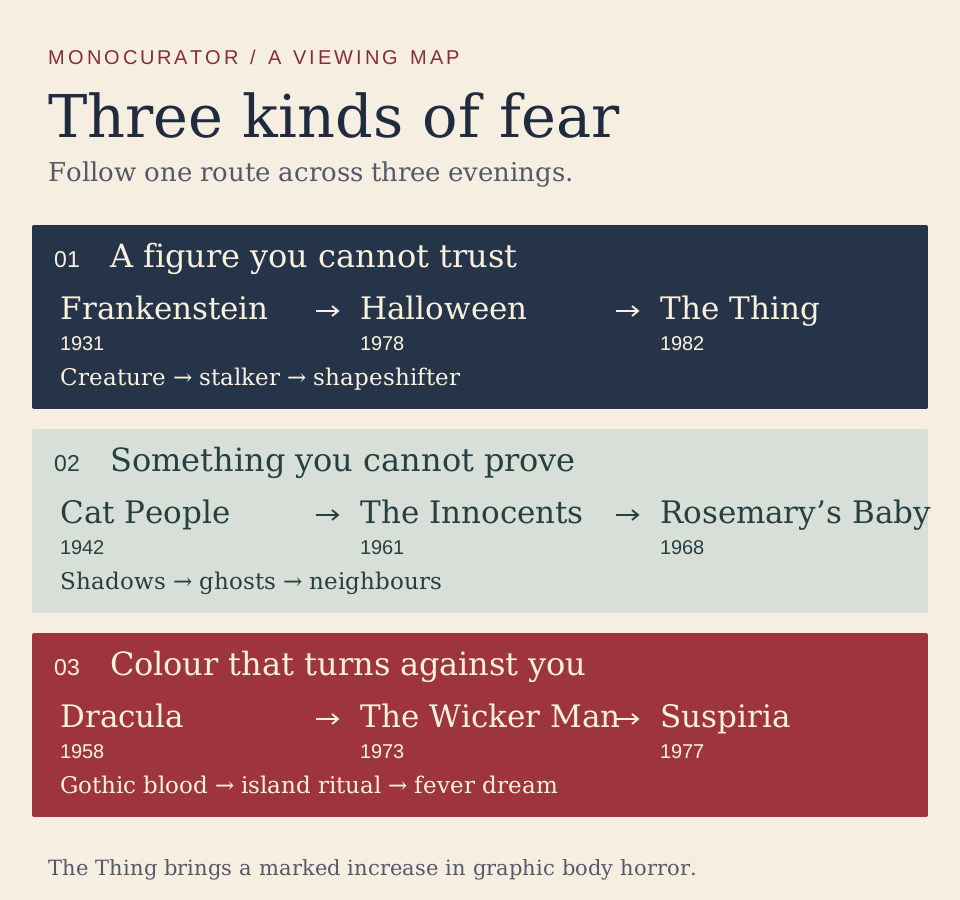
For a first three-film run: Frankenstein → Halloween → The Thing. Begin with a creature you can study, move to a figure you keep trying to locate, then confront one whose identity cannot be trusted. The third film is a substantial increase in graphic bodily horror.
For atmosphere and uncertainty: Cat People → The Innocents → Rosemary’s Baby. Each asks you to decide what an anxious person has correctly understood. Make time between them; this is a route through three different kinds of unease, rather than a single long marathon.
For a colourful October weekend: Dracula on Friday, The Wicker Man on Saturday and Suspiria on Sunday. You move from a confrontation with a recognisable monster to a community’s customs, then to a building that feels like a fever. Gothic colour does not always need a dark night.
Momo’s note: An empty corner in a horror film is an excellent place to put nothing. It is also an excellent place to make an audience do all the work. Cat People and Halloween could charge rent for theirs.
Sources and edition notes
Film facts checked on 16 September 2026. Runtime references describe the cited catalogue or presentation; selection, viewing routes and comparisons are Monocurator’s editorial judgement. Current viewing availability is handled separately from these film references.
- BFI: 10 great silent horror films; BFI IMAX: Nosferatu: A Symphony of Horror, 1922, 95-minute presentation. See our linked restoration guide for copy-specific music and tinting.
- AFI Catalog: Frankenstein, 1931, 70 minutes, black and white; credits and synopsis.
- Criterion: Cat People, 1942, 73 minutes, black and white; Geoffrey O'Brien: Cat People: Darkness Betrayed, swimming-pool sound and shadows.
- BFI: Dracula, 1958, 82 minutes; BFI: 1 great horror film per decade, colour, performers and US title.
- AFI Catalog: Psycho, 1960, 108–109 minutes, black and white; synopsis and credits.
- Criterion: The Innocents, 1961, 100 minutes, black and white; BBFC: The Innocents, content detail.
- Criterion: Night of the Living Dead, 1968, 96 minutes, black and white; restoration and synopsis.
- Criterion: Rosemary's Baby, 1968, 136-minute presentation in colour; AFI Catalog, synopsis and a 137-minute release record.
- BFI Player: The Exorcist, 1973, 122-minute presentation; medical scenes and possession; Warner Bros. Japan: The Exorcist, disc specifications distinguish the approximately 122-minute original theatrical version from the 132-minute director's cut.
- Sight and Sound: The Wicker Man reviewed in 1974, with a 2023 edition note distinguishing the 88-minute theatrical cut from the 93-minute Final Cut.
- BFI Player: The Texas Chain Saw Massacre, 1974, 83 minutes; BBFC case study, limited bloody detail and sustained terror.
- Universal Pictures at Home: Jaws, 1975, 124 minutes; synopsis and credits.
- AFI Silver: Suspiria (1977), 98 minutes, colour, music and setting; Synapse Films: Suspiria, 98-minute restored presentation.
- BFI: Halloween, 1978, 91 minutes; Sight and Sound's 1979 review, framing and anticipation; BBFC case study, violence, threat and nudity.
- BFI: The Thing, 1982, 109 minutes; AFI Catalog, colour and plot details, including the dogs.
On screen
Films discussed
- Nosferatu (1922) · F. W. Murnau
- Frankenstein (1931) · James Whale
- Cat People (1942) · Jacques Tourneur
- Dracula (1958) · Terence Fisher
- Psycho (1960) · Alfred Hitchcock
- The Innocents (1961) · Jack Clayton
- Night of the Living Dead (1968) · George A. Romero
- Rosemary’s Baby (1968) · Roman Polanski
- The Exorcist (1973) · William Friedkin
- The Wicker Man (1973) · Robin Hardy
- The Texas Chain Saw Massacre (1974) · Tobe Hooper
- Jaws (1975) · Steven Spielberg
- Suspiria (1977) · Dario Argento
- Halloween (1978) · John Carpenter
- The Thing (1982) · John Carpenter
Continue exploring on Monocurator
Further reading
Read next in the Journal
Want a recommendation shaped around your evening? Ask Momo what to watch next →