What to watch next
What to Watch After Psycho: 5 Classic Movies
Start with M for sound and surveillance, or choose The Night of the Hunter, Caligari, Touch of Evil, or Detour by what stayed with you.
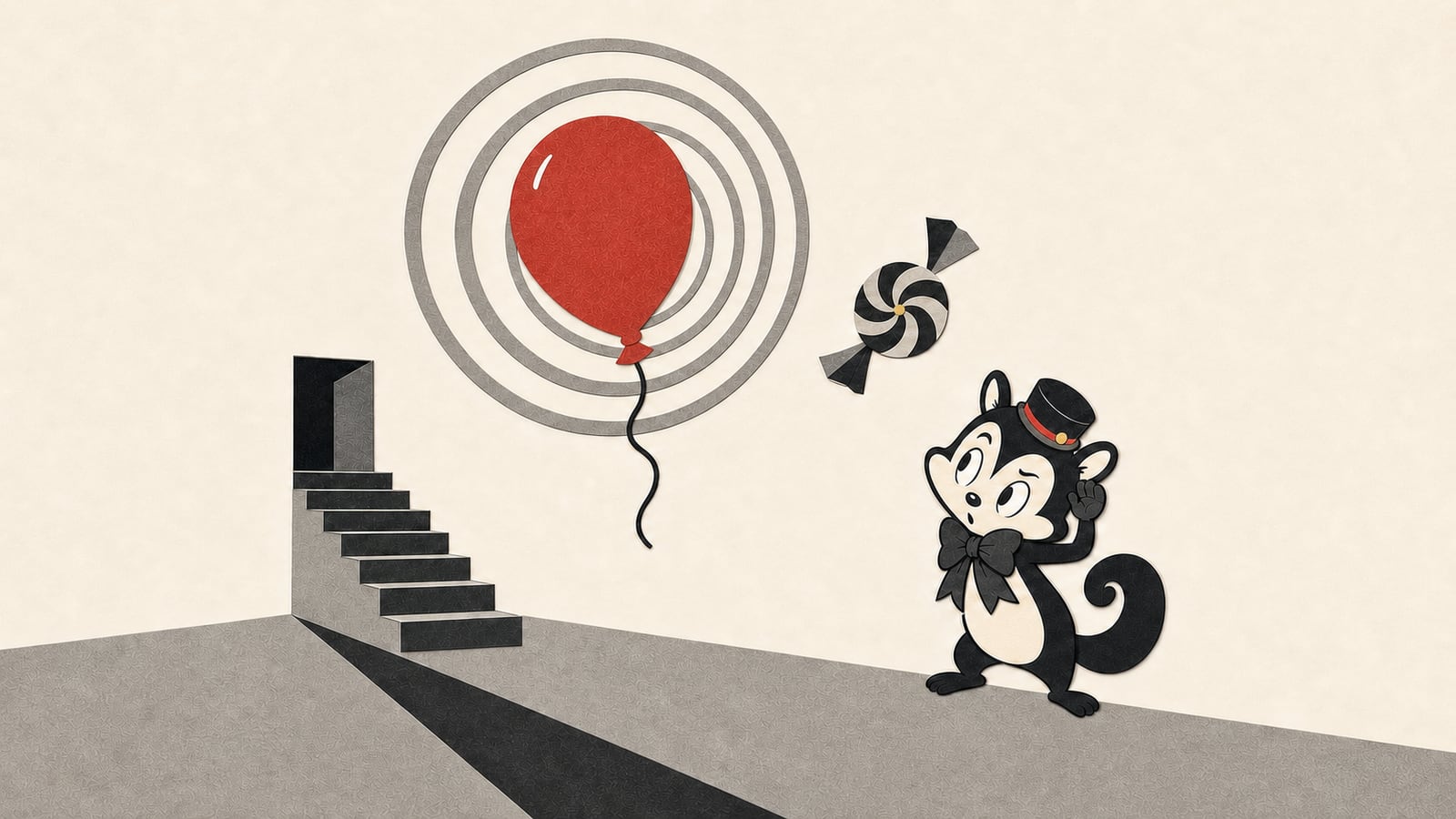
What makes Psycho linger is not only the shock everyone knows. It is the way the film makes ordinary rooms feel observable, turns curiosity into danger, and keeps shifting our confidence about whose story we are following.
The shortest answer: watch M next if sound, surveillance, and divided attention made Psycho unsettling. If another part stayed with you, use the five choices below to continue that specific feeling rather than simply choosing another film with a similar plot.
The five films below do not reproduce Psycho. Each continues one part of its unease: offscreen sound, predatory watching, unstable design, corrupt authority, or a narrator who cannot be trusted with his own life.
For a wider horror night, our eight black-and-white horror movies range from classic monsters to ghost stories and a zombie siege.
Choose by the part of Psycho you loved
- Sound, silence, and surveillance: M
- A home turned into a nightmare: The Night of the Hunter
- Architecture as psychology: The Cabinet of Dr. Caligari
- A camera that creates pressure: Touch of Evil
- An unsafe narrator and no spare time: Detour
The right follow-up is not the film with the most similar plot. It is the one that continues the specific unease you want to feel again.
1. M — if sound made the danger worse
In M (1931), a city searches for a child murderer while police, criminals, crowds, and the hunted man all move through overlapping systems of surveillance. Fritz Lang treats sound and silence as active parts of the story. A repeated tune or an offscreen noise can tell you where danger is before the camera does.
That makes it a strong next film after Psycho, where plumbing, rain, music, and quiet rooms alter what an image means. Both films also make watching morally uncomfortable. The viewer is given information, denied certainty, and moved among positions that do not feel safe.
How to ease in: follow the parallel searches by the police and the criminal underworld. You do not need to retain every official or underworld figure. Listen whenever the image appears to withhold the important action.
Heads-up: the story centers on child murder and abduction and includes mob violence, vigilantism, and an intense confrontation about criminal responsibility.
2. The Night of the Hunter — if home no longer felt safe
The Night of the Hunter (1955) is part crime story, part fairy tale, part religious nightmare. Robert Mitchum’s false preacher turns hymns and scripture into tools of pursuit, while houses, riverbanks, and night skies take on the stark clarity of a child’s fear.
Where Psycho contaminates a motel and a private house, Charles Laughton’s film asks how danger appears when adults fail to recognize it and children do. Its stylization is not a detour from fear; it is how the film enters a child’s unstable world.
How to ease in: accept the abrupt changes between menace, humor, expressionist design, and storybook calm. Listen for the repeated hymn. Depending on who carries it, the same melody can signal threat or resistance.
Heads-up: child endangerment, murder, domestic abuse, religious manipulation, corpses, and sustained pursuit.
3. The Cabinet of Dr. Caligari — if the room itself looked wrong
The Cabinet of Dr. Caligari (1920) makes anxiety part of the scenery. Streets bend, shadows are painted, doors seem to resist the people using them, and no path offers a stable route to safety.
It is a useful companion to Psycho because it exposes what a later film often conceals. Hitchcock makes familiar architecture subtly wrong; Robert Wiene begins with a world that openly announces its distortion. Both ask the viewer to read rooms as states of mind.
How to ease in: approach it as a nightmare staged in a small theatre rather than naturalistic horror. The acting and scenery belong to the same exaggerated language. Watch doors, windows, and paths before worrying about the framing story.
Heads-up: murder, abduction, mind control, confinement, and dated depictions of mental illness.
4. Touch of Evil — if the camera made you complicit
Touch of Evil (1958) opens by binding a bomb, a crowded border, a car, and several crossing lives into one expanding field of suspense. From there, wide lenses, deep focus, abrupt angles, and layered sound make the town feel contaminated by the investigation passing through it.
Like Psycho, it guides attention so forcefully that the act of looking becomes part of the pressure. Orson Welles’s corrupt detective also shifts the threat away from an isolated criminal and toward authority willing to manufacture its own truth.
How to ease in: use the 111-minute reconstructed version if possible. Anchor yourself in Vargas’s investigation of Quinlan and Susan Vargas’s growing isolation. The border geography is allowed to feel unstable.
If version labels are holding up the choice, compare the theatrical, preview, and reconstructed cuts. The version guide explains why the 1998 reconstruction is the clearest first route.
Heads-up: murder, corruption, drugging, sexual threat, kidnapping, racist casting and stereotypes, violence, and substance misuse.
5. Detour — if the voice telling the story felt unsafe
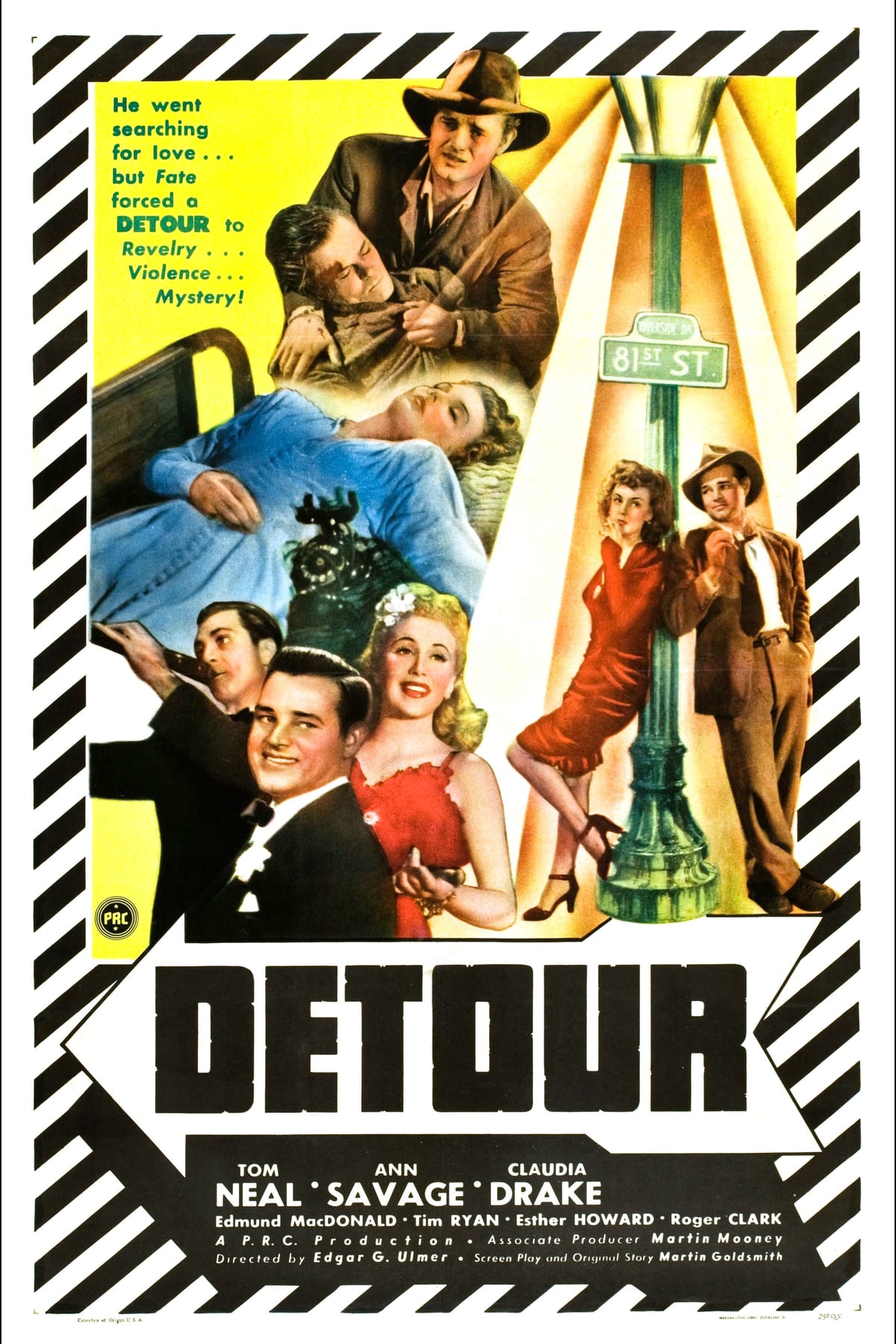
Detour (1945) runs only 68 minutes. A pianist recounts the road, rooms, accidents, and choices that left him trapped, but his explanations never quite make the account feel secure. Every decision is described as something fate did to him.
The scale is tiny compared with Psycho: a road, a few anonymous spaces, two people locked in a worsening story. That smallness becomes the atmosphere. Rough seams and rear-projected roads feel less like production limitations than a bad memory being repeated until the speaker believes it.
How to ease in: hear the narration as testimony, not truth. Notice when Al explains too much, removes himself from a choice, or uses fate to close a gap in his own story.
Heads-up: coercion, threats, violence between partners, accidental death, and a bleak fatalistic tone.
For the baseline before choosing another film, return to the Psycho film guide. If Touch of Evil or Detour is your route, If you only watch one film noir continues through a short ordered path rather than another long list.
Continue exploring on Monocurator
Want a recommendation shaped around your evening? Ask Momo what to watch next →