See Films Differently Momo Notices
Do I Like It, or Is It Just the Best Thing Around?
How a small selection, expensive neighbours and familiarity can affect a choice, with a camera experiment and the uniform in The Last Laugh.

Imagine choosing a chair from a shop with three on display. One is too low, another presses against your back, and the third feels comfortable enough. You buy the third.
A month later, in a larger shop, you find several chairs you would rather sit in. Was your first choice a mistake?
Possibly. Or it was a sensible choice from a small selection, and “my favourite” was doing more work than the evidence allowed. Winning a contest with two awkward chairs is a fairly modest achievement. I wouldn’t order a commemorative plaque.
The useful question is what changed: the available options, the comparison that made something attractive, or your familiarity with it. Those are three different possibilities.
Best among these
Being the best available option gives something a position in a set. It tells us less about how much we enjoy it.
In the imagined shop, the third chair could genuinely suit you. Discovering an even better one needn’t erase that comfort. Equally, if all three hurt your back, choosing the least uncomfortable would hardly make it a favourite.
Try describing the thing without mentioning its neighbours. The seat supports you. The height fits your desk. You like the curved arms. Those observations give your choice something to stand on beyond “the others were worse”.
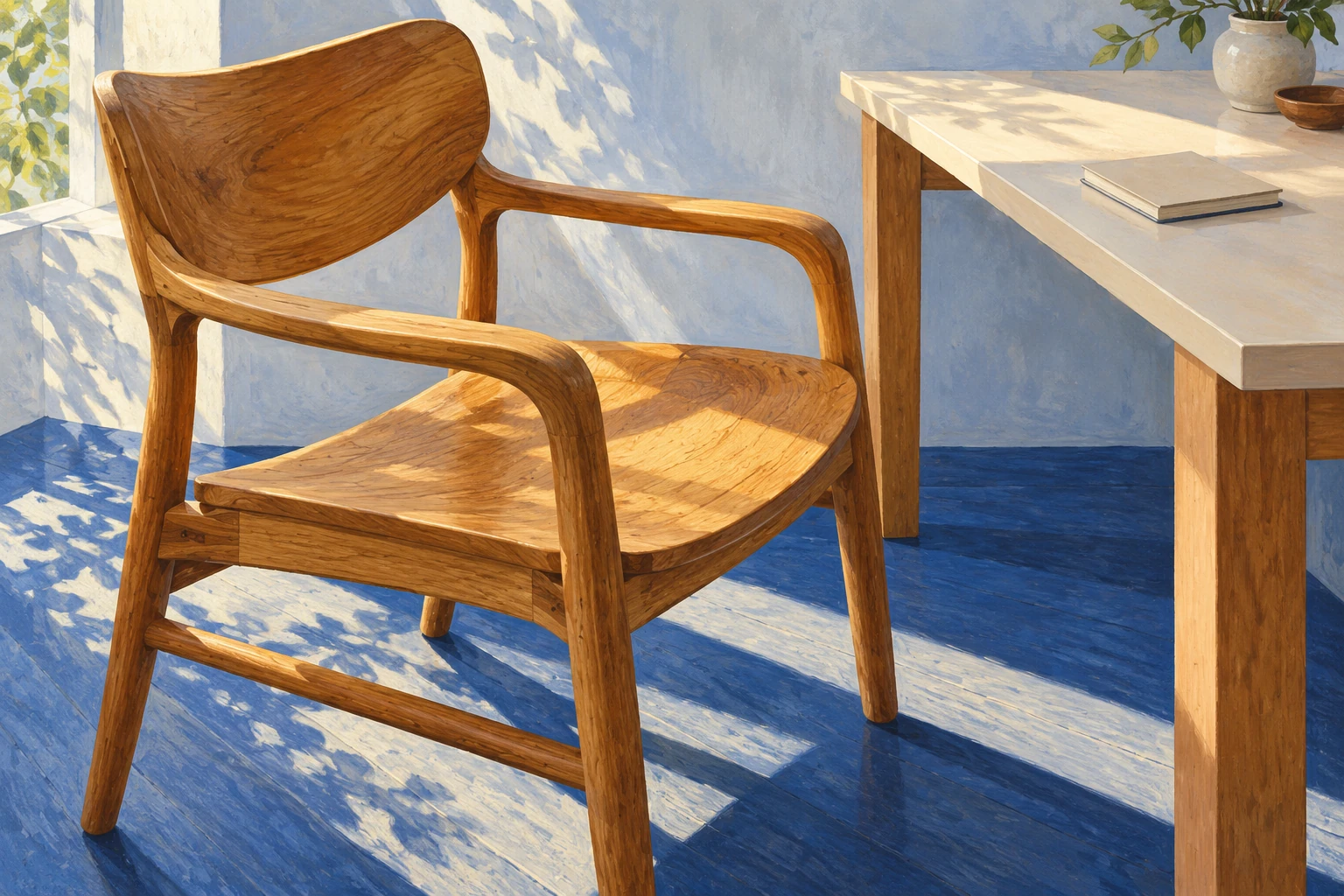
They needn’t produce a universal ranking. A chair that works at your desk may be poor for reading by a low window. The purpose matters. Expanding the selection can also reveal features you hadn’t considered; that is learning, rather than evidence that your earlier pleasure was counterfeit.
The neighbours can change the verdict
There is a further complication. Other options can affect which of the existing ones we choose.
Contrast concerns how neighbouring examples affect a judgement. In an imagined display of unusually ornate chairs, a plain one might seem dull; surrounded by clumsy designs, it might look elegant. This changes the impression of the chair, beyond establishing its rank.
In Itamar Simonson and Amos Tversky’s 1992 research, one questionnaire comparison offered two Minolta cameras priced at $169.99 and $239.99. Each attracted 50% of choices. In another group’s version, a $469.99 camera was added: the original cameras received 22% and 57%, while the newcomer received 21%. The $239.99 model had become the middle option. [1]
These were choices made by different groups, using catalogue descriptions and pictures. The figures describe those responses, rather than proving that each individual changed their mind or that photographers everywhere prefer the middle price. They illustrate the authors’ account of a compromise effect: an option can gain appeal when it sits between alternatives. [1]
That differs from discovering a chair with a feature you need. Here the original products remained in the choice set; the new neighbour changed the arrangement around them.
My practical response would be to separate two questions. Does this camera offer a feature I will use? Does its price chiefly look reasonable beside the most expensive one? Both comparisons may help, but an expensive neighbour is doing a suspicious amount of work if I cannot name the useful feature.
Familiar is another kind of advantage
Suppose you recognise one design because you have seen it repeatedly. That is a different history again.
Robert Zajonc’s 1965 technical report describes experiments with unfamiliar Chinese characters shown at different frequencies. Participants subsequently guessed how favourable their meanings were on a good–bad scale; more frequently shown characters generally received more favourable ratings. That particular task concerned guessed meaning, rather than how much somebody enjoyed a chair. [2]
Later evidence also resists a simple “more often means better” rule. A 2017 meta-analysis reports that exposure effects, across its studies, followed an average pattern that rose and then fell; results varied with the conditions and material. [3]
So I would keep familiarity separate from the size of the selection and the position of an option within it. Seeing a design often does not mean there were few alternatives. Choosing the middle-priced camera does not establish an exposure effect. One pleasing purchase gives us very little reason to diagnose either.
And familiarity needn’t be a fault. Knowing where a camera’s controls are can be a practical benefit. The useful distinction is whether you are enjoying that benefit, responding to repeated exposure, or simply assuming that recognition is a recommendation.
Momo takes the uniform seriously
Now, a film. F. W. Murnau’s black-and-white The Last Laugh (1924) gives a man’s surroundings a particularly merciless say in his value. Emil Jannings plays a hotel doorman whose uniform is a source of pride. When he is demoted to work in the hotel’s toilets, he secretly wears his former uniform to his niece’s wedding. [4]
The coat makes an unusually concrete question out of judgement: what, exactly, are people looking at when they look at this man? His work, his bearing, the position the uniform announces? The garment allows him to carry the hotel’s prestige into another setting. [5]
This is a detour into status and appearance. Murnau’s story is doing different work from the camera experiment, and treating a person as a product to rank would make a miserable reading of it. What interests me is the visible cue: a coat can help determine which comparison somebody is placed within.
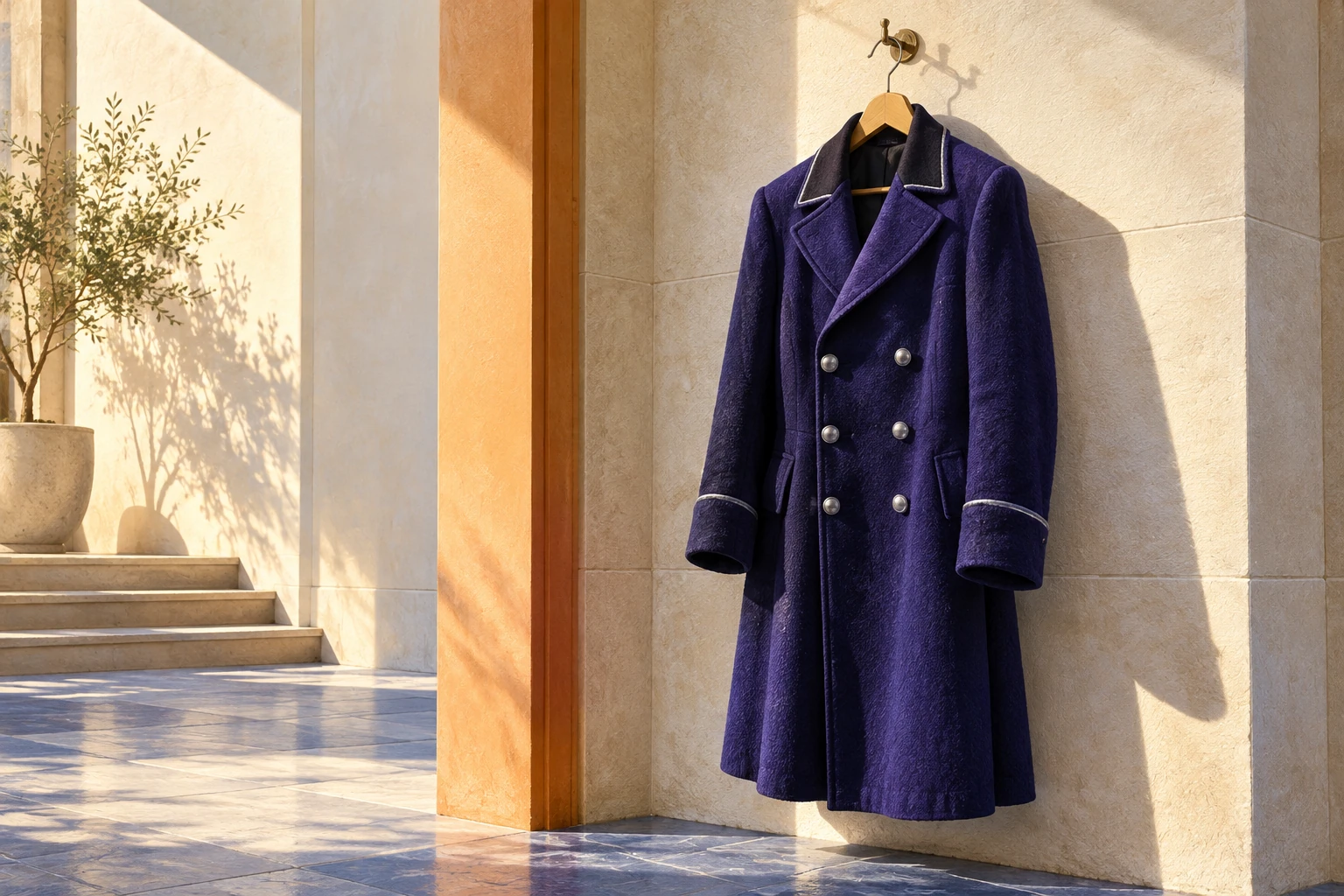
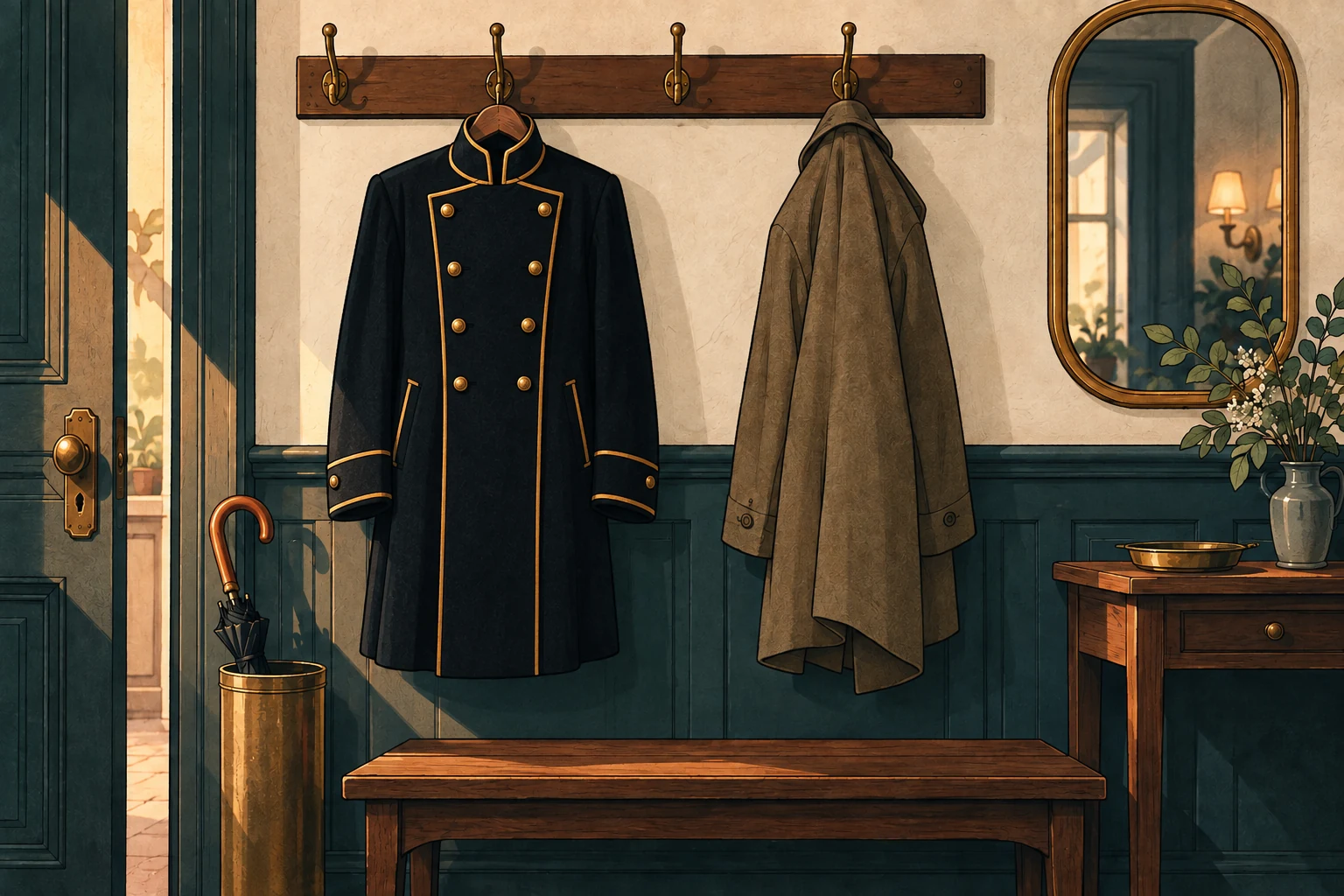
Momo’s proposed viewing exercise is to follow the uniform. Watch what the man expects it to do for him. Then ask how much of that expectation depends on an audience recognising it. An impressive coat has acquired a very demanding job description.
Give the preference a little room
For a purchase, a film or an evening out, I’d start with a modest description: “I liked this, among the things I considered, for these reasons.”
Then change one part of the comparison. Look at a wider selection. Consider the same option without the conspicuously expensive neighbour. Ask what its familiar appearance tells you about its actual use. These are prompts for reflection, rather than a test that can certify a preference as pure.
If your reasons survive, you have more to say about what you enjoy. If they change, you may have learnt something useful. There is no need to defend an entire personality because another shop had a better chair.
References & Further Reading
The shop examples and practical questions are imagined editorial examples. The research supports the specified experimental findings. The film connection is Monocurator’s interpretation; it does not diagnose the characters through those studies.
- Itamar Simonson and Amos Tversky (1992), ‘Choice in Context: Tradeoff Contrast and Extremeness Aversion’, Journal of Marketing Research 29(3), 281–295; especially the method on p. 282 and camera comparison on p. 290. Full paper, hosted by Alpen-Adria-Universität Klagenfurt.
- Robert B. Zajonc (1965), The Attitudinal Effects of Mere Exposure, Technical Report No. 34, Institute for Social Research, University of Michigan, September; especially printed pp. 22–24. This is the archived report, rather than a citation to the later 1968 journal article.
- R. Matthew Montoya, Robert S. Horton, Jack L. Vevea, Martyna Citkowicz and Elissa A. Lauber (2017), ‘A Re-examination of the Mere Exposure Effect: The Influence of Repeated Exposure on Recognition, Familiarity, and Liking’, Psychological Bulletin 143(5), 459–498. DOI: 10.1037/bul0000085. The statement here draws on the published abstract; the full paper has not been examined for this article.
- Filmportal.de, Der letzte Mann / The Last Laugh (1924), film record and German Films synopsis. The original presentation is listed as black-and-white and silent; the synopsis includes the ending.
- Thirza Wakefield, ‘10 Great Films Set in Berlin’, British Film Institute, 4 September 2014; section on The Last Laugh.
For the next unexpected question, follow the Journal in your RSS reader.
On screen
Films discussed
- The Last Laugh (1924) · F. W. Murnau
Further reading
Read next in the Journal
Want a recommendation shaped around your evening? Ask Momo what to watch next →