See Films Differently Momo Notices
Finding Something to Want: Pizza Baguettes and People on Sunday
A freezer-aisle detour and a scene from People on Sunday: how an encounter can shape what we want, without making discovery another assignment.
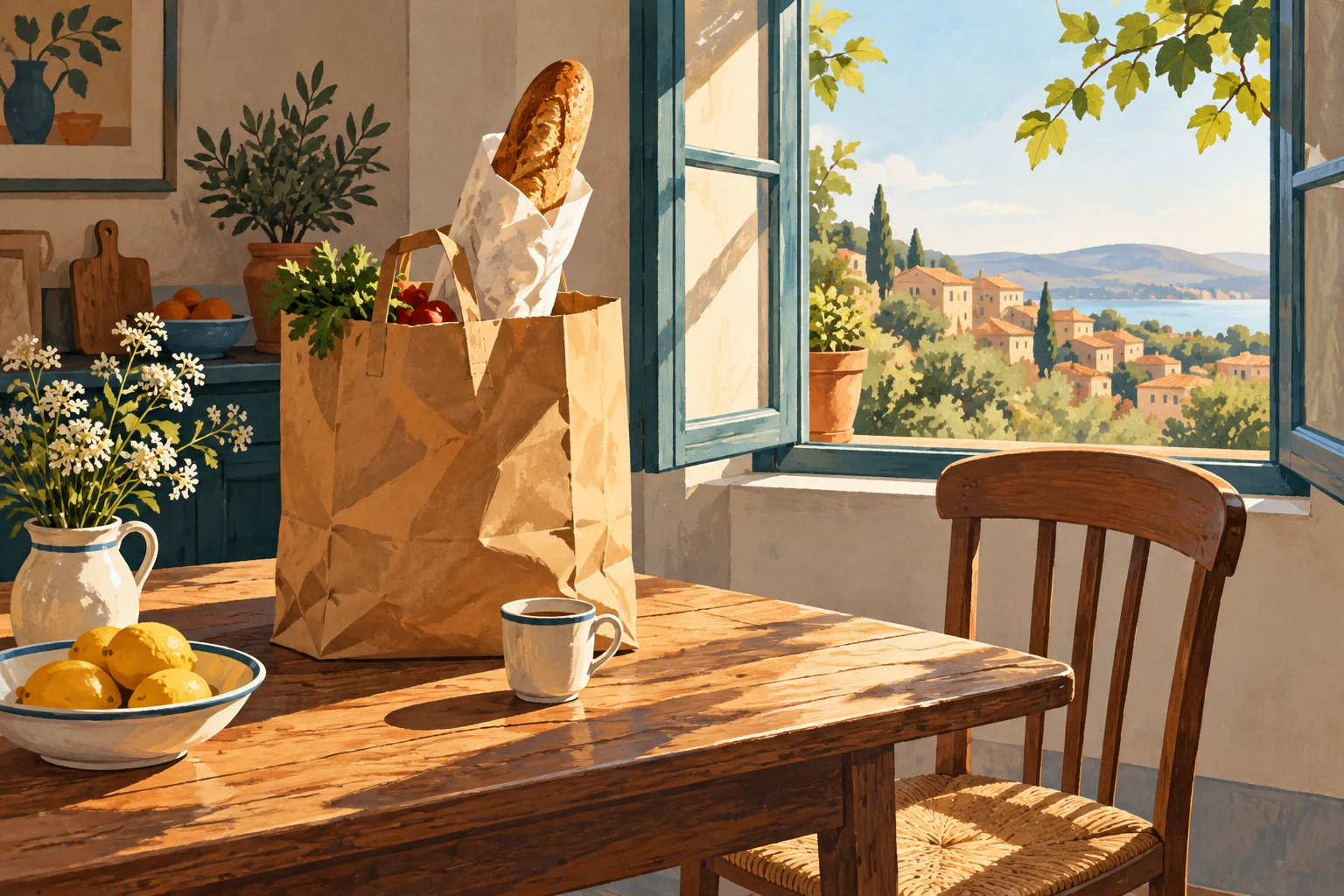
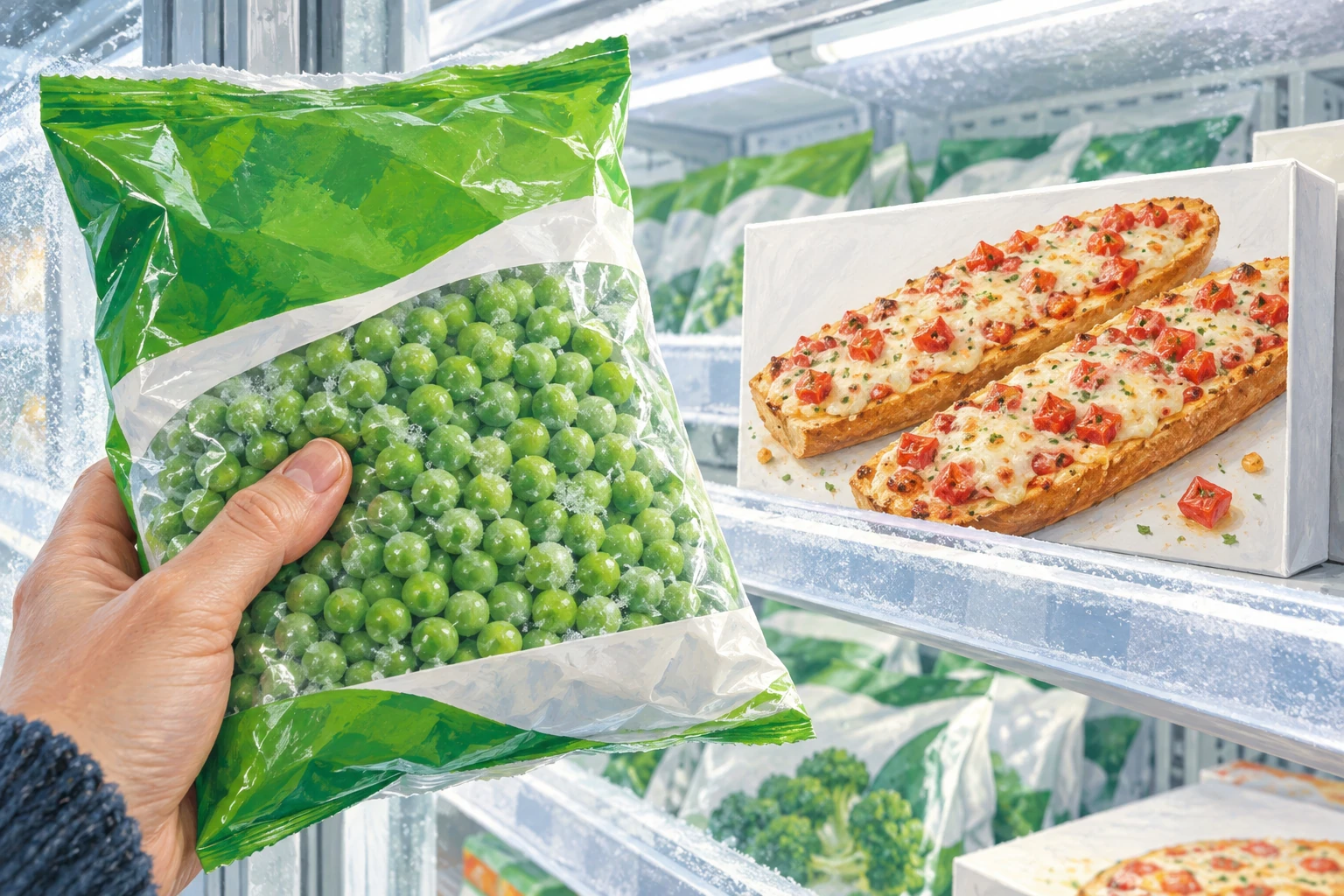
Picture yourself in a British supermarket, standing in the frozen-food aisle with a bag of peas in your hand. You came for the peas. You found them. The trip is already a success.
Then you look along the shelf.
Pizza baguettes. [1]
Oh. Those would be nice.
You weren’t looking for them. When you were deciding what to have for dinner, they never occurred to you. Now that they’re in front of you, you fancy one.
So what happened? Did you encounter something you already wanted, or did the encounter help create the desire?
The question is harder than it first appears. Pizza baguettes were available before you noticed them, and perhaps you already liked them. But liking them had not made them part of tonight’s possibilities. Seeing the box has changed that. It may even have helped produce the appetite.
A perfectly successful shopping trip
Let’s give the other version of this trip its due. You collect the peas and leave. You’ve forgotten nothing, bought what you needed and saved some time. An entirely successful expedition. The peas have no grounds for complaint.
Yet the glance along the shelf makes something possible that completing the errand doesn’t require. A food that was already in the shop becomes part of your idea of dinner. Its position in the freezer hasn’t changed. Its position in your evening has.
That is a slightly different pleasure from tracking down a thing you’ve wanted for months. In that case, the wanting leads and the search follows. Here, the order is less tidy. Something outside the plan supplies a suggestion the plan couldn’t have requested.
Research on consumer choice gives us a reason to be careful about assuming that every preference is ready and waiting inside us. In their review, James R. Bettman, Mary Frances Luce and John W. Payne describe how preferences can take shape during a decision, depending on the task and the options presented. They also stress that people do have stable preferences, and that a choice varying with circumstances doesn’t, by itself, show a preference being created on the spot. [2]
So the box can’t settle whether a new appetite has appeared or an old possibility has returned to mind.
The researchers also discuss how choosing involves attending selectively to information. [2] That is useful when you have a job to finish. In our little scene, the bag of peas is the relevant object; the next shelf can remain irrelevant throughout a faultless shopping trip. Only when your attention moves beyond that job does another option have a chance to enter the decision and influence what seems appealing.
I like the modesty of this. You haven’t discovered an unknown food. You haven’t necessarily discovered anything profound about yourself. You’ve encountered an option, and the encounter has helped shape what dinner might now be.
And you can leave it in the freezer. Noticing something doesn’t oblige you to buy it, or to replace what you’d already planned. The option can be there without becoming an instruction. Encountering a possibility may alter what you want without determining what you choose.
Having no particular use for the next thing
The interesting difficulty is that you can’t always name what might interest you before encountering it. Imagine going into a library for a novel and opening a book about coastal birds because a page catches your eye. You may find yourself wanting to know why those birds gather in that place. That question wasn’t waiting on your list of reading interests. The page gave you a reason to ask it.

Looking only for what you already want is excellent for finding it. It leaves a more awkward question: how do you meet something you haven’t yet had a reason to want?
A little looking around leaves that possibility open. No special technique is required by the idea. Your eyes can linger on something without your having decided what use to make of it. Wandering, in this sense, can happen while you’re standing still beside the peas. It gives unfamiliar or overlooked options a chance to become relevant, and sometimes relevance is part of what creates desire.
It would be a pity to turn this into another assignment. Inspect every shelf. Produce three discoveries before lunch. Submit evidence of a richer inner life. I’d rather let the freezer remain a freezer.
Some days you need to get home. Some days you have time to look and nothing appeals. Neither requires an explanation of what is wrong with your curiosity. The unplanned glance loses much of its freedom if it has to earn its place by producing a result.
A Sunday with room to look
Now, there’s a film I’d put beside this thought: People on Sunday (1930), the black-and-white silent film directed by Robert Siodmak and Edgar G. Ulmer. It follows young Berliners on a weekend outing, combining a fictional story with documentary images. [3] You can arrive curious about how the outing will go, then find yourself wanting to watch something that has little responsibility for its outcome.
At the beach, the film spends time with a photographer taking portraits of day-trippers. In her account of the sequence, critic Imogen Sara Smith describes a boy who briefly hesitates without smiling, then breaks into a grin. The film shows people preparing for their pictures and freezes them into photographic portraits. Later, the process reverses: still images begin moving again. [4]
The pause before the boy’s grin offers a new thing to be interested in. Perhaps you’d been following the main group’s relationships. Here is a reason to stay with somebody else for a moment: you want to see a face change. The finished photograph no longer contains everything you want from the encounter. You may be enjoying the bit before it was ready. An interest can join the one that brought you to the film; the story can still have its turn.
This is also where the comparison with looking around needs some care. The camera and editing have deliberately brought those faces to us; the sequence’s movement and stillness are arranged. We aren’t freely inspecting an unfiltered stretch of Berlin. The film has made an invitation, and we can discover that we want to accept it. That is the connection I find with the shelf: an encounter can help shape the purpose we bring to what comes next.
Back at the supermarket, you still have the peas. Perhaps the pizza baguettes stay where they are; perhaps one box comes home. There is no need to make the choice carry any more weight than that.
Looking along the next shelf may not change your life. It may only change tonight’s dinner. But it can also show, in a small and ordinary way, that wanting is not always something we bring fully formed to the world. Sometimes the world presents us with possibilities, and our wants take shape partly in response. Some days, that’s quite enough.

References & Further Reading
- Iceland Foods. ‘Dr. Oetker Bistro Baguette Cheese & Tomato 2 x 125g (250g)’. UK retailer product listing, undated. Product page. See also Dr. Oetker’s Bistro Baguette range (German). The supermarket scene and shelf arrangement are imagined; no current stock availability is implied.
- Bettman, James R., Mary Frances Luce and John W. Payne. ‘Constructive Consumer Choice Processes’. Journal of Consumer Research 25, no. 3 (1998): 187–217. doi:10.1086/209535. See especially pp. 188–189 on constructed and established preferences, context and selective processing. Author-hosted article.
- The Criterion Collection. ‘People on Sunday’. Film information and credits, undated. Film page.
- Smith, Imogen Sara. ‘The Sun on Their Faces: One Scene from People on Sunday’. The Criterion Collection, 24 January 2018. Essay.
For the next unexpected question, follow the Journal in your RSS reader.
On screen
Films discussed
- People on Sunday (1930) · Robert Siodmak and Edgar G. Ulmer
Further reading
Read next in the Journal


Want a recommendation shaped around your evening? Ask Momo what to watch next →