See Films Differently Film history
How the Shipping Container Changed the Waterfront
How container fittings and compatible equipment reshaped ports, and why On the Waterfront asks a separate question about who controls the work.

Different goods, familiar boxes. What had to change around the box to make that simplicity work?
A photograph of a container port can seem curiously repetitive. Rows of boxes on the quay, more boxes on the ship. A place handling an extraordinary variety of things presents remarkably few shapes to the eye.
One box might contain furniture, another shoes. For the machine lifting it, the first question is where to take hold.
Keep the differences inside; agree on how to pass the outside from one carrier to another. Making that idea work required changes to the places receiving the boxes, as well as to the boxes themselves.
Waiting beside a ship
In Elia Kazan’s On the Waterfront (1954), men arrive at the docks and wait for their daily work assignments. Johnny Friendly, who controls the waterfront, can direct which job Terry Malloy receives. [1]
The port is a place where cargo passes through and people are selected. Having ships, goods and willing workers does not automatically produce a day’s employment. Whoever allocates the work controls access to a livelihood.
That makes the waterfront more than a backdrop for a crime story. The place where cargo is handed over is also where a man can be denied work.
Nor was cargo handling simply a matter of carrying heavy things. London Museum distinguishes workers who stowed goods aboard ships, warehousemen who stacked and inspected them, and clerks who recorded their weight. [2] London’s arrangements were not those of the New Jersey waterfront, but the variety of tasks helps us understand an old port as more than a place with a lot of men in it.
Pass the box along
Container transport lets a loaded box pass between different means of transport, reducing the need to handle its contents separately at each transfer. The Port Authority’s account contrasts this with the repeated movement of individual cargo through vehicles, warehouses, quaysides and ships’ holds. [4]
On 26 April 1956, the converted tanker Ideal X left Port Newark with 58 containers on deck. Metal cargo boxes existed before Malcom McLean’s venture. The task was to organise transport around them. [4]
Moving the outer unit reduces the need to handle each package separately at the port. Someone still has to pack the goods and eventually take them out. The work of handling the contents can be separated from the work of handling the container.
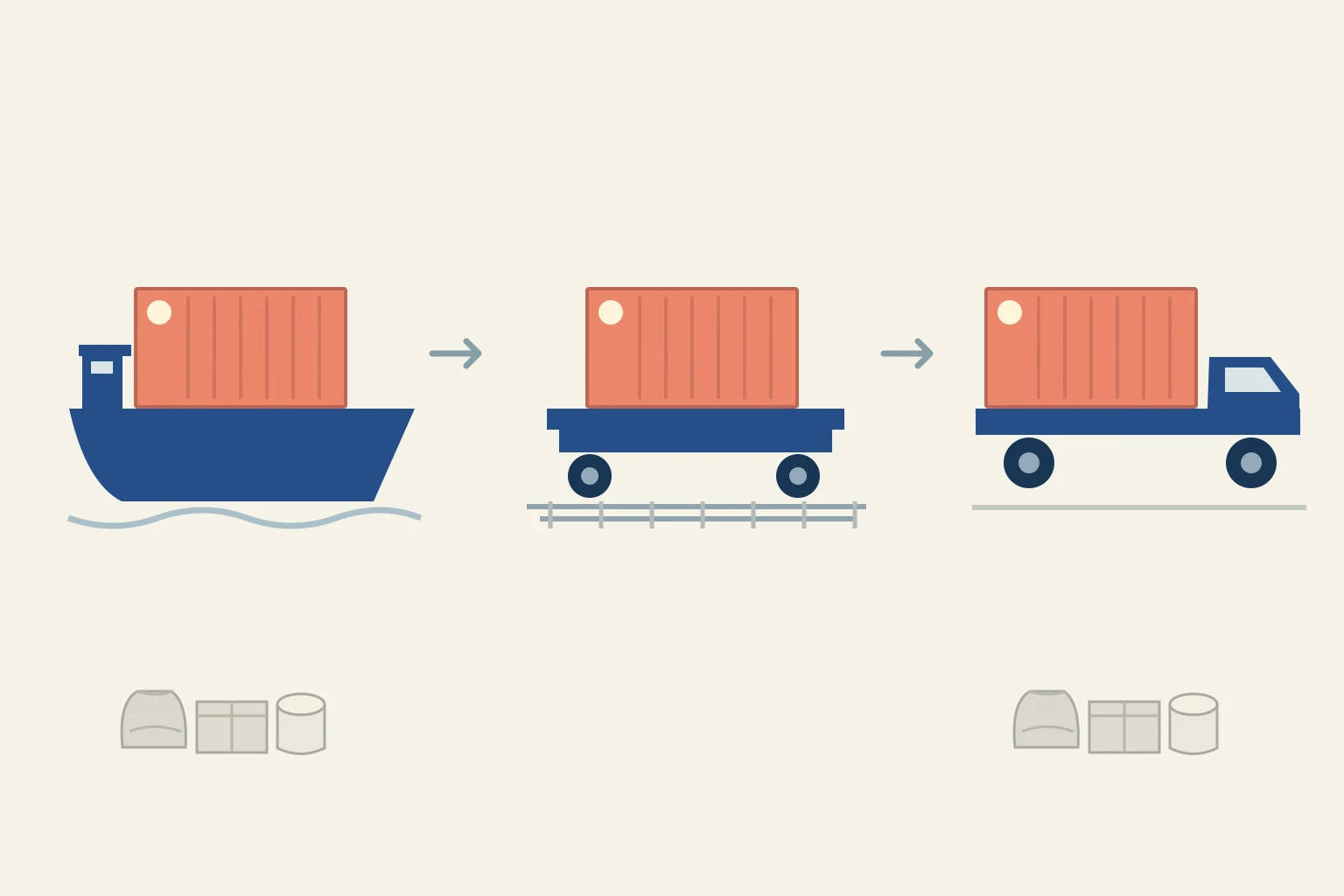
The goods need not become alike. Their handover can.
Matching the corners
Similar dimensions alone are not enough. Lifting points must fit, the box must attach to a vehicle, and its structure must withstand the demands placed on it.
Corner fittings provide the points through which the container can be handled, secured and stacked. The International Maritime Organization identifies these functions in its explanation of the Convention for Safe Containers. [3]
A manufacturer of boxes and a manufacturer of lifting equipment can work in different places around an agreed point of contact. That relationship is part of what makes the box reusable across a transport system.
The public description of ISO 1161:2016, a later standard for corner and intermediate fittings, covers their dimensions, function and strength. [6] Matching the shape is only one requirement: the connection must also do its job under load. This does not mean that the boxes aboard the Ideal X met a standard published decades later.
Rebuilding the receiving end
A liftable box is of limited use if the next ship or terminal cannot receive it. The Port Authority’s history describes changes extending to lorries, ships, railway wagons and cranes. A new container facility opened at Elizabeth in 1962. [4]
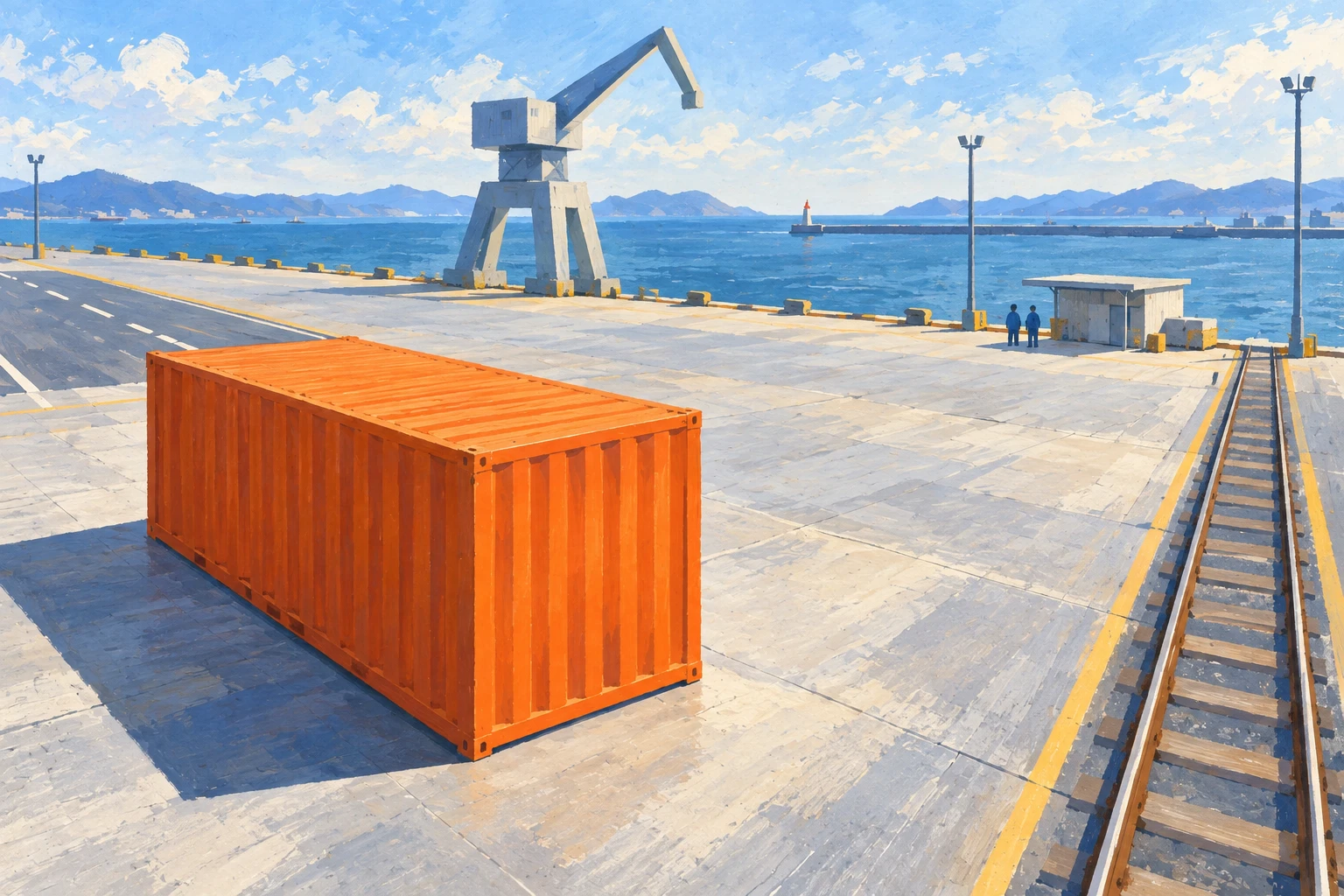
Here, an apparently modest decision to use common boxes becomes a substantial investment in everything around them. Compatibility has to be built at the receiving end too.
An established dock is not necessarily well suited to the new arrangement. In London, larger ships and containers were a poor fit for the older docks; London and St Katharine Docks closed in 1968. [5] That is one local history, not a date for a simultaneous transformation of every port.
The shore needed equipment to receive the boxes, set them down and pass them onwards. In the older London docks, that change became a question about what the land would be used for next.
No simple nostalgia
It would be a mistake to turn the men in On the Waterfront into symbols of a warm, human world swept away by machinery. The film’s allocation of work already contains a harsh imbalance of power. A crowded waterfront is not necessarily a fair one.
Nor does more efficient cargo handling, by itself, tell us whether the people doing the work have better lives. The standard that determines where a box can be gripped is different from the arrangements that determine who gets work and on what terms.
A container’s corner fittings explain how a crane can take hold of it. In On the Waterfront, Johnny Friendly determines which job Terry receives. The force that the film brings to the foreground is this control over the people working at the port.

References & Further Reading
-
American Film Institute, On the Waterfront, AFI Catalog. Film record and opening synopsis for the 1954 film.
-
London Museum, ‘The jobs that made London’s docks run’. Collection-based account of dock occupations; no publication date stated.
-
International Maritime Organization, ‘International Convention for Safe Containers (CSC)’. Official overview, including the functions of corner fittings; page undated.
-
Roz Hamlett, ‘The World in a Box: The Story Behind Modern Shipping’, PORTfolio, Port Authority of New York and New Jersey, 23 June 2015. Port authority history article.
-
London Museum, ‘London Dock’. Particularly ‘Redevelopment: what came next?’; no publication date stated.
-
International Organization for Standardization, ISO 1161:2016 — Series 1 freight containers: Corner and intermediate fittings — Specifications, fifth edition, July 2016. Public abstract only; the paid standard is not reproduced or relied on for individual clauses.
-
Barnaby Lewis, ‘Boxing clever – How standardization built a global economy’, International Organization for Standardization, 11 September 2017. An earlier treatment connecting On the Waterfront with container standardisation.
The sources support the history and the film’s premise. The distinction between cargo-handling compatibility and control over employment is Monocurator’s interpretation. This article discusses the early work-allocation scenes; the linked synopsis includes the ending.
For the next unexpected question, follow the Journal in your RSS reader.
On screen
Films discussed
- On the Waterfront (1954) · Elia Kazan
Further reading
Read next in the Journal


Want a recommendation shaped around your evening? Ask Momo what to watch next →