What Does Public Domain Mean for a Film?
What public domain means for a film, with US and UK rules checked on 2 October 2026, separate scores and subtitles, and The Gold Rush as a version example.
A film is in the public domain when copyright no longer protects it, or when it did not qualify for that protection. For the work concerned, you no longer need the former copyright owner’s permission to use it. That is what the US Copyright Office means by the term. [1]
With a film, the next question is wonderfully inconvenient: which work, in which country, and in which version? An old film’s images, a later score and newly translated subtitles can have different histories. Finding a video online does not answer those questions.
This guide uses US and UK sources checked on 2 October 2026. It explains how to read a public-domain claim and what to check next; it does not clear a particular download, screening or upload for you.
Free to watch tells you about an offer
A rights holder can allow a film to be watched without charging viewers while keeping copyright. A licence can permit specified uses of a protected work. An exception can also allow a particular use without permission. None of those makes the work itself public domain. The UK Intellectual Property Office treats internet availability, licence terms and copyright status as separate questions. [2]
For an evening’s viewing, look for a source offering the film legitimately in your territory and identify the edition you will see. If you want to reuse its images or sound, read the rights information for that material. A play button makes an offer to watch; it is a remarkably small place to put a promise about every other use.
The country belongs in the answer
In the United States, the Copyright Office’s current Duration of Copyright circular states that works published in the US before 1 January 1931 are in the public domain. For the older works covered by its discussion, the maximum term reached 95 years; terms run to the end of the relevant calendar year. This gives us a useful 2026 starting point for the original published film. It does not give every later addition the original film’s birthday. [3]
Nor is “made more than 95 years ago” a universal calculation. Unpublished works, later works and separate sound recordings need their applicable rules. For more recent films, publication, notices and renewal history may matter. Certain foreign works also had US copyright restored after losing it through failures to comply with formalities, so a missing renewal is not a shortcut for every film. [3]
In the United Kingdom, the general film rule in section 13B of the Copyright, Designs and Patents Act is 70 years from the end of the calendar year in which the last of four specified people dies: the principal director, screenplay author, dialogue author and composer of music specially created for and used in the film. The section also supplies qualifications for unknown identities, foreign works and films with none of those people. Historical and transitional rules need attention too. [4] [2]
These are starting rules for an investigation, not two interchangeable age limits. An American label does not settle a British use. You need the facts relevant to the work and the country where you intend to use it.
A title can contain several things to check
| Part of what you have found | What to identify |
|---|---|
| Original film | Title, original publication or registration details, country and applicable term |
| Underlying writing or music | The story, script or composition, and its own rights history |
| A later version | Added narration, new creative material or changes, with their dates and credits |
| Accompaniment | Which composition and which performance or recording you are hearing |
| Translation | Who made the subtitles or translated intertitles, and when |
| The supplied file or disc | Its edition, rights statement, licence and access terms |
The point is to find out which material the claim covers. The Copyright Office warns that permission for one part of a derivative work may not authorise another part. Its investigation guidance specifically separates a film from searches for underlying works and music. [5]
US law also limits copyright in a derivative work to the contributor’s material: it does not enlarge the copyright in the material already there. New original additions can be protected without putting the underlying public-domain work back under copyright. A restoration credit alone does not establish what new copyrightable authorship has been added. Look for the actual contribution, rather than treating the word “restored” as a rights verdict. [6] [7]
Chaplin makes the version question concrete
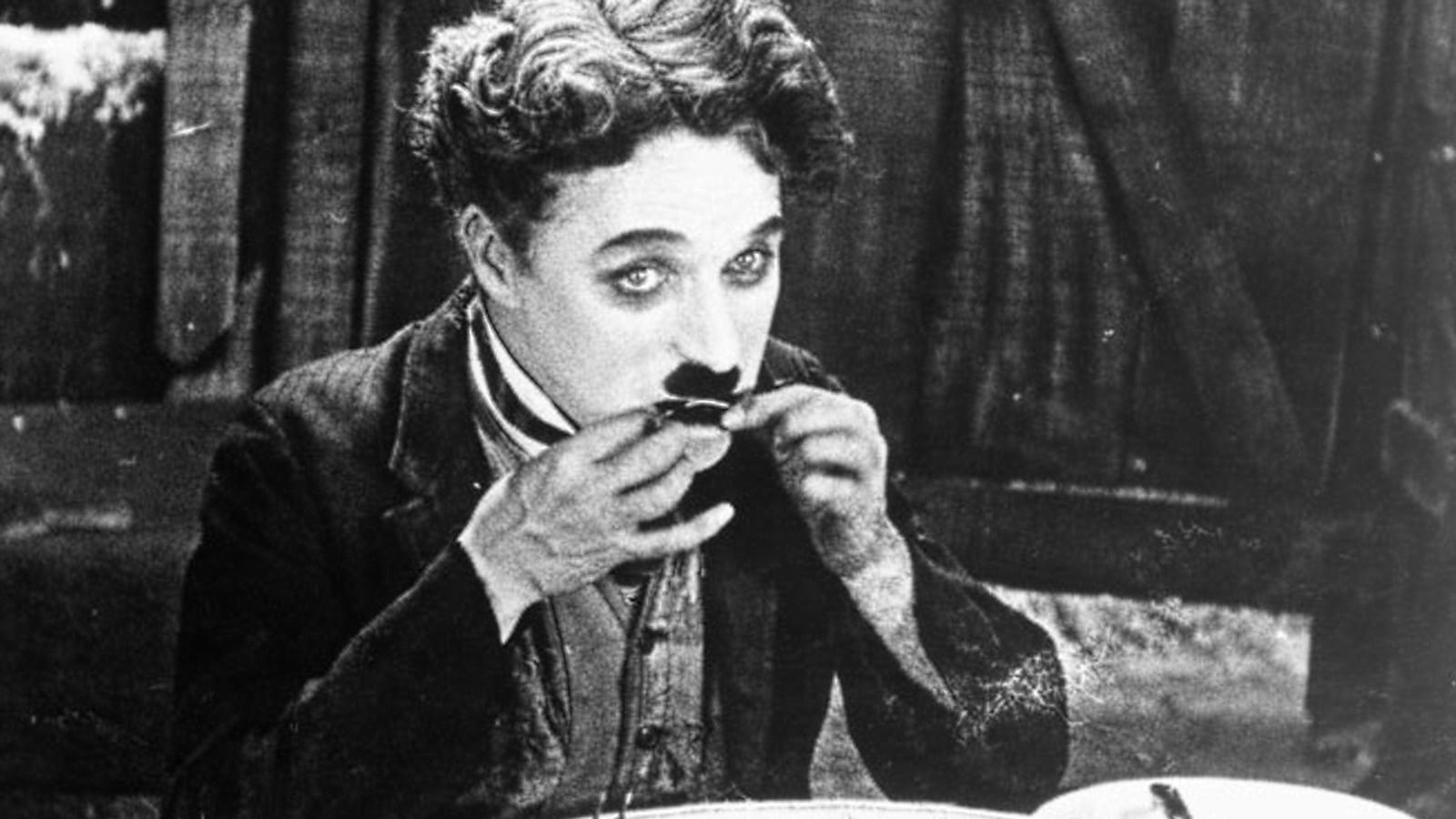
Take the black-and-white The Gold Rush. Criterion’s edition distinguishes Chaplin’s 1942 version, with added music and narration, from the reconstructed original 1925 silent film. Its presentation of the silent version includes a newly recorded adaptation of Chaplin’s score. [8]
That gives us three useful distinctions before doing any rights calculation: the original film, the later version and the accompaniment on a particular release. Seeing “1925” beside the title tells you very little about when everything in that presentation was made.
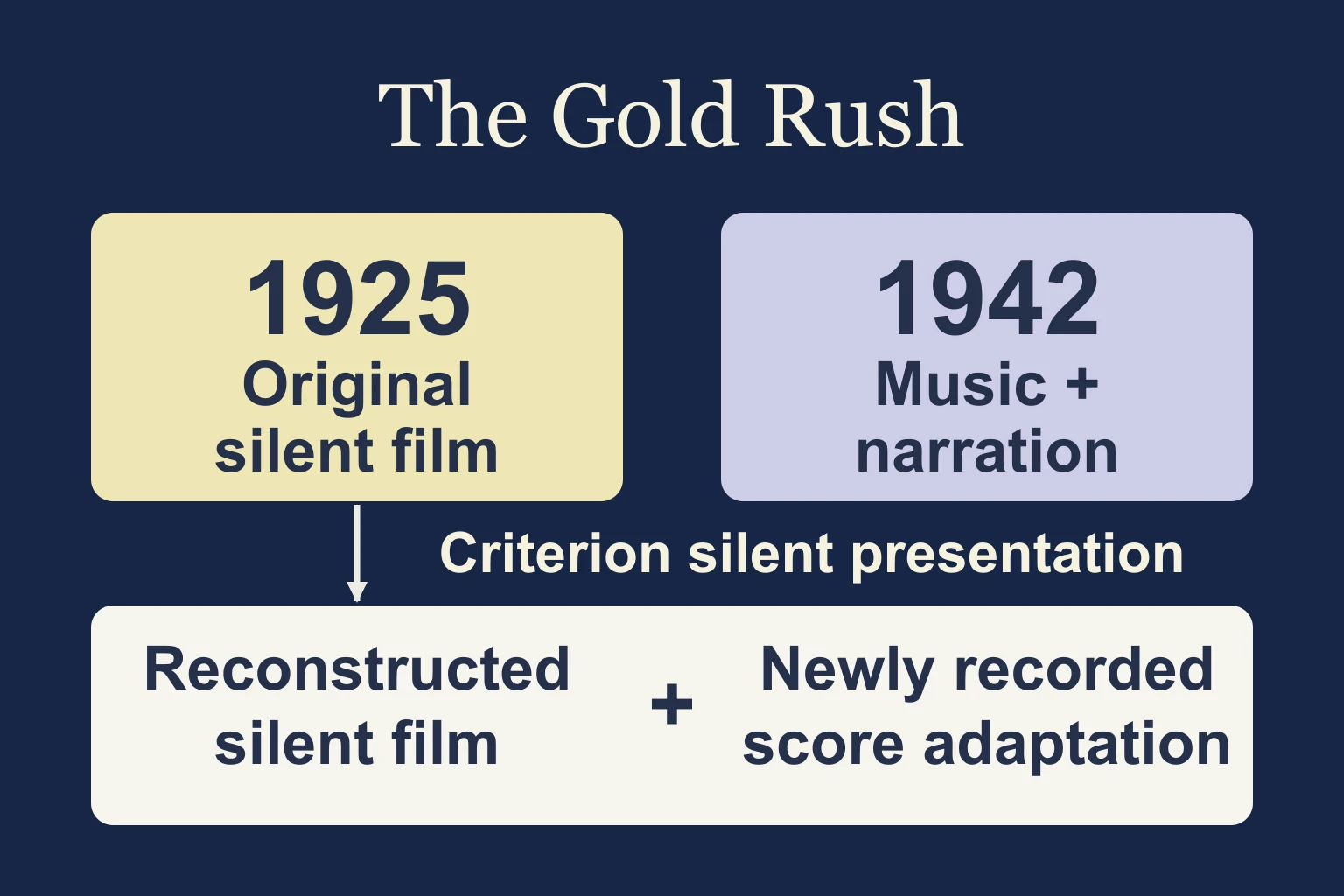
Momo’s suggestion is to pay attention to those credits before pressing play. A voice added later can change how a scene reaches you, as well as what material you need to identify for reuse. The Little Tramp may have very little luggage; a modern release can bring quite a lot.
The edition information demonstrates why the question matters. It is not a finding that Criterion’s transfer, music, extras or any other supplied file may be copied. For that, you would have to investigate the particular material and intended use.
Write down the use before chasing the rights
“I want to watch it tonight” and “I want to upload this scored version” are different projects. So are reproducing a frame in an article, editing a clip and arranging a public screening. Say what you intend to do, where, and with which material. That makes a rights statement or licence much easier to assess.
A useful research note can fit on a few lines:
- Country and date checked: the jurisdiction for your use and the day you checked the sources.
- Work and edition: the original title, publication details and the particular release or file.
- Included material: soundtrack, translation, narration and any additions you plan to use.
- Evidence: the archive or distributor’s statement, relevant law or official guidance, and any licence terms.
- Open questions: what the evidence establishes and what still needs a record search or permission.
Begin with the copy’s credits and publication information, then consult the relevant records and rules. The Copyright Office cautions that searches can be inconclusive: an empty search result does not establish that a work is unprotected. Missing an owner is also different from finding that copyright has ended. [5]
Public domain is a useful answer when we can say what it refers to. Keep the country, edition and material attached to it. Then “an old film I found online” can become a film you understand well enough to choose—and, where the evidence supports it, reuse.
References & Further Reading
Sources checked on 2 October 2026. The laws and guidance below support the stated general rules and distinctions. No individual file’s copyright history, licence or legal clearance is certified by this article.
- US Copyright Office, ‘Definitions’, FAQ, ‘Where is the public domain?’.
- UK Intellectual Property Office, ‘Copyright Notice: Duration of Copyright (Term)’, especially general rules, exceptions, foreign and embedded works, and the public-domain question.
- US Copyright Office, Duration of Copyright, Circular 15A, revised April 2026, pp. 1–3. The 1931 cutoff is the circular’s current statement; it is not a cutoff for all separate sound recordings or modern additions.
- Copyright, Designs and Patents Act 1988, section 13B, ‘Duration of Copyright in Films’, latest available revised text checked on 2 October 2026, particularly subsections (2)–(9). The legislation service reported no known outstanding effects for this section on that check date.
- US Copyright Office, How to Investigate the Copyright Status of a Work, Circular 22, revised April 2026, particularly pp. 1, 3–5 and 11. General investigation guidance, including separate underlying-work searches and derivative editions.
- 17 USC §103, ‘Subject Matter of Copyright: Compilations and Derivative Works’, especially subsection (b), US Copyright Office’s published statutory text.
- US Copyright Office, Copyright in Derivative Works and Compilations, Circular 14, July 2020, pp. 1–2, definitions and scope of protection. The circular directs readers to the current Compendium for registration policies; no registration procedure is taken from its superseded sections here.
- The Criterion Collection, The Gold Rush, film record and edition features. Documents the 1942 and reconstructed 1925 presentations, added narration/music and the newly recorded score adaptation; it is used for edition facts, not as a reuse licence.
For the next unexpected question, follow the Journal in your RSS reader.
On screen
Films discussed
- The Gold Rush (1925) · Charlie Chaplin
Further reading
Read next in the Journal
Want a recommendation shaped around your evening? Ask Momo what to watch next →