Version guide
The Gold Rush: 1925 vs 1942—Which Version to Watch?
Choose The Gold Rush's 1925 or 1942 version, find both on Criterion Channel, and compare the US Blu-ray with the German 4K UHD's language options.
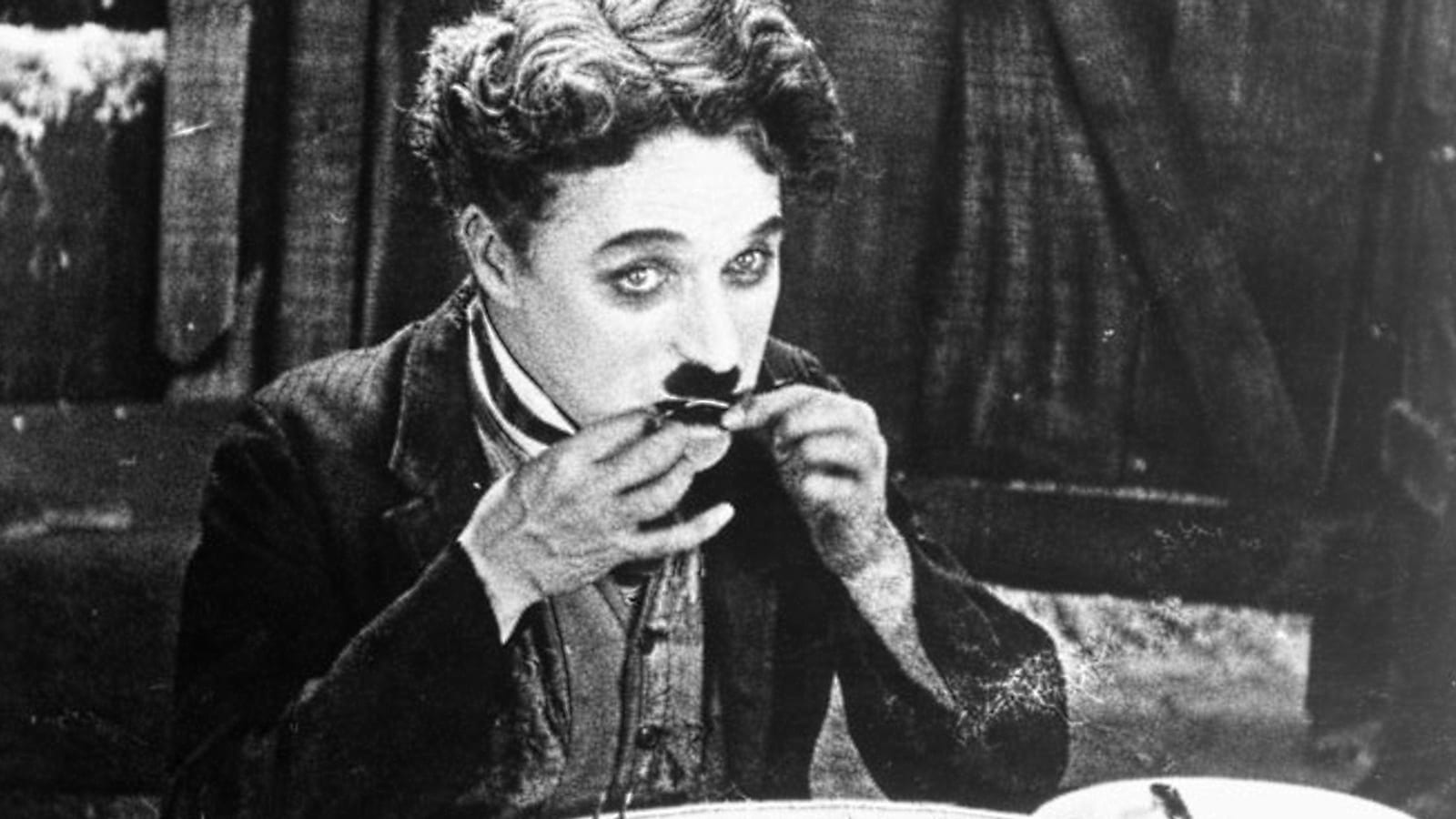
Start with a reconstructed presentation of the 1925 silent version. The 2025 4K restoration runs 88 minutes and uses intertitles; Chaplin’s 1942 re-edit runs about 72 minutes and has his narration. His later version also changes the editing and story, making it a rewarding second viewing.
Ready to watch? Choose the silent or narrated stream, or use the disc comparison for Criterion’s Blu-ray and the German 4K UHD. The edition matters: two discs can include the 1925 version while using different restorations.
Where to watch The Gold Rush
For Criterion Channel subscribers in the United States and Canada, the film’s collection page offers both versions. Its headline feature is the 1942 reissue; the silent version sits under Extras, where it is easy to miss.
- Watch the 1925 silent version — listed at 1:28:57. Select the film itself; the neighbouring commentary is a separate item.
- Watch the 1942 narrated version — listed at 1:12:20, with Chaplin’s spoken narration.
These are subscription links. Criterion’s Channel FAQ limits the service to the US and Canada. The streaming listing identifies the cuts but does not name the 2025 restoration; an 88-minute listing alone cannot establish that master. For a copy to keep, continue to the Blu-ray and UHD choices.
The two versions at a glance: 1925 silent vs 1942 narrated
| Check | Reconstructed 1925 silent lineage | 1942 narrated reissue |
|---|---|---|
| Best use | First viewing | Comparison after the silent version |
| Current reference runtime | 88 minutes for the 2025 4K restoration | About 72 minutes |
| Story delivery | English intertitles | Chaplin’s spoken English narration replaces the intertitles |
| Music | Chaplin’s 1942 music adapted to the longer silent version by Timothy Brock | Chaplin’s synchronised score, with Max Terr credited as musical director |
| Editing | Reconstructs the 1925 release from surviving material | Shortened, rearranged, and partially rebuilt by Chaplin |
| Story | Reconstructs the original story structure | Revises Georgia’s letter and the ending; the details below contain spoilers |
This comparison is more useful than asking whether the film has sound. A silent-version presentation may carry a synchronised modern recording of Chaplin’s later score, while the 1942 version combines a different picture edit with continuous narration. Cut, text, narration, score, and runtime must be checked together.
The first lineage: reconstructing the 1925 silent film
The Gold Rush opened in 1925 as a silent feature with intertitles. The version shown that year cannot simply be retrieved from an untouched original negative: Chaplin later cut the negative to make the 1942 reissue, withdrew prints of the silent version, and discarded material.
Modern presentations of the silent film are therefore reconstructions. That word matters. It describes an effort to recover the 1925 structure from surviving elements; it does not promise that every frame comes from one pristine source or that an original object has remained unchanged.
The Monocurator Film page for The Gold Rush uses the named 2025 restoration as its top-level runtime reference. Its Credits, versions & sources section keeps the original release, the later reissue, and modern reconstruction work separate.
The 1993 Brownlow–Gill reconstruction
In 1993, Kevin Brownlow and David Gill reconstructed the silent version by combining surviving 1925 material with footage recoverable from the 1942 reissue. Their work made the longer silent structure accessible again after Chaplin’s revisions had displaced it for decades.
It is a reconstruction of the first lineage, not a new narrative cut. Its significance is methodological: it established a recoverable route back toward the 1925 film despite incomplete and mixed-generation materials.
The 2012 Criterion presentation
Criterion’s 2012 release made both lineages available in one edition. Its main feature is the 72-minute 1942 sound version, which Criterion describes—explicitly as its own product wording—as Chaplin’s “definitive 1942 version.” The edition also includes a reconstructed 1925 silent version from a 2K transfer, accompanied by a newly recorded adaptation of Chaplin’s score.
That package is useful for comparison, but its reconstructed silent presentation should not be confused with the later 2025 4K restoration. “Includes the 1925 version” identifies a lineage; it does not identify which restoration master is present.
What the 2025 4K restoration means
For the centenary, Fondazione Cineteca di Bologna restored the film in 4K at L’Immagine Ritrovata under the aegis of Association Chaplin and Roy Export, with support from mk2. The project followed a new international search for full-frame 1925 material. Its official press notes credit elements from Roy Export and Photoplay Productions together with holdings from the BFI National Archive, Blackhawk Films, Lobster Films, the Bundesarchiv, Filmoteca de Catalunya, George Eastman Museum, and the Museum of Modern Art.
The restoration follows the reconstruction work associated with Brownlow and Gill while incorporating the results of that later search. It is not evidence of a simple 1993-to-2012-to-2025 chain, and it is not a third cut. The official description is appropriately careful: the work brings the film a step closer to the 1925 release rather than claiming to recreate an untouched original.
Cannes lists the centenary presentation at 88 minutes. The official film-concert specification also gives approximately 88 minutes at 24 frames per second for the reconstructed silent version with Timothy Brock’s adapted score. Those figures describe a named current presentation; they should not be turned into a universal runtime for every historical print or reconstruction.
The second lineage: Chaplin’s 1942 narrated reissue
Chaplin did more than add sound in 1942. He re-edited the original material, removed the intertitles, recorded continuous English narration, and added a synchronised orchestral score. AFI records the rerelease at about 72 minutes, substantially shorter than the current 88-minute restoration of the silent lineage.
The new voice changes the film’s dramatic texture. Instead of reading brief title cards and interpreting the Prospector through gesture, viewers hear Chaplin describe the action and guide its tone. The score is also part of this later project: Chaplin composed the music for the reissue, with Max Terr as musical director.
Compare the letter and ending · Story spoilers
In the silent construction, Georgia writes a letter to Jack, who gives it to the Prospector as a joke. The reissue makes the letter a genuine declaration from Georgia, softening her treatment of him. AFI records this revision and the removal of the original ending. The silent version’s kiss and photographer gag give way to the couple walking away together, as described in the official restoration notes (page 4).
None of this makes the reissue a false or invalid version. Chaplin authorised it and reshaped his own film seventeen years after its premiere. It is best approached as a later reinterpretation whose narration, music, pacing, and moral emphasis can be compared with the silent release.
The score is later, even when the picture follows 1925
The music on the 2025 restoration was not the film’s fixed premiere soundtrack in 1925. Chaplin composed the score for the 1942 reissue. Timothy Brock later restored, extended, and adapted that music so it could accompany the longer silent reconstruction with reinstated intertitles.
For the centenary restoration, Brock adapted, arranged, and conducted the music, performed by Orchestra Città Aperta. The accurate description is Chaplin’s later score adapted to the reconstructed 1925 version—not “the original 1925 score.”
This also explains why audio alone cannot identify the cut. A presentation can have orchestral sound and still belong to the reconstructed silent lineage. Listen for narration and look for intertitles before deciding what you have.
Do not identify the version by runtime alone
Use 88 minutes as the official reference for the 2025 4K restoration and about 72 minutes for the 1942 reissue. Do not treat any other single number as the permanent runtime of “the 1925 version.” Historical film lengths, projection speeds, logos, restoration sources, and distributor accounting can produce different figures.
A small difference around 88 minutes does not necessarily indicate a different cut. A move toward 72 minutes is much more significant, but even then the label and presentation clues should confirm it.
Use at least three identifiers:
- the explicit edition or restoration name;
- intertitles or continuous Chaplin narration;
- the stated runtime;
- restoration and score credits;
- the ending, if you are comparing after a first viewing.
Which disc or restoration does the listing mean?
“Includes the 1925 version” tells you which cut is present. The named edition tells you which restoration or transfer you will see. These three labels describe different things:
| Presentation or edition | What it contains | How to recognise it |
|---|---|---|
| 2025 centenary restoration | Reconstructed 1925 silent film, restored in 4K; the official reference is 88 minutes | A restoration identity. The official press notes name the project; “4K restoration” alone does not identify a UHD disc. |
| Criterion Blu-ray, listed edition | The 1942 feature plus a reconstructed 1925 supplement from a 2K transfer | Criterion’s special features distinguish the two. Its silent supplement is an earlier presentation, not the 2025 4K restoration. |
| ARTHAUS / Studiocanal: Goldrausch (4K-UHD+Blu-ray) | Centenary silent 4K presentation, approximately 89 minutes listed, with the 1942 version also included | The German package is PLAION product 1190399. ARTHAUS specifies 2160p/SDR for its UHD presentation. |
Which edition works for an English-speaking viewer?
For both cuts on a US Blu-ray, choose the listed Criterion edition if your player supports Region A. Its 1942 feature has English narration, its 1925 reconstruction is included, and the publisher lists English subtitles for deaf and hard-of-hearing viewers. Criterion’s disc FAQ confirms the US Blu-ray region. This is the earlier HD edition with the 2K silent transfer described above.
For the centenary restoration on UHD, the German ARTHAUS package needs a different language check. ARTHAUS lists German subtitles and German/English audio for the 1942 version. A 13 December 2025 owner report, post 14, identifies English title cards on the UHD silent feature. That is a report from a copy of this edition; the publisher’s specification does not state the title-card language. “German subtitles” and “English intertitles” can describe different text in the same presentation.
The official pages do not specify each German disc’s playback region. If your choice depends on using the bundled Blu-ray in a Region A player, that compatibility remains unconfirmed here. The UHD also requires a UHD-capable player: a 4K television alone does not make a standard Blu-ray player read it.
The label’s approximate 89-minute listing and the restoration’s 88-minute reference belong to different presentation records; that small difference does not establish another cut.
A new disc manufacturing date can still accompany an older transfer. For other copies, use the Film page’s viewing links and match the edition name, intertitles or narration, and restoration credits.
Before you press play
- The listing names the 1925 silent version or an identified reconstruction.
- If it claims the latest restoration, it explicitly says 2025 4K restoration or centenary restoration.
- The expected runtime is approximately 88 minutes for that 2025 presentation.
- The film uses intertitles, not continuous Chaplin narration.
- The music is described as Chaplin’s later score adapted by Timothy Brock to the silent version.
- The restoration credits match the named edition.
- You have not inferred the cut from runtime, release year, or “4K” alone.
- For a disc or paid stream, you have checked territory, format, playback compatibility, and included versions on the current official page.
Bottom line
Start with a reconstructed presentation of the 1925 silent The Gold Rush. An edition explicitly identified as the 2025 4K restoration is the leading current candidate: it is the named 88-minute centenary presentation, with intertitles and Brock’s adaptation of Chaplin’s later score.
Then watch the 72-minute 1942 reissue. Its narration, synchronised score, shorter edit, revised letter, and changed ending make it Chaplin’s later reinterpretation—not the same film with an optional audio track.
Frequently asked questions
Should I watch the 1925 or 1942 version of The Gold Rush first?
Watch a reconstructed presentation of the 1925 silent version first. Prefer an edition clearly identified as the 2025 4K restoration when that option is available to you. Then compare Chaplin’s 1942 narrated reissue as a separate later version.
Is the 2025 restoration a new cut of The Gold Rush?
No. It is a new restoration of the reconstructed 1925 silent lineage. Its restoration team searched for additional full-frame 1925 material and brought multiple archival elements together; it is not a third cut, a director’s cut, or a new film.
Why do The Gold Rush runtimes differ?
Different cuts, reconstructions, projection choices, and mastering details produce different figures. The reliable named references are 88 minutes for the 2025 4K restoration and about 72 minutes for Chaplin’s 1942 reissue. Use runtime with the edition label, intertitles or narration, and restoration credits.
Continue through Monocurator
- Follow the boot meal into Minions and silent comedy to see how appetite, gestures and mistimed help can make a joke clear without a translation.
- Open the The Gold Rush Film page for a spoiler-light introduction, the version map, sources, and discovery links.
- Browse Charlie Chaplin films in the catalogue to move among his directing, writing, acting, and composing credits.
- Browse the Version Guides hub when a restoration, cut, runtime, score, or subtitle track changes what you are choosing.
- See the Version Guides for the complete editorial series.
Claim and source matrix
| Claim | Source basis |
|---|---|
| 2025 restoration: 4K, 88 min, B&W, 1.33:1 | Association Chaplin/mk2 press notes; Cannes film record |
| 2025 restoration bodies, lab, and archival search | Association Chaplin/mk2 press notes |
| 1993 Brownlow–Gill reconstruction and surviving-element method | Association Chaplin/mk2 press notes |
| 1942 narration, intertitle removal, synchronised score, and re-edit | AFI Catalog; Charlie Chaplin official; Film Concerts |
| 1942 runtime and story/ending changes | AFI Catalog; Association Chaplin/mk2 press notes |
| Brock adaptation, 24 fps, and approximate 88-minute concert presentation | Charlie Chaplin Film Concerts; Association Chaplin/mk2 press notes |
| Criterion’s 1942 wording and its reconstructed silent supplement | The Criterion Collection product record |
| German UHD package: centenary 4K, included 1942 version, listed runtime and subtitles | ARTHAUS UHD specifications; label-linked PLAION product 1190399 |
| Direct streams: 1925 at 1:28:57 and 1942 at 1:12:20; Channel territories | Criterion Channel collection, individual film listings and US/Canada catalogues; Channel FAQ |
| US Criterion Blu-ray region and UHD player requirement | Criterion technical-support FAQ |
| English intertitles on the German UHD feature | Dated first-hand owner report, Blu-ray.com forum post 14; not a publisher specification |
The recommendation to begin with the reconstructed silent version is Monocurator’s editorial judgement. Historical sources were checked on 3 August 2026; the edition listings and viewing routes were checked on 15 September 2026. The German UHD owner report is identified separately from the official specifications.
For the text cards themselves, our guide to intertitles explains how they carry dialogue, narration and timing, and how they differ from subtitles.
Sources and edition notes
- Criterion Channel: The Gold Rush, both versions — direct film choices and the separately listed commentary.
- Criterion: Channel FAQ — subscription service and US/Canada availability.
- Criterion Channel US catalogue and Canada catalogue — both versions listed in each territory on 15 September 2026.
- Criterion: Technical Support FAQ — US disc regions and UHD player requirements.
- Blu-ray.com: The Gold Rush German UHD discussion, post 14 — a dated owner report of English intertitles on the UHD feature. The bundled Blu-ray’s regions and subtitle switching were not established by that report.
- Association Chaplin and mk2 Films: The Gold Rush 2025 restoration press notes — restoration format and runtime; laboratory and governing bodies; archival sources; 1993 reconstruction history; Brock score; and major 1942 changes.
- Charlie Chaplin official: The Gold Rush — official film record, credits, and production context.
- Charlie Chaplin Film Concerts: The Gold Rush — reconstructed silent presentation, approximate 88-minute runtime, 24 fps specification, and Brock’s adaptation of Chaplin’s 1942 music.
- The Criterion Collection: The Gold Rush — Criterion’s description of its 1942 feature and reconstructed 1925 supplement, including soundtrack and transfer information.
- AFI Catalog: The Gold Rush — original release record; 1942 rerelease, runtime, narration, score, re-editing, letter revision, and altered ending.
- Festival de Cannes: The Gold Rush — 2025 Cannes Classics presentation, 88-minute runtime, and restoration credits.
- ARTHAUS: Charlie Chaplin — Goldrausch — German UHD presentation, 2160p/SDR, included versions and listed subtitles.
- PLAION Pictures: Goldrausch (4K-UHD+Blu-ray) — label-linked product 1190399, centenary edition identity, approximate silent runtime and 1942 extra.
Edition descriptions are evidence for identifying versions, not permanent claims about streaming access, stock, price, or regional availability.
For the next unexpected question, follow the Journal in your RSS reader.
If this guide helped you avoid the wrong cut, you can support Monocurator. Support Monocurator →
Continue exploring on Monocurator

Further reading
Read next in the Journal
Want a recommendation shaped around your evening? Ask Momo what to watch next →