.jpg)
What to expect
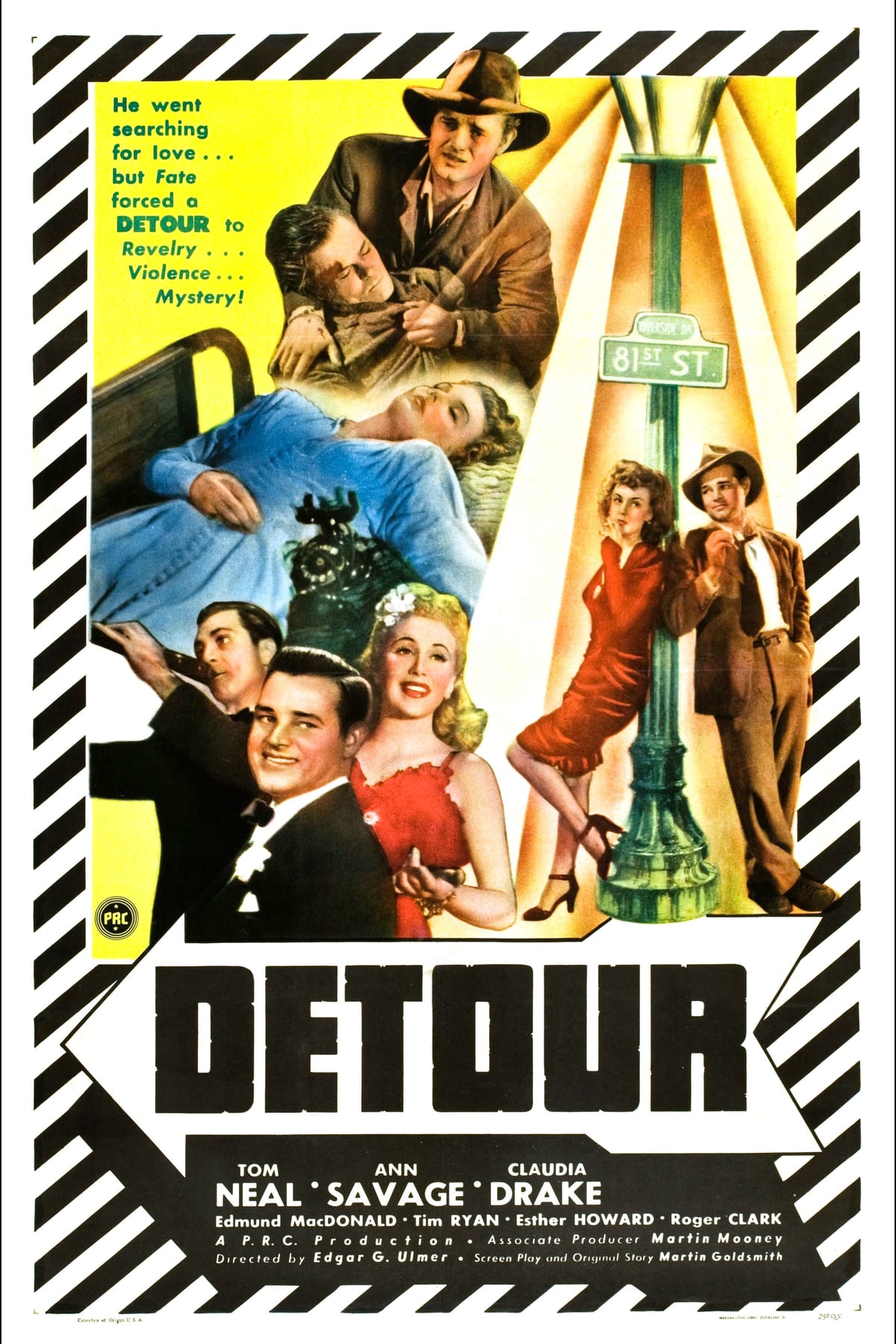
Detour strips film noir to a road, a few rooms, and a narrator whose account never feels entirely safe. Its modest scale becomes an advantage: every unlucky turn seems tighter, stranger, and more inescapable. The film endures as a compact vision of guilt and self-deception, where rough edges add to the sensation that fate has closed in before anyone noticed.
How to ease in
Take the narration as testimony, not objective truth. The film moves fast and leaves rough seams visible, so it helps to listen for the moments when Al explains too much or turns a choice into something fate supposedly did to him. The small budget is part of the atmosphere: anonymous rooms and rear-projected roads make the journey feel like a bad memory being replayed.
Heads-up
A doomed hitchhike into the bleakest B-movie poetry.
Detour feels as if it has already gone wrong before the first scene begins. I am fascinated by the gap between the narrator's weary certainty and the choices visible on screen.
Open the note ↓
Detour feels as if it has already gone wrong before the first scene begins. I am fascinated by the gap between the narrator's weary certainty and the choices visible on screen. The film is tiny, but that narrowness suits it: there is nowhere for its excuses to stretch out, and nowhere for us to look away.
— Momo

Credits & versions
Version map
Ways to watch and read
| Action | Search destination |
|---|---|
| Watch | Check availability on JustWatch |
| Rent | Search rentals on Apple TV |
| Read | Search books on Bookshop.org |
U.S. search destinations · Links checked 2026-07-27 · Stock, editions, prices, and availability can change · Disclosure
Where to go next
Want a gentler, shorter, or stranger next film?
Ask Momo for something like this →
Momo is on shift. Visit Momo Cinema →