See Films Differently Film history
What Was the Dead Letter Office For? Finding a Way Back
The American dead-letter problem blocked delivery and return. Dated postal rules and The Shop Around the Corner reveal two different kinds of missing information.
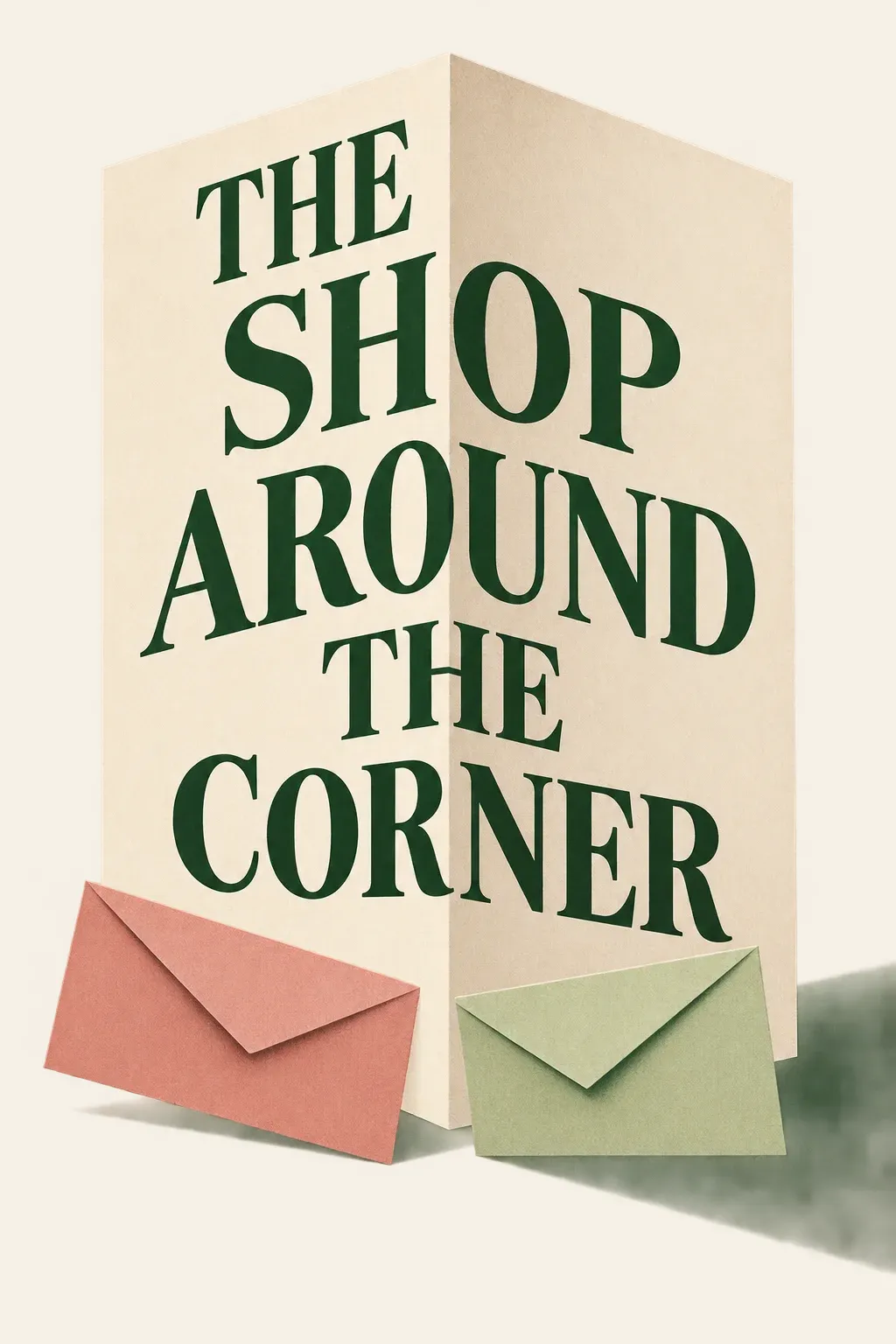
A letter can fail to reach its destination and still have somewhere to go: back to the person who sent it. The awkward case begins when the post office cannot do either.
That is the problem behind the rather theatrical name Dead Letter Office. Let’s stay with the United States. Its postal history gives us a particularly clear example: letters to Santa Claus. Before the policy changes of the early twentieth century, a fictitious address meant that a letter should be returned. If a return was impossible, it went to the office in Washington, D.C. Clerks opened it, tried to identify the sender and returned it if they could; otherwise it was destroyed. [1]
The address might have been wonderfully elaborate. It still had to lead somewhere. I admire an imaginative envelope, but a sorting office has rather different requirements from a Christmas story.
Two directions, both blocked
The later American term dead mail makes the double failure explicit. A USPS rule revision taking effect on 27 January 2013 defined it as mail that could neither be delivered nor returned to its sender. It also described efforts to reunite loose articles with their envelopes or wrappers so that they could be returned or forwarded. [2]
A missing wrapper is a useful way to think about the job. The object may survive perfectly well while the information needed to move it has become detached. Finding another railway carriage or a faster van won’t repair that particular failure.
If you imagine an envelope with an unusable destination and no usable return address, you’ve removed both ordinary routes. Someone now has to find information that the outside of the envelope hasn’t supplied. This example is hypothetical; the two-direction problem is the one the rule actually defines.
Why open the letter?
For a concrete procedure, let’s use a dated document: the USPS Postal Operations Manual revision of 13 December 2012, when this work was assigned to the Mail Recovery Center. Its rule for opening dead letters stated the purpose: finding the name and address of either the recipient or the sender, so the property could be delivered or returned. [3]
The sender matters as much as the intended recipient. Getting a letter home can be a successful outcome even when its original journey remains unfinished.
I find that a useful limit on the detective story. The mystery to solve is a name and an address that permit delivery or return. The document doesn’t promise to explain every relationship inside the envelope. A letter can contain quite enough personal drama without asking the post office to review it.
The same 2012 revision set a boundary when identification failed. Letters containing enclosures worth at least $25 had a three-month holding period; other letters had no holding period under that provision. [3] Those are rules from that particular document, rather than a claim about every period of American postal history or today’s service.
We shouldn’t quietly give those later rules to the Washington clerks of the 1890s. The earlier Santa example and this later procedure show related work in two documented settings. Their details belong to their own dates.
Letters that arrive, identities that don’t
Naturally, I have a correspondence with further complications to offer you: Ernst Lubitsch’s The Shop Around the Corner (1940), a black-and-white film set in Budapest. Alfred Kralik and Klara Novak quarrel as colleagues while unknowingly conducting an affectionate correspondence with each other. The AFI synopsis establishes that premise without our needing to borrow the ending. [4]
Their letters get through. The missing information is who the correspondent is in everyday life.
That makes a pleasing companion to the postal problem. In one case, missing information obstructs delivery. In the film’s premise, the correspondence works while the people misunderstand their relationship. Being able to send a letter to someone and being able to recognise that person are different achievements.
I rather like a romance in which the postal arrangements are coping better than the participants. Lubitsch can manage the introductions. The dead-letter clerk has a more limited task: find enough information for the letter to move again, even if the available direction is home.
References
- United States Postal Service, Historian. ‘Santa Letters: Gateway to Kindness.’ January 2013. Official postal history.
- United States Postal Service. ‘DMM Revision: New Minimum Value for Treatment as Dead Mail.’ Postal Bulletin 22354, 10 January 2013. Rule revision.
- United States Postal Service. ‘POM Revision: Dead Mail and Mail Recovery Center Updated Procedures.’ Postal Bulletin 22352, 13 December 2012, section 692.12. Opening and holding letters.
- American Film Institute. ‘The Shop Around the Corner.’ AFI Catalog of Feature Films. Credits, physical properties and synopsis.
For the next unexpected question, follow the Journal in your RSS reader.
On screen
Films discussed
- The Shop Around the Corner (1940) · Ernst Lubitsch
Further reading
Read next in the Journal

Want a recommendation shaped around your evening? Ask Momo what to watch next →