The Exterminating Angel 1962

The Exterminating Angel

1962 · Mexico · Directed by Luis Buñuel

StrangeFunnyBleak Approachable · For patient viewers Surrealist satire

After an elegant dinner, a group of wealthy guests discover that none of them can bring themselves to leave the room.

The Exterminating Angel: the escape and church ending

Follow the sequence of the final scenes, then consider what their repetition might mean.

How do they escape, and what happens at the church? · Ending spoilers

What happens in the scenes

Leticia, one of the guests, believes the group has returned to the arrangement of an earlier moment in the drawing room. She asks the others to repeat what they said and did that first night. After this reenactment, they can leave the room and the house.

Her recognition is the character’s claim. In her Criterion essay, Marsha Kinder points out that some guests have died, complicating any literal return to the original gathering. The repetition brings a way out without establishing a dependable rule for how the confinement works.

The apparent release is followed by a church service. At its close, members of the congregation and clergy find that they cannot leave. Michael Joshua Rowin’s MUBI account traces this renewed confinement; the story has moved beyond the private dinner party.

One reading of the ending

The move from drawing room to church widens the satire: a public institution associated with order becomes another place of collective paralysis. On this reading, leaving the first room has not freed the wider society from the pattern. Alex Cox’s Criterion essay likewise treats the ending as a return of the problem. This is an interpretation of the recurrence; the film supplies no final mechanical, theological or psychological explanation for it.

What to expect

Buñuel refuses to explain the invisible barrier, making social ritual itself feel like the trap. Courtesy, status, religion, and appetite lose their civilised surfaces while the doorway remains physically open.

How to ease in

Do not search for a mechanical cause. Watch repeated actions and social roles; the film treats repetition as evidence that the group is imprisoned by more than architecture.

Heads-up

A quick, non-exhaustive note Includes death, suicide, animal slaughter, starvation, illness, class cruelty, and religious satire.
Momo's Note Who is Momo? →

After an elegant dinner, a group of wealthy guests discover that none of them can bring themselves to leave the room.

I enjoy how quickly an impeccable room becomes a complete social system. Nobody needs to lock the door when everyone has learned the same rules about who may move first.

Open the note ↓

I enjoy how quickly an impeccable room becomes a complete social system. Nobody needs to lock the door when everyone has learned the same rules about who may move first.

— Momo

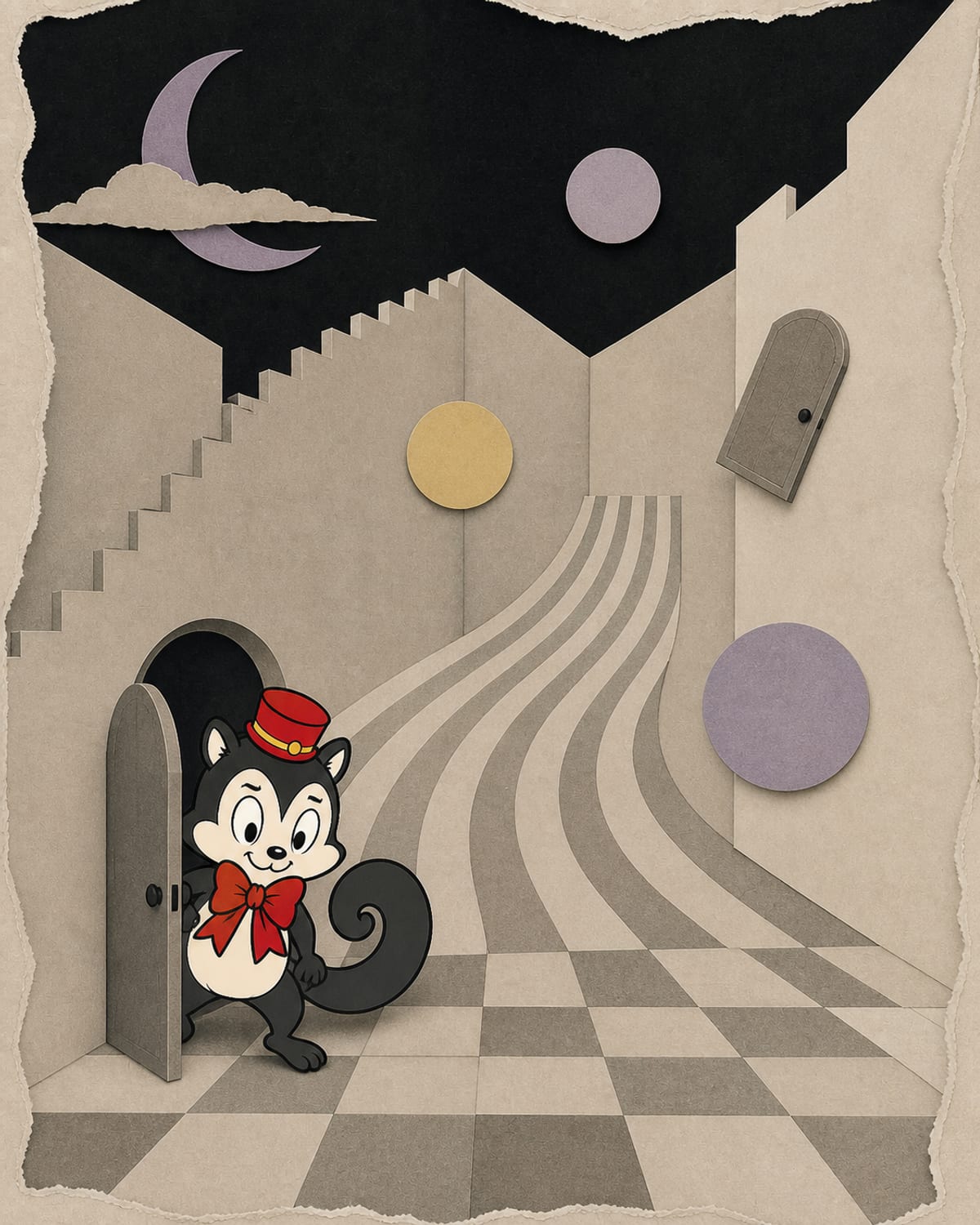
Momo guiding the way into this film

Where to go next

Want a gentler, shorter, or stranger next film? Ask Momo for something like this →
Momo is on shift. Visit Momo Cinema →

Continue through the catalogue →