← Back to the films

Drama

The Seventh Seal

Det sjunde inseglet

Year
1957
Length
96 minSwedish 96-minute original length Version sources ↓

A knight plays chess with Death. Unforgettable.

Search for a copy ↓ Before you watch ↓

Amazon.com search · paid link. Check the edition and region before buying.

Country
Sweden
Language
Swedish
BleakStrange Best saved for later · For patient viewers Drama
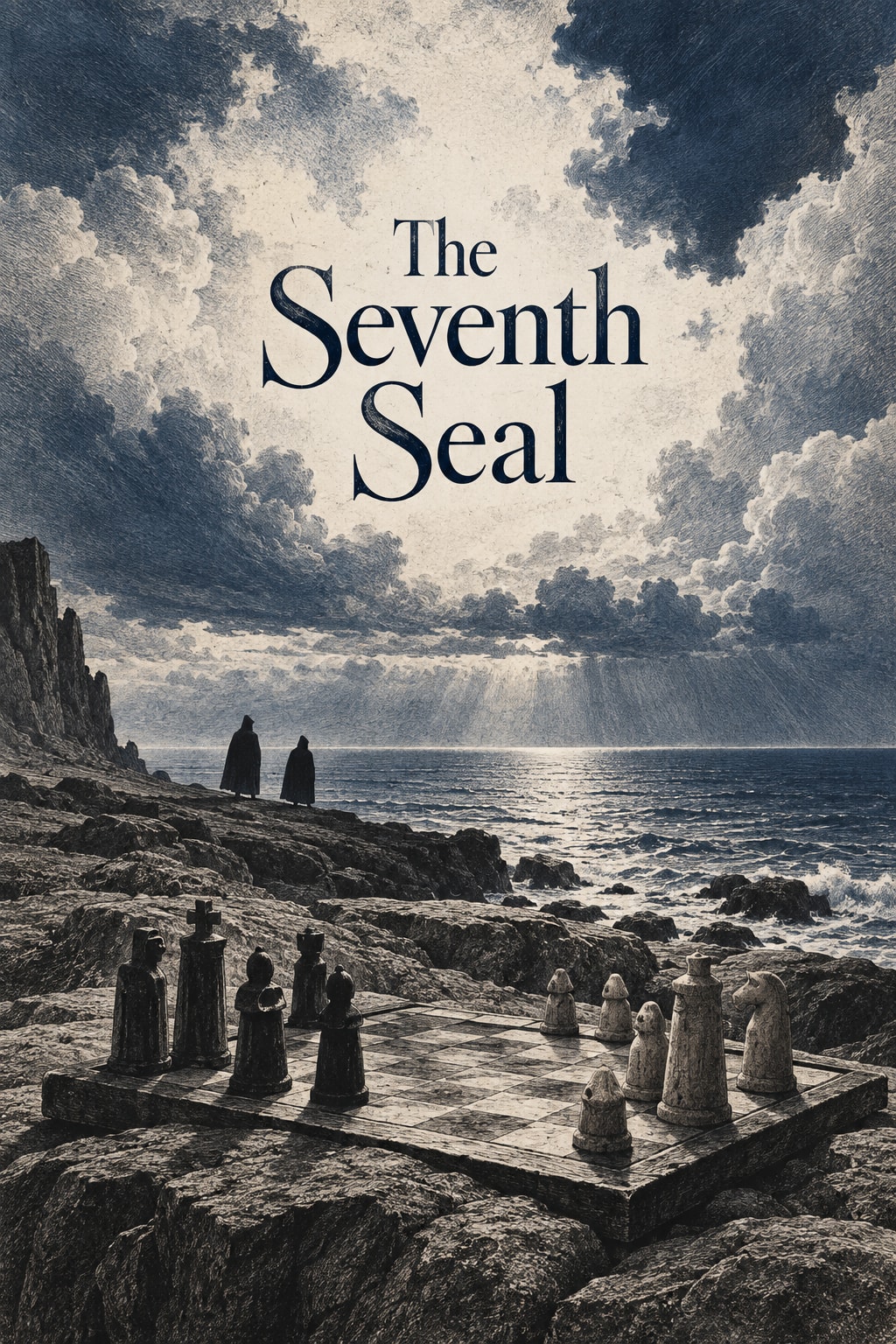
The Seventh Seal: A chessboard and distant cloaked figures stand on an engraved seashore.

Image: Monocurator · source · Original Monocurator artwork

Why does the knight play chess with Death?

Antonius Block challenges Death to gain time. Keeping the game going postpones their appointment while he searches for answers and a meaningful act to perform. The Ingmar Bergman Foundation’s synopsis makes this purpose explicit: the chessboard gives his journey a deadline.

Block and Jöns
The knight returning from the Crusades and his squire.
Death
The knight’s opponent, accompanying his journey through their unfinished game.
Jof, Mia and Mikael
Two travelling performers and their young son.

The image also has a visual ancestry. In his introduction to the film, Bergman recalled childhood church paintings in which Death played chess and led a final dance. That painted world becomes a road the characters can travel, with its frightening figures encountered among ordinary conversations and daily needs.

The chess result, the survivors and the final dance Ending spoilers

Who wins the chess game?

Death wins. The knight’s useful move happens beside the contest:

  1. Jof sees the danger. He recognises Death at the board and prepares the family’s departure.
  2. Block creates a distraction. Seeing them leave, he deliberately knocks the pieces over.
  3. Death restores the position. As he concentrates on the board, the wagon gets away. His winning position remains.

Bergman’s screenplay, pages 27–28, follows these actions. The distraction helps someone else; it does not secure the knight’s own escape.

Who survives?

Jof, Mia and Mikael survive the encounter and emerge from their wagon after the storm. Death reaches the knight’s party at the castle. The family’s continued life gives Block’s delay a purpose: he has used the time he gained to help them. Their survival is a reprieve, not immortality.

What does the final dance mean?

Jof sees Death leading a distant procession; Mia responds with affectionate amusement at his visions. The screenplay’s final page places that vision beside the living family. Read the ending through this contrast: the departing figures and the people whose journey continues.

The silhouettes also belong to a spontaneous moment of filmmaking. Bergman recalled spotting a striking cloud after filming had stopped. The camera was hurriedly set up, and crew members and tourists replaced actors who had already left. The famous image was made in minutes.

What to expect

The Seventh Seal gives philosophical doubt a simple, unforgettable image: a weary knight facing Death across a chessboard. Yet Ingmar Bergman balances its grave questions with humour, tenderness, performance, and the needs of ordinary people on a medieval road. That contrast keeps the film human. It asks what faith and meaning can offer in a frightening world without pretending that one answer will settle the matter.

How to ease in

You do not need a background in theology. Follow the knight's questions, but give equal weight to the travelling performers, meals, jokes, and practical acts of care around him. The film alternates stark allegory with earthy road-movie episodes. If the famous chess image feels solemn, remember that Death is also a character in a story with wit and movement.

Heads-up

A quick, non-exhaustive note Set during a plague and includes death, religious terror, self-punishment, attempted sexual violence, and persecution for alleged witchcraft.
Momo's Note May contain spoilers Who is Momo? →
Open the note ↓ Close the note ↑

The chessboard is the image everyone carries away, but I return to the shared food under the afternoon light. Bergman lets a modest pleasure answer the film's enormous questions without pretending to solve them. That balance makes the darkness bearable: meaning may not arrive as certainty, but attention can still make a moment whole.

— Momo

Momo thinking about this film

Credits & versions

Credits
Cast
Max von Sydow — Antonius Block · Bengt Ekerot — Death · Gunnar Björnstrand — Jöns · Bibi Andersson — Mia
Screenplay
Ingmar Bergman
Cinematography
Gunnar Fischer

Version map

Where to go next

Want a gentler, shorter, or stranger next film? Ask Momo for something like this →
Momo is on shift. Visit Momo Cinema →

Continue through the catalogue →