See Films Differently Start here
Why Watch Black-and-White Films Today?
Black-and-white films do more than remove colour: they reshape light, faces, texture and space. Here is what to look for, and where a beginner can start.
When I tell people that I love black-and-white films, they often ask the same question:
Why watch them now, when films have colour?
It is a fair question. If black-and-white looks like an obsolete stage on the way to modern cinema, choosing it can sound like preferring an old telephone to a new one.
But a black-and-white image is not simply a colour image with something missing. It reorganises what catches your eye. Light becomes more visible. Shadows become shapes. Faces separate from rooms in unfamiliar ways. Rain, smoke, stone, skin and fabric can seem to share one world while keeping sharply different textures.
That is the short answer: watch black-and-white films because they let cinema show you things that colour shows differently.
The longer answer is more enjoyable, because there is no single ‘black-and-white look’. A ruined city, a romantic close-up, a comic chase and a fairy-tale nightmare can all use monochrome for completely different reasons.
Black-and-White Is a Way of Arranging Attention
Colour helps us recognise things quickly. A red coat, green field or blue sky can claim attention before we have examined the rest of the frame.
Remove hue and the hierarchy changes. Brightness, contrast, outline, movement and texture do more of the work. A white face in a dark doorway may become the first thing we see. A wet road can turn into a ribbon of reflected light. A tiny figure can remain readable against a pale horizon.
This is why strong black-and-white photography often feels designed rather than merely old. Cinematographers did not point a camera at a colourful world and accept a reduced result. They controlled lighting, make-up, costume, sets, exposure and film stock so that colours in front of the camera became distinct tones on screen. The history of cinematography is full of new techniques for shaping those relationships, from reflected sunlight in early outdoor filming to the powerful illumination used for deep-focus images. [1]
The practical viewing tip is simple: during your first ten minutes with a black-and-white film, notice where the brightest patch sits. Then notice the darkest. The space between them is often where the film is directing your attention.
Light Can Enter the Story
In The Third Man, post-war Vienna is not merely a background photographed without colour. Rubble, wet streets, tilted compositions and pools of darkness make the city feel physically unstable.
The most famous entrance begins with absence. A man is hidden in a doorway. A cat gives away his position. Then a nearby window lights his face, and Harry Lime appears before he has said a word.
Colour could stage the same surprise. Black-and-white makes the event unusually clean: darkness contains a secret, light releases it, and the face becomes the answer. The BFI describes the film as a blend of stark realism and German expressionism, using real damage in Vienna while transforming the city to reflect its characters’ troubled inner worlds. Its cinematography won the Academy Award in the black-and-white category. [2]
This is one pleasure of monochrome. Light stops behaving like an invisible condition that allows us to see the actors. It can behave like an actor itself.
The Same Colours Can Produce Opposite Worlds
‘Black-and-white’ sounds like one visual category. Watch two very different films and it immediately breaks apart.
Rome, Open City uses rough streets, mixed film stock and immediate human movement to bring occupied Rome close to newsreel reality. The production began shortly after the city’s liberation, using scarce resources, location shooting and scraps of 35mm film. The BFI notes both the rawness those conditions created and the film’s carefully shaped melodrama. [3]
The Night of the Hunter goes in almost the opposite direction. A barn becomes a sharp silhouette. A river journey becomes a child’s picture book touched by fear. In the Library of Congress essay, Peter Rainer describes images conceived in jet black and pearl, with darkness and light continually bleeding into each other. [4]
One film makes history feel frighteningly near. The other makes danger feel like a nightmare remembered from childhood. Both are black-and-white.
That difference matters for beginners. If one famous monochrome film leaves you cold, you have not discovered that black-and-white cinema is ‘not for you’. You have discovered that one film is not for you.
Our companion article, Why Was Night of the Living Dead Shot in Black and White?, looks at the choice inside a later horror film made after colour had become normal. It shows why monochrome did not simply vanish when the technology changed.
If you would rather meet the film without its ending being discussed, begin with the spoiler-light Night of the Living Dead Film guide.
Black-and-White Can Make an Image Easier to Remember
The chess game beside the sea in The Seventh Seal can be reduced to a few forms: pale sky, dark clothes, two figures and a chequered board. That simplicity helps the image survive outside the film. You do not need to remember the colour of a costume or landscape to recognise it.
The BFI connects Gunnar Fischer’s sharply composed photography with expressionist chiaroscuro and the film’s conflict between light and darkness. It also points out something the film’s solemn reputation conceals: it contains humour, travelling performers and moments of ordinary pleasure. [5]
This is another reason to watch rather than merely admire a still. Iconic black-and-white images can make a film look severe from the outside. Movement, voices, jokes and human awkwardness restore everything a famous photograph leaves out.
Monochrome can simplify the visual field without simplifying the people in it.
Old Does Not Mean Slow, and Silent Does Not Mean Primitive
Some resistance to black-and-white films is really resistance to what we imagine an ‘old film’ will demand: patience, homework and reverence.
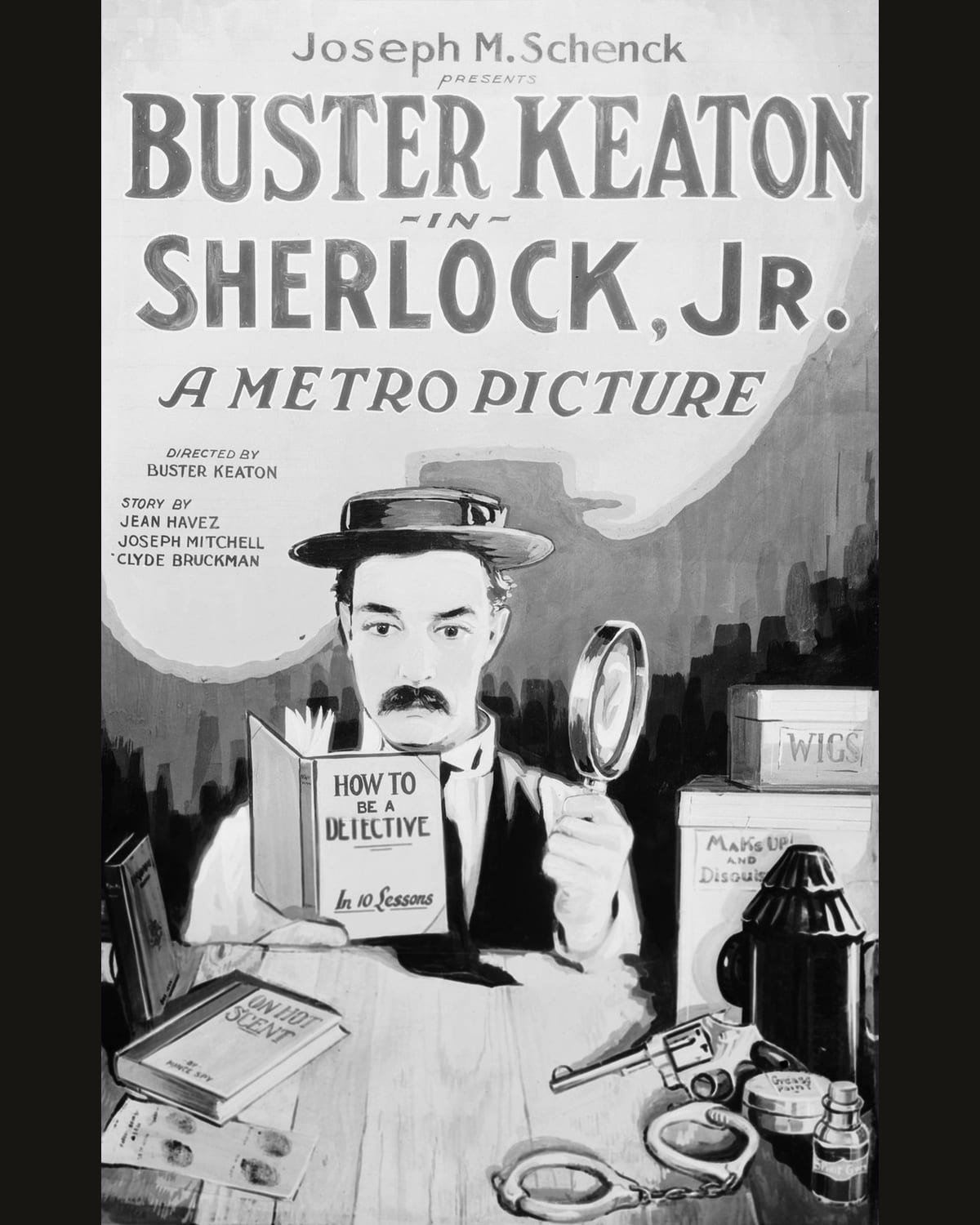
Try Sherlock Jr. instead. It runs about 45 minutes. Buster Keaton plays a projectionist who dreams himself into the film on screen, where a burst of edits keeps dropping him into completely different locations. The BFI calls it a dazzling display of physical comedy, camera trickery and ideas about how cinema plays with fantasy. [6]
Or try His Girl Friday, where the problem is not slowness but keeping up. Its dialogue moves like a competitive sport as Rosalind Russell and Cary Grant interrupt, challenge and attract each other. The BFI describes their exchanges as lightning-fast ping-pong repartee. [7]
Neither film asks you to respect it because it is historically important. One fires visual jokes; the other fires words. Their age becomes interesting after their energy has already won you over.
Black-and-White Was Never as Colourless as the Label Suggests
There is one useful complication. Early cinema was not always experienced as neutral grey.
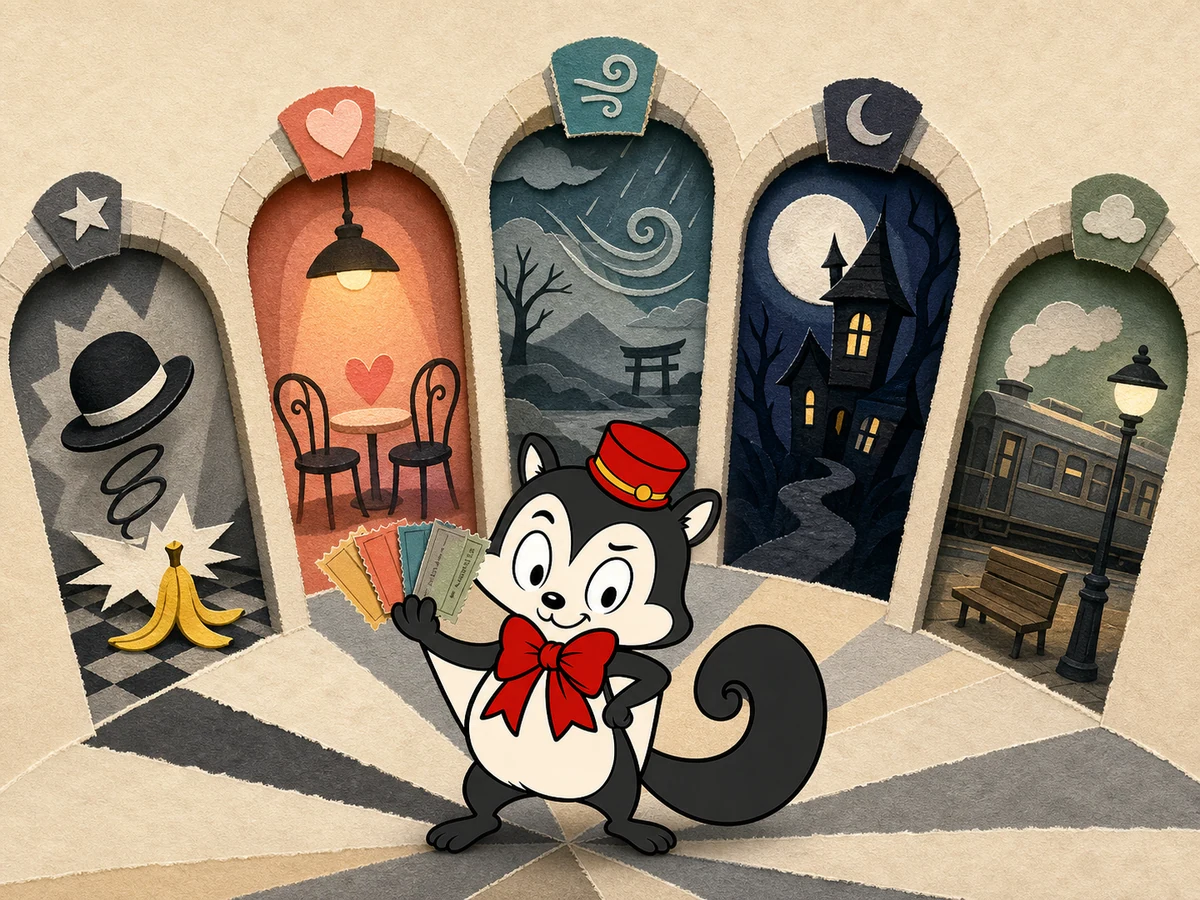
Silent-era prints were often tinted or toned: a whole scene might be washed in blue for night, amber for lamplight or another colour chosen for atmosphere and meaning. Film historian Annike K. Hanssen notes an estimate that tinting and toning were used in roughly 85% of prints during the period from 1908 to 1921. [8]
That does not make ‘black-and-white film’ a useless category. It reminds us not to treat cinema history as a simple staircase from no colour to colour. Filmmakers and exhibitors have always manipulated what an audience sees.
Our guide to silent-film tinting and toning explains where those colours appear in the image and why restored copies can differ.
A good restoration may therefore look different from the flat grey image people expect from an old television broadcast. Grain can be visible without turning to electronic noise. Night scenes may carry a tint. Fine gradations can appear inside a black coat or bright sky.
When possible, choose a reputable restoration and watch it on a screen large enough that faces are not reduced to thumbnails. You do not need expensive equipment. You only need an image that has not crushed every dark tone into one black patch or blown every bright surface into white.
Why Do Filmmakers Still Choose It?
Once colour became standard, black-and-white became a more conspicuous decision. That is why modern monochrome helps answer the original question.
Filmmakers still use it to separate points of view, evoke a period without pretending to reproduce it neutrally, emphasise landscape, or create distance from everyday vision. Wings of Desire gives its watching angels a textured monochrome world before colour enters with human experience. The BFI notes that cinematographer Henri Alekan used a silk stocking as a filter to create the angels’ muted, tactile view. [9] Cold War and Roma use contemporary production technology to make images that do not resemble a technical leftover from the past.
At the 2019 Academy Awards, Cold War and Roma became the first pair of black-and-white films nominated together for cinematography since 1966. The Academy noted that the separate black-and-white cinematography category had ended in 1967. [10]
The technology did not force these later films to abandon colour. Their filmmakers selected monochrome from a larger palette of choices.
Where Should a Beginner Start?
Do not begin with the film you think you are supposed to appreciate. Begin with the experience you want tonight.
- For comedy: Sherlock Jr. if you want compact visual invention; His Girl Friday if you want rapid dialogue.
- For romance: Casablanca if you want glamour, humour and a love story pressed against history. Our beginner-friendly explanation of why Casablanca is considered great shows what its reputation can hide.
- For suspense and atmosphere: The Third Man if you want a mystery moving through a damaged city.
- For horror: The Night of the Hunter if you want a dark fairy tale rather than realistic violence.
- For action: Seven Samurai if you are happy to give a longer film an evening and want to see weather, movement and geography made dramatically clear.
The point is not to graduate from an ‘easy’ film to a ‘serious’ one. Comedy, romance, horror and action are already serious demonstrations of what cinema can do.
What to Look for in Your First Film
You do not need a film-school vocabulary. Three questions are enough:
- Where does the light lead me? Look for the brightest face, doorway, window or object.
- What texture can I almost feel? Rain, fog, skin, stone, cloth and smoke often become unusually present without hue.
- What would colour make easier—and what might it distract from? There is no correct answer. The question makes the image active.
After a few minutes, you usually stop thinking ‘this film has no colour’. You begin thinking about a face, a joke, a room or a decision. That is the moment the barrier disappears.
So Why Watch Black-and-White Films Today?
Because they are not incomplete colour films.
They are films in which brightness, darkness, shape and texture have been given more responsibility. They can make a real city look immediate, a studio set look like a dream, a face emerge from nothing or a comic body become perfectly readable in motion.
And because avoiding them closes the door on too many kinds of pleasure: fast comedies, frightening fairy tales, romances, thrillers, action films, intimate family stories and images that modern filmmakers still study, quote and reinvent.
You do not have to prefer black-and-white to colour. You only have to let one good film teach your eyes what the difference can do.
Frequently asked questions
Are black-and-white films harder to watch?
They can feel unfamiliar for the first few minutes, especially if you associate monochrome with poor television copies or compulsory school viewing. The storytelling is not automatically more difficult. Starting with a genre and running time you already enjoy usually matters more than the absence of colour.
Are all old films black-and-white?
No. Colour processes, hand-colouring, tinting and toning appeared throughout early cinema, and colour features existed long before colour became the dominant industrial standard. Many silent films commonly called black-and-white were originally shown with coloured tints.
Why does black-and-white sometimes look more dramatic?
Without hue, contrast and lighting have to separate faces, objects and spaces more clearly. Hard shadows, bright edges and reflected surfaces can therefore become unusually prominent. That effect is designed; it is not an automatic property of every monochrome image.
What is the best black-and-white film for a beginner?
There is no universal best first film. Sherlock Jr. is short and visually inventive, His Girl Friday is fast and funny, Casablanca offers romance and wit, The Third Man offers suspense, and The Night of the Hunter offers stylised horror. Choose the promise that sounds enjoyable rather than the title with the greatest reputation.
Do modern filmmakers still make black-and-white films?
Yes. Roma, Cold War, The Tragedy of Macbeth and many other recent films use monochrome as a deliberate aesthetic choice. Modern black-and-white can be photographed digitally or on film; the meaningful question is what the tonal design does inside that particular story.
References
The sources below support the historical, production and cinematographic claims in this guide. The comparisons between films and the viewing method are Monocurator’s interpretation.
- John Belton, ‘A brief history of cinematography’, BFI Sight and Sound, September 2011.
- Neil Mitchell, ‘Location, location, location: Vienna and The Third Man’, British Film Institute, 24 June 2015.
- Alex Barrett, ‘Rome, Open City: Roberto Rossellini’s great leap for realism on screen’, British Film Institute, 15 May 2024.
- Peter Rainer, ‘The Night of the Hunter’, National Film Registry essay, Library of Congress.
- Samuel Wigley, ‘7 reasons to celebrate The Seventh Seal, Ingmar Bergman’s medieval masterpiece’, British Film Institute, 13 February 2017.
- Sherlock Jr. (1924), British Film Institute film record.
- Tara Judah, ‘10 great screwball comedy films’, British Film Institute, 2 May 2015.
- Annike K. Hanssen, Early Discourses on Colour and Cinema: Origins, Functions, Meanings (Stockholm University, 2006), p. 12, hosted by the Timeline of Historical Film Colors.
- Samuel Wigley, ‘5 visual themes in Wings of Desire – Wim Wenders’ immortal film about watching’, British Film Institute, 30 June 2015.
- ‘91st Academy Awards facts and records’, Academy of Motion Picture Arts and Sciences, 2019.
On screen
Films discussed
- Sherlock Jr. (1924) · Buster Keaton
- His Girl Friday (1940) · Howard Hawks
- The Third Man (1949) · Carol Reed
- The Night of the Hunter (1955) · Charles Laughton
Continue exploring on Monocurator
Want a recommendation shaped around your evening? Ask Momo what to watch next →