Les commandes de la page sont traduites. Les titres des films restent tels qu’ils figurent au catalogue. Les textes éditoriaux et les descriptions des sources sont en anglais.

← Retour aux films

Drama

Woman in the Dunes

Suna no Onna

Durée
147 minCriterion presentation Sources des versions ↓

An amateur entomologist is trapped in a sand pit with a widow whose nightly labour keeps their home from being buried.

Rechercher un exemplaire ↓ Avant de regarder le film ↓

Recherche sur Amazon.com · lien d’affiliation rémunéré. Vérifiez l’édition et la région avant d’acheter.

Langue
Japanese
StrangeTense À garder pour plus tard · Pour les spectateurs patients Drama
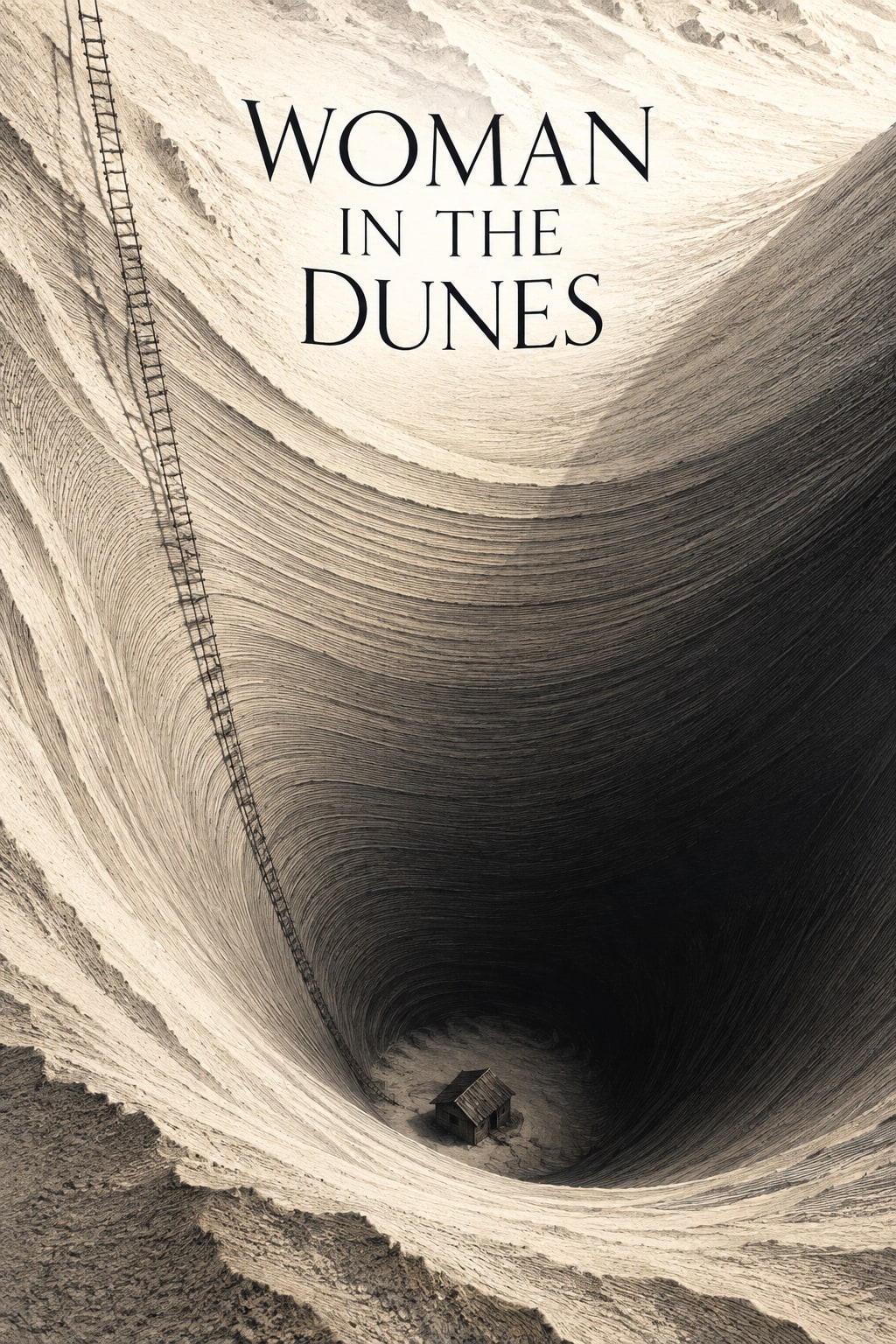
WOMAN IN THE DUNES lettering above a deep sculpted sand hollow, a rope ladder and a tiny hut. Original illustration.

Image: Monocurator · source · Original Monocurator artwork

Woman in the Dunes: the ending and the ladder

Open the ending guide after watching to compare the man's final choice with two readings of it.

Explore his final choice and two readings of it · Ending spoilers

He returns to his water-collecting device and postpones escape because he wants to share his discovery with the villagers. In Violet Lucca's account of the ending, the ladder is left behind when the woman is taken away for urgent help. He climbs out, looks towards the sea and then returns to the pit. His voiceover places telling someone about the device before leaving.

The change is real, but its value remains open to interpretation. Audie Bock's Criterion essay emphasises sharing knowledge and finding recognition among other people. Lucca reads the same desire more darkly: satisfaction in a small achievement can make confinement bearable without ending it. These readings help explain why the return can feel both purposeful and disturbing.

The final report identifies him as missing for more than seven years. It leaves a gap between his official absence and the life we have watched; it does not show every intervening year. The woman's fate is unresolved. His decision to stay is therefore not proof that captivity has become harmless or that both characters have reached a happy ending.

À quoi s’attendre

Teshigahara turns sand into landscape, texture, labour, time, and desire. Close-ups deny an easy sense of scale, while Kōbō Abe’s premise becomes a physical inquiry into freedom and adaptation.

Comment aborder le film

The film is long and intentionally repetitive. Attend to changing routines and to the scale of the sand: grain, skin, wall, and horizon continually redefine the same material.

À savoir

Une brève note non exhaustive Includes abduction, confinement, sexual coercion, attempted escape, dehydration, violence, and sustained psychological distress.
Momo's Note Peut contenir des révélations sur l’intrigue Qui est Momo ? → (S’ouvre en anglais)
Ouvrir la note ↓ Fermer la note ↑

At first I read every grain as part of the prison. Slowly the same sand becomes work, measurement, weather, and even knowledge; the trap does not vanish, but the meaning of attention changes.

— Momo

Momo thinking about this film

Générique et versions

Générique
Distribution
Eiji Okada · Kyoko Kishida
Photographie
Hiroshi Segawa

Carte des versions

Criterion presentation 147 min 147 minutes is attached only to the named Criterion presentation. No edition, cut, score, territory, frame rate, source element, or restoration detail is inferred. Source : The Criterion Collection — Woman in the Dunes Référence pour la durée · Vérifié le 2026-08-20

Pour poursuivre la découverte

Envie d’un prochain film plus doux, plus court ou plus étrange ? Demandez à Momo un film dans le même esprit → (S’ouvre en anglais)
Momo est de service. Visiter Momo Cinema → (S’ouvre en anglais)

Poursuivre la découverte du catalogue →