A free film classroom resource
Modern Times
Who sets the pace?
A conveyor keeps moving. A worker has to keep up. Use Chaplin’s factory comedy to ask what efficiency measures—and what it leaves out.
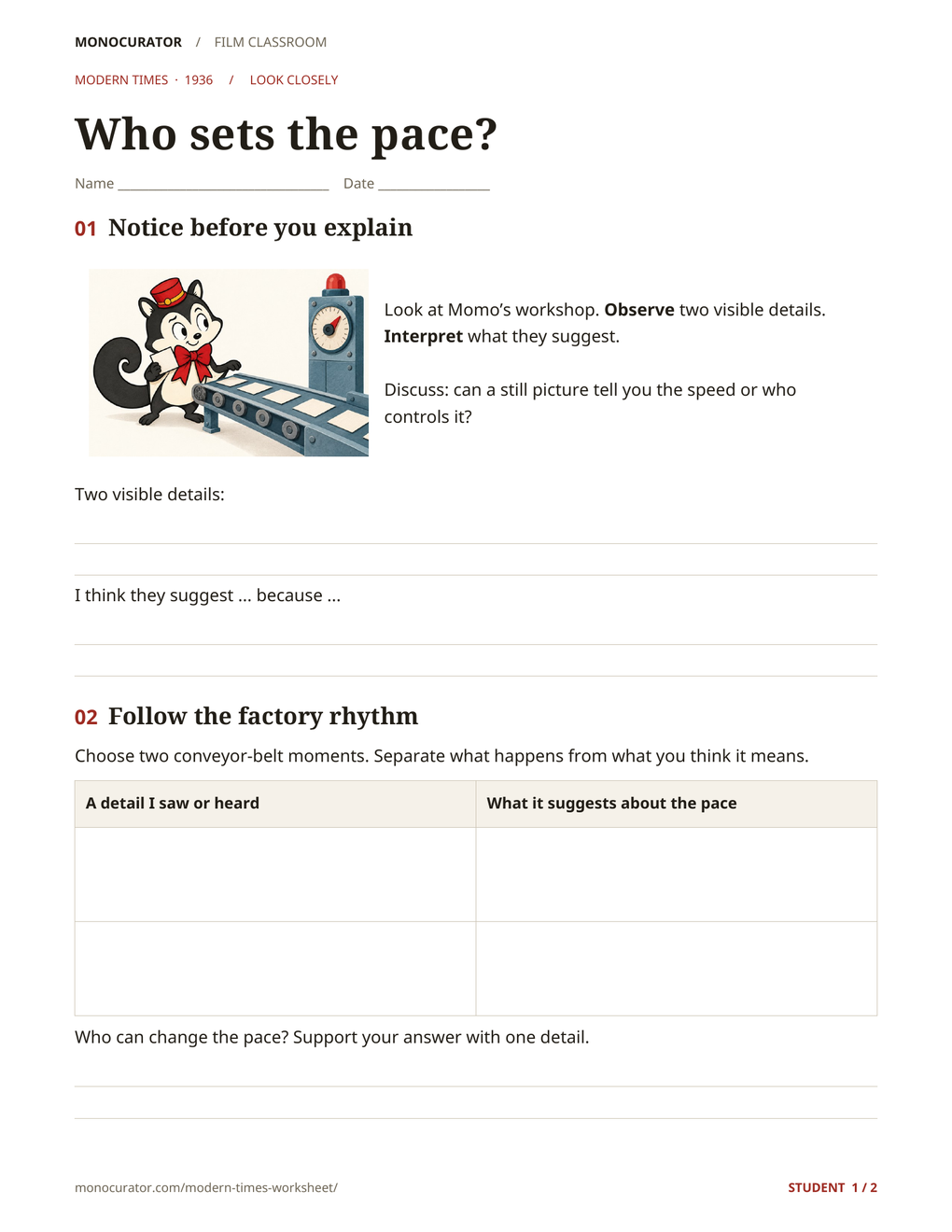
Get the free worksheet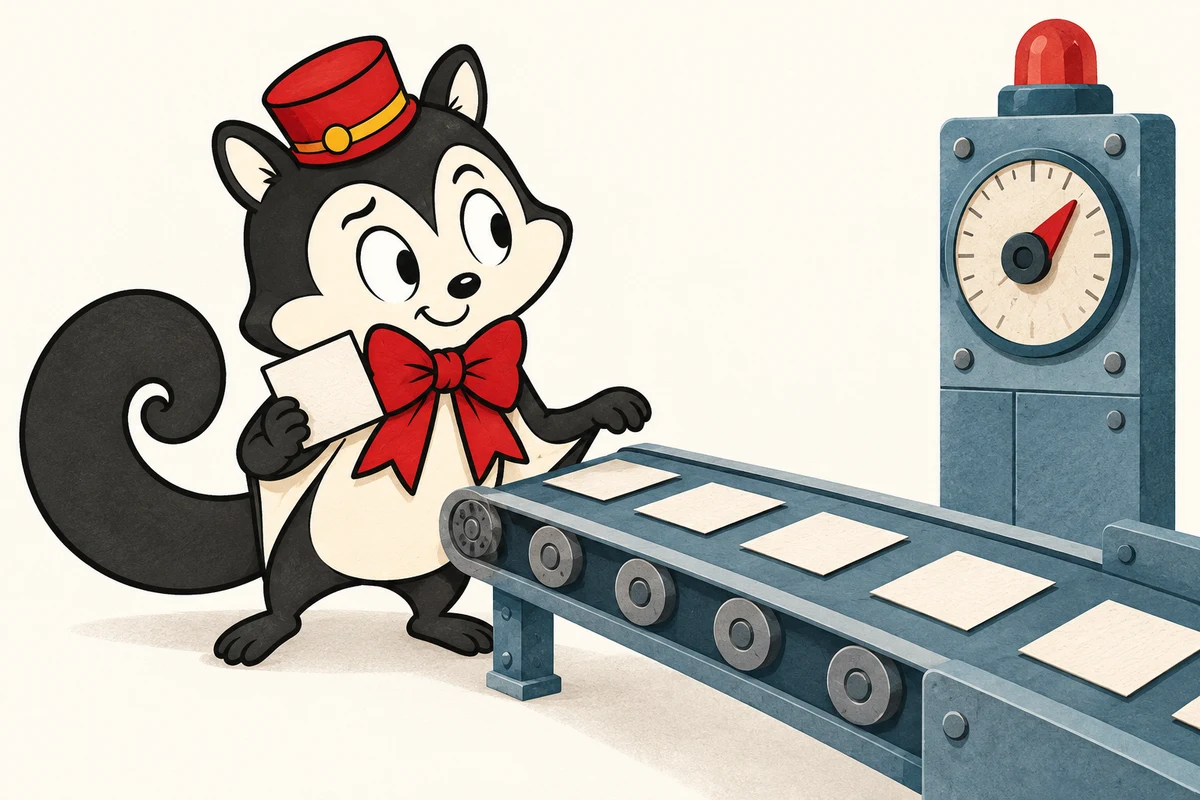
Ready for your classroom
Download the lesson
Free student sheets, teacher notes and an editable copy. No account or email address is needed.
Suggested for ages 12–16, with extension prompts for older learners. This is our teaching recommendation; choose the scenes and support that suit your class.
Print at “Fit to page” on A4 or US Letter. The Word file includes both the student sheets and teacher notes.
The question behind the joke
Faster for whom?
Students follow a movement, explain a consequence and propose a change. Each answer needs a detail from the scene.
1. Start with what you can see
The opening illustration gives everyone a place to begin. Students name visible details, then separate those details from an interpretation. A dial has a pointer; that alone does not tell us who controls the conveyor or how fast it moves. They bring that distinction to their film notes.
2. Follow the assembly line
Watch the early factory sequence in Modern Times (1936). Students record an action or sound, who appears to set the pace, and how the worker responds. They choose a repeated gesture or change in timing and explain how it makes the situation funny, uncomfortable, or both.
3. Put the feeding machine on trial
Compare what the demonstration promises with what happens to the person using the machine. Students identify a human need the design overlooks, sketch or describe one change, and explain a possible cost or limitation of their solution.
The question is open: a better answer may change the machine, the working arrangement, or both. Students should explain their choice using something they observed.
Try a question now
If you measured only the number of tasks completed, what would you miss?
Choose one detail from the factory scene. Explain why it belongs in the measurement.
Optional extension: who gets a voice?
For classes watching more of the film, compare the boss’s speech through a screen with the Tramp’s singing performance near the end. How do the voice, the body and the listener’s response work together? Listen for how music, sound effects and voices shape each scene.
How to use the 45 minutes
The core lesson works with the assembly-line and feeding-machine sequences. Allow viewing time separately, or show the selected scenes beforehand. The teacher notes provide a sequence, sample responses and four things to look for when assessing the work. The final singing scene is an extension, so the core activity does not require a full-film screening.
For a history lesson, put the comedy beside evidence of actual working conditions. The film is a constructed argument about its world, and students can ask which parts need checking against other sources.
Print, share and adapt
You may print, share and adapt Monocurator’s original materials for teaching, free of charge. Keep the source references with adapted copies. The pack supplies the activities and Momo illustration; arrange access to the film separately.
Sources and scene preparation
The Chaplin site’s production account supports the factory and sound notes. MoMA’s screening essay discusses the relationship between bodies, machines and comedy. Scene descriptions are used instead of timings, which vary between editions.
For a broader teaching context, Ohio State’s automobile history lesson uses the factory opening, and MIT’s American history course places the film alongside the standardization of work. This worksheet and its activities are Monocurator’s own.
Sources checked 14 September 2026.