What to watch next
10 Classic Animated Movies: A World Beyond One Style
Choose a classic animated movie by mood and style: compare Kiki, Akira, Pinocchio and seven more, from paper silhouettes to clay and hand-drawn worlds.
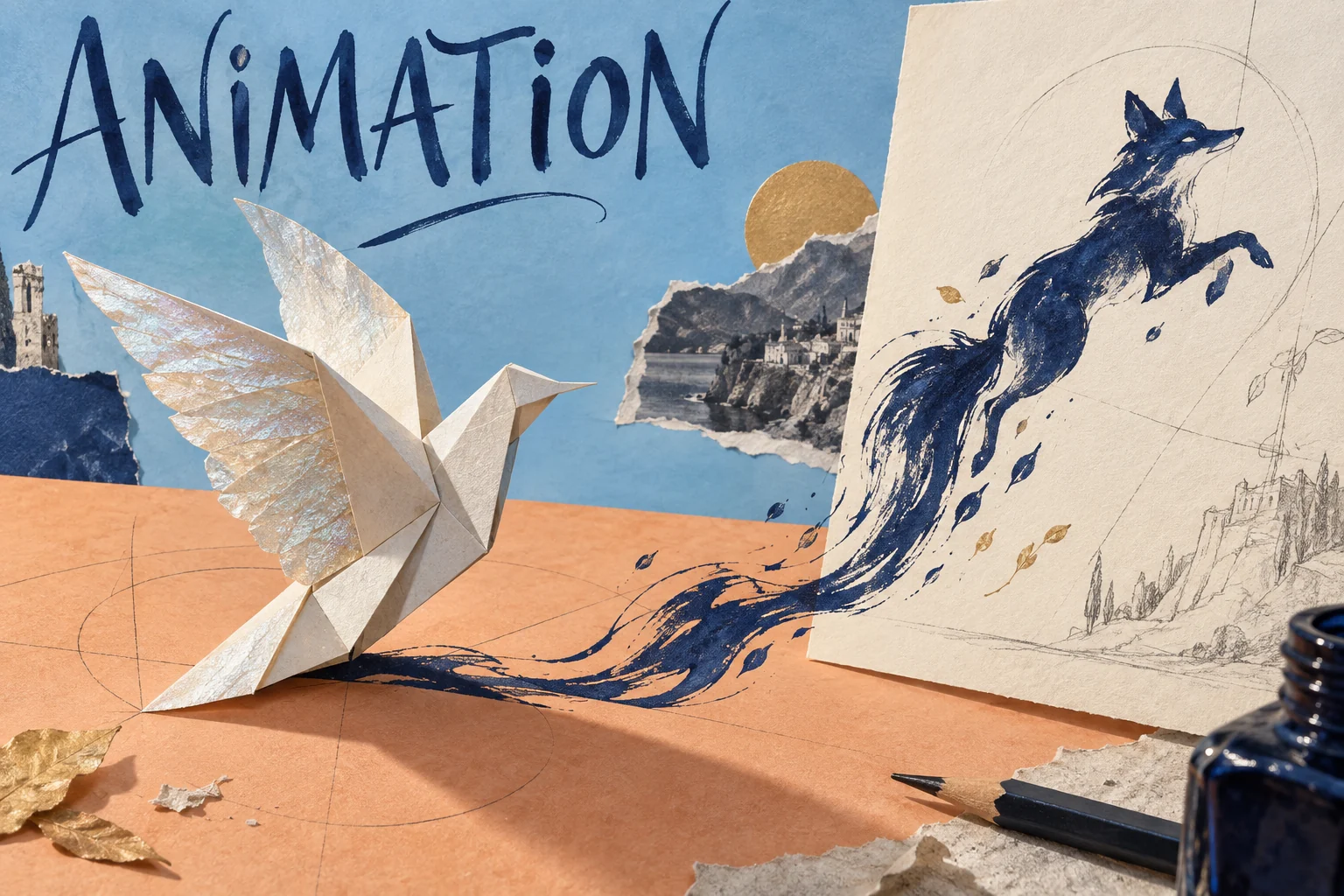
Start with Kiki’s Delivery Service for a warm coming-of-age story, Yellow Submarine for music and graphic invention, or Fantastic Planet for an unsettling world with rules of its own. Animation can make a broomstick feel heavy, turn a hole into something you can carry, or make a familiar human body look like a strange little animal. Those are quite different pleasures.
These ten classic animated movies, made between 1926 and 1989, include hand-drawn characters, articulated silhouettes, cut-out figures and clay brought to life a frame at a time. Some invite a relaxed evening; others contain frightening violence or bleak ideas. Choose by the world you want to enter, not by an assumption that animation means one audience or one mood.
Compare the 10 classic animated movies
| Film | Time to allow | Choose it for | Before choosing |
|---|---|---|---|
| The Adventures of Prince Achmed (1926) | 67 min, BFI edition | Intricate silhouettes, magic and transformations | Silent with music and intertitles; versions differ |
| Pinocchio (1940) | 87 min | Expressive character animation and a dangerous fairy tale | Threats to children and frightening transformations |
| Fantasia (1940) | About 2 hours; 125 min archive reference | Music becoming abstract shapes, comedy and spectacle | An anthology, with dark demonic imagery in one sequence |
| Animal Farm (1954) | 72 min | A compact political fable | Violence, exploitation and betrayal |
| Yellow Submarine (1968) | About 90 min | The Beatles, visual jokes and changing graphic styles | An episodic, deliberately absurd journey |
| Fantastic Planet (1973) | 72 min | Strange ecology and a change of human perspective | Nudity, captivity and violence |
| Watership Down (1978) | 92 min | A dangerous journey through an English landscape | Bloody animal violence and death |
| The Adventures of Mark Twain (1985) | 86 min, distributor edition | Clay animation and an eccentric literary voyage | Some unusually bleak, frightening passages |
| Akira (1988) | 124 min | A densely imagined city and explosive momentum | Graphic violence, body horror and flashing imagery |
| Kiki’s Delivery Service (1989) | 102 min | Independence, ordinary work and the pleasure of flight | Moments of peril; a gentler pace than an action adventure |
For the silent film, the score and projection speed can change the experience; choose the presentation as well as the title.
The Adventures of Prince Achmed (1926): a world made from edges
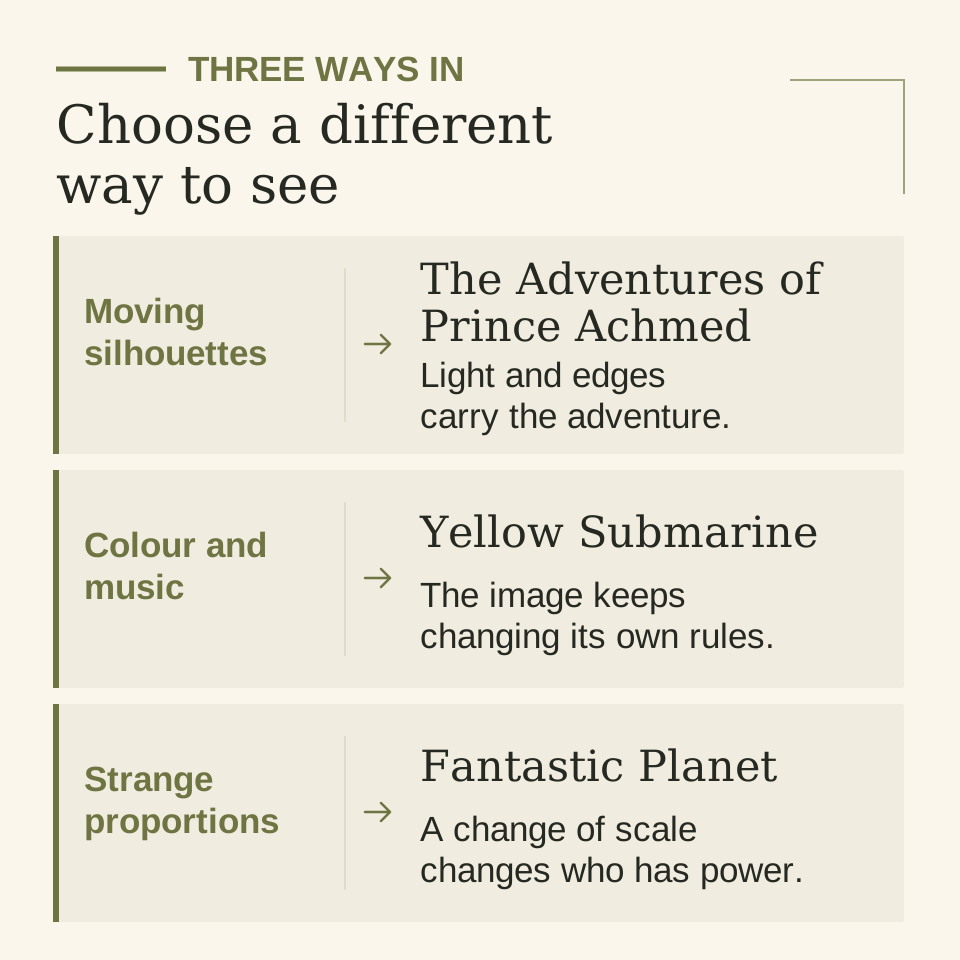
A hand, a feather or the curve of a horse’s neck can tell a story without a face changing expression. Lotte Reiniger’s articulated silhouettes make movement readable through outline and spacing. Background layers and tinted light give the figures places to travel; the image feels far richer than the phrase “black paper shapes” suggests.
Choose it for the pleasure of watching ingenuity become magic. The Arabian Nights-inspired adventure has a flying horse, a sorcerer and transformations particularly well suited to its medium. The BFI’s 67-minute edition has German intertitles with English subtitles and musical accompaniment. It is an approachable way to discover that a silent feature need not resemble photographed theatre.
Next: Fantastic Planet for a very different use of cut-out figures.
Pinocchio (1940): a small body learning the world
The puppet’s uncertain movements make his eagerness visible. Around him, wood, cloth, water and smoke behave differently, giving an impossible character a surprisingly tangible world to inhabit. The animation can be lavish without making every object feel made from the same material.
Choose Pinocchio for character acting and a fairy tale whose temptations are genuinely tempting. Invitations promise applause or freedom before their costs become apparent; that pattern gives the frightening passages their force. This is not simply a soothing story about a wooden boy. Disney archive. Look for the 1940 animated original.
Next: Kiki’s Delivery Service for a less threatening story of learning independence.
Fantasia (1940): let the music change the picture
Here the question is not what happens next to one protagonist. It is what another piece of music might make visible. Abstract light, dancing creatures, a troublesome apprentice and a night of demonic movement belong to a programme that keeps changing its terms.
Choose it when you want to give attention to sound as well as story. A movement can land like a musical accent; a shape can seem to grow out of a phrase. The live-action orchestra and introductions frame the animated episodes as a concert. Disney archive. Choose the 1940 original here; Fantasia 2000 is a separate film.
Next: Yellow Submarine for a looser, pop-song-driven visual journey.
Animal Farm (1954): familiar animals, an ugly political pattern
The farm makes power visible through ordinary necessities: food, labour, shelter and the words everyone is expected to accept. John Halas and Joy Batchelor’s adaptation of George Orwell turns changes in those arrangements into the substance of its story. A recognisable animal can become an intimidating political figure without losing its animal shape.
Choose it for a short, concentrated film with an increasingly bitter direction. It is a useful contrast to the adventures elsewhere in this list: building a new society is the action, and the cheerful surface offers little protection. Readers of the novel should expect a changed ending. BFI.
Next: Watership Down for another animal community facing questions of leadership and survival.
Yellow Submarine (1968): a picture can change its mind
The pleasure lies partly in never knowing what kind of image comes next. Flat colour gives way to collage-like textures, letters become things, and a joke can arise from treating a drawing’s empty space as a physical object. George Dunning’s film, with art direction by Heinz Edelmann, makes stylistic variety part of the journey.
Choose it for songs and visual play rather than a tightly engineered plot. The songs are performed by the Beatles; actors supply the animated band’s speaking voices. The journey to rescue Pepperland takes those cartoon counterparts through an extravagantly changeable universe. A place may last just long enough for a song or an impossible joke, then give way to another. Let the detours do their work. Official Beatles film page.
Next: Fantasia if the relationship between music and image is what caught you.
Fantastic Planet (1973): being human does not make you important
A giant’s hand changes the meaning of a person. On this planet, humans can be pets or pests; intelligence does not guarantee that a larger creature will recognise you as a fellow being. The shift in scale makes an abstract question about power immediately physical.
René Laloux’s film uses Roland Topor’s cut-out designs and Alain Goraguer’s music to make its environment unsettling even when little is happening. Strange plants and animals deserve as much attention as the central conflict. Choose it for an adult, compact science-fiction film whose images remain difficult to domesticate. Criterion. Neither its brevity nor its drawn figures make it a gentle choice.
Next: Akira for human bodies under pressure in a very different environment.

Watership Down (1978): the landscape is beautiful and dangerous
At rabbit height, a field is not an empty space between destinations. It is cover, exposure, scent, food and distance from safety. The naturalistic backgrounds make the journey feel grounded, while dream and myth can break into another visual language altogether.
Martin Rosen’s adaptation of Richard Adams follows the work of finding somewhere to live, with disagreements over whom to trust and what a secure community should cost. Choose it for a moving adventure that takes its animals’ lives seriously. The violence can be bloody, and the film does not promise to keep beloved creatures from harm. Criterion.
Next: Animal Farm to compare two very different ways of organising an animal society.
The Adventures of Mark Twain (1985): clay with a mischievous imagination
Tom Sawyer, Huck Finn and Becky Thatcher join their creator aboard an extraordinary airship. That premise allows Will Vinton’s film to move among Twain’s stories without pretending they form one ordinary adventure. A literary mind becomes a place to travel through.
Choose it for stop-motion animation that enjoys the physical possibilities of clay. Faces and forms can stretch towards caricature or turn alarmingly strange. The friendliness of the young companions does not define the whole journey: the passage drawn from The Mysterious Stranger is especially bleak. Magnolia Pictures. Look for Vinton’s animated film, not the 1944 biographical feature with the same title.
Next: Prince Achmed for another handmade method that turns transformation into storytelling.
Akira (1988): a city too large to control
Traffic, signs, tunnels and towers give Neo-Tokyo a weight beyond the immediate chase. When a motorcycle moves through it, the sense of speed comes from a whole constructed environment passing by. Katsuhiro Otomo’s animation makes urban density exhilarating before the city’s pressures become catastrophic.
Choose it for kinetic science fiction and a spectacle in which bodies are as unstable as institutions. The rivalry between Kaneda and Tetsuo provides a personal centre, but the film expects you to keep up with a complicated, turbulent world. Graphic violence, bodily transformation and flashing imagery make it one of this list’s most intense choices. BFI.
Next: Fantastic Planet for a slower, equally disquieting change of perspective.
Kiki’s Delivery Service (1989): magic has everyday uses
A young witch can fly, but she still needs a place to live and something useful to do. Hayao Miyazaki makes those practical concerns as interesting as the broomstick. A bakery, a parcel and an unfamiliar city give Kiki’s growing independence a scale you can feel.
Choose it for warmth, observation and the vulnerability of trying to become good at something. The flying has weather and effort in it; confidence is not an endless supply simply because the heroine has a magical ability. There is danger later in the story, but much of its pleasure comes from ordinary encounters. GKIDS.
Next: Pinocchio for a much more menacing world of invitations and choices.
Choose the experience, then the technique
For an easy way in: begin with Kiki if you want a story carried by character and observation. Choose Pinocchio for a more frightening fairy tale. Yellow Submarine offers the lightest commitment to conventional plot.
For the medium itself: compare the moving silhouettes of Prince Achmed, the cut-out bodies of Fantastic Planet and the clay of Mark Twain. Their differences shape how a creature can move, change and occupy space. More realism is not the only route to a convincing world.
For an adult evening: Akira is the forceful choice; Fantastic Planet is stranger and more detached. Animal Farm and Watership Down use animals to create markedly different political and emotional experiences.
For Prince Achmed, our guide to music in silent films explains why the accompaniment matters. If an older animated film is advertised as newly restored, restoration versus remastering explains what that claim may actually mean.
Momo’s Note: A flying delivery service still has to get the parcel to the right door. That small inconvenience is part of what makes Kiki’s magic so easy to believe.
On screen
Films discussed
- The Adventures of Prince Achmed (1926) · Lotte Reiniger
- Pinocchio (1940) · Ben Sharpsteen and Hamilton Luske
- Fantasia (1940) · Samuel Armstrong and James Algar and Bill Roberts and Paul Satterfield and Hamilton Luske and Jim Handley and Ford Beebe and T. Hee and Norman Ferguson and Wilfred Jackson
- Animal Farm (1954) · John Halas and Joy Batchelor
- Yellow Submarine (1968) · George Dunning
- Fantastic Planet (1973) · René Laloux
- Watership Down (1978) · Martin Rosen
- The Adventures of Mark Twain (1985) · Will Vinton
- Akira (1988) · Katsuhiro Otomo
- Kiki’s Delivery Service (1989) · Hayao Miyazaki
Further reading
Read next in the Journal
Want a recommendation shaped around your evening? Ask Momo what to watch next →