What to watch next
10 Classic Romance Movies: Choose the Feeling for Tonight
Choose a classic romance by mood and running time: ten films, from playful road trips and secret letters to Brief Encounter, Charulata and Moonstruck.

Some evenings call for two people making each other laugh. Others call for the ache of a meeting that cannot easily become a life. These classic romance films offer both, with room for letters, train stations, opera and a very awkward office Christmas party.
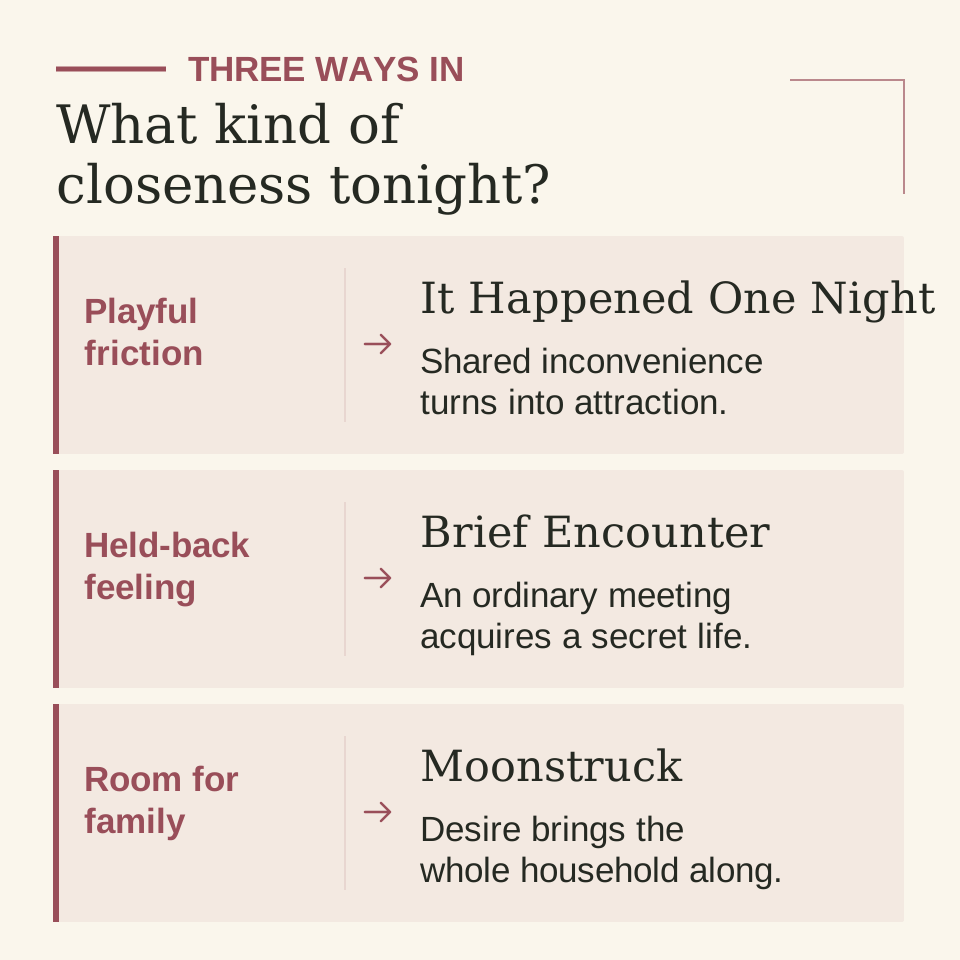
Three places to start:
- Playful and immediately engaging: It Happened One Night, a road trip on which irritation becomes attraction.
- Quiet and emotionally intense: Brief Encounter, where an ordinary weekly journey acquires a secret meaning.
- Warm, noisy and full of adult contradictions: Moonstruck, a Brooklyn romance with a family around it.
We chose ten films for distinct romantic experiences, from screwball courtship to musical melancholy and a woman’s discovery of her own creative voice. This is a guide to choosing an evening, with the emotional temperature made clear and the endings left for you to discover.
Compare the romances
| Film | Year | Time | Mood | Choose it for |
|---|---|---|---|---|
| It Happened One Night | 1934 | 105 min | Playful, argumentative | Attraction developing through shared inconvenience |
| The Shop Around the Corner | 1940 | 99 min | Intimate, gently comic | Letters, expectation and everyday kindness |
| Brief Encounter | 1945 | 86 min | Restrained, aching | The immense importance of a small meeting |
| Roman Holiday | 1953 | 118 min | Light on its feet, bittersweet | A stolen day in a city |
| All That Heaven Allows | 1955 | 89 min | Lush, emotionally direct | Desire under the pressure of respectability |
| The Apartment | 1960 | 124–125 min | Funny, bruised, humane | People learning what care requires |
| Charulata | 1964 | 119 min | Delicate, searching | The intimacy of having your mind understood |
| The Umbrellas of Cherbourg | 1964 | 92 min | Colourful, wistful | First love carried entirely through music |
| A Room with a View | 1985 | 117 min | Witty, expansive | Desire disrupting good manners |
| Moonstruck | 1987 | 104 min | Generous, operatic | A second chance with all the family complications |
Times follow the presentations or institutional records cited below. Black-and-white and colour films sit together here; the useful distinction is how you want the romance to feel.
It Happened One Night (1934): fall in love through the inconvenience
A runaway heiress and an out-of-work reporter meet on a bus. Money, transport and somewhere to sleep become shared problems, which gives Claudette Colbert and Clark Gable plenty to argue about before either has much reason to admit affection. 1
This is a useful first choice if romantic solemnity puts you off. Attraction emerges through practical details: who can manage a situation, who is bluffing and who begins looking after the other person. The reporter’s bossiness and the film’s assumptions about men and women can grate, especially early on. What keeps the pairing lively is Colbert’s refusal to be merely an inexperienced passenger in his story. Expect comic friction and companionship rather than polished declarations. Explore the film.
The Shop Around the Corner (1940): being known on paper
Two employees in a Budapest shop annoy each other at work while unknowingly exchanging affectionate anonymous letters. Ernst Lubitsch lets James Stewart and Margaret Sullavan carry both versions of the relationship: the hopeful private correspondence and the much less flattering daily encounter. 2
Its particular pleasure is the distance between imagining someone and getting to know them. A small act of thoughtfulness can be more revealing than an eloquent letter, particularly when work makes everyone anxious about how they are regarded. It has a Christmas atmosphere without requiring a December viewing. Beneath the warmth are threats to livelihoods and a serious crisis involving the shopkeeper; the tenderness matters because the film allows those vulnerabilities to exist. Explore the film.
Brief Encounter (1945): when an ordinary place changes forever
A piece of grit in Laura’s eye brings her into contact with a doctor at a railway station. Their meetings grow into something neither can conveniently fit inside an existing marriage. David Lean puts enormous feeling into modest spaces: a refreshment room, a cinema seat, the interval before a train leaves. 3
Celia Johnson’s expression often has to contain what Laura cannot say. That makes this a strong choice when you want emotional intensity without constant confrontation. The narration gives access to a mind rehearsing and judging its own happiness, while the music allows feelings more room than conversation can. Its anguish about an affair is the substance of the experience, so save it for an evening when bittersweetness is welcome. Explore the film.
Roman Holiday (1953): borrow a day from another life
Audrey Hepburn’s princess escapes her formal obligations and explores Rome. Gregory Peck’s reporter recognises an opportunity for a story, then finds that spending time with her changes the nature of the opportunity. William Wyler lets the city provide movement, interruptions and the simple pleasure of being out among people. 4
Pick this for romance that has somewhere to go. A haircut or a ride through the streets carries the excitement of doing something ordinary for the first time. Hepburn’s mixture of composure and curiosity keeps the princess from becoming merely a visitor to a tourist itinerary. There is an ethical complication in the reporter’s concealed motive, and the royal responsibilities do not evaporate because the day is lovely. Its bittersweet temperament suits a viewer who can enjoy a stolen interval without demanding that life remain suspended around it.
All That Heaven Allows (1955): who gets to approve your happiness?
A well-off widow falls for a younger gardener. Her children and friends regard the relationship as a problem to be corrected. Douglas Sirk gives their disapproval an attractive surface: handsome interiors, polished conversation and the comfort of apparently knowing what everybody should do. Jane Wyman and Rock Hudson’s lovers must negotiate that surrounding world. 5
This is the selection for rich colour and feelings large enough to fill the screen. Windows, rooms and the way people occupy them help make loneliness visible; looking respectable can become a form of confinement. The romance is deliberately heightened, with idealisation and melodramatic turns that require a willingness to meet it emotionally. If you prefer affection to stay tentative and half-spoken, try Charulata. Here, the expressive setting makes the apparently sensible objections feel increasingly hard to bear.
The Apartment (1960): make room for someone else's dignity
An office worker lends his flat to executives conducting affairs, hoping that the arrangement will advance his career. The woman he likes is caught in the same workplace’s unequal distribution of power. Billy Wilder gives Jack Lemmon and Shirley MacLaine room to be funny, tired, hopeful and embarrassed, sometimes within the same conversation. 6
There is room here for people whose lives have already become messy. Small domestic actions gradually acquire the weight that grand promises lack. The comedy makes the corporate arrangement seem absurd before its human cost becomes harder to ignore. An attempted suicide and emotional exploitation are central, so the charming performances should not be mistaken for a promise of light entertainment. Its appeal is the possibility of acting decently after a long period of settling for less. Explore the film.

Charulata (1964): someone finally hears the thought
In nineteenth-century Bengal, Charu lives comfortably but spends much of her time alone while her husband works on his newspaper. His cousin Amal brings literary conversation and a different kind of attention into the house. Satyajit Ray makes her creative awakening inseparable from the attractions and tensions that follow. 7
This is a romance for anyone who finds being understood as compelling as being admired. A glance, a discussion of writing or a change in someone’s ease can shift the emotional balance. The house feels spacious and limiting at once, and Charu’s intelligence is always part of the attraction. It asks for attention to small changes and offers no easy division into a villainous husband and a perfect alternative. Choose it for delicate complications; choose Moonstruck if you want people to give their feelings much more volume. Explore the film.
The Umbrellas of Cherbourg (1964): even the practicalities are sung
Geneviève works in her mother’s umbrella shop and loves a young mechanic, Guy. His departure for military service changes the time available to them. Jacques Demy sets their story in saturated colours and gives every exchange to Michel Legrand’s music, including the kinds of ordinary conversation most musicals leave spoken. 8
The music carries an emotion beyond what dialogue could comfortably express. The sweetness of the presentation meets decisions about money, waiting and a future that cannot remain imaginary forever. That friction gives the film its particular ache. Dialogue is sung throughout, so the everyday exchanges never step outside the music. Choose it if that continuity appeals more than the alternating dialogue and showpieces of a conventional musical. Its bright shopfronts promise visual pleasure, while the emotional weather is more changeable.
A Room with a View (1985): open the window
Lucy Honeychurch visits Florence with her chaperone and encounters people less constrained by propriety than the society she knows. Back in England, an apparently suitable engagement does not settle the feelings the trip has disturbed. Helena Bonham Carter, Julian Sands and Daniel Day-Lewis make the alternatives vividly different in James Ivory’s adaptation of E. M. Forster. 9
For an expansive romantic evening, this offers landscapes, music and a sharp comedy of manners. Watch how a person stands in a room or speaks about a view: a whole approach to life can be hiding in the gesture. It is still a leisurely costume drama, with class conventions shaping much of the conversation. Compared with Brief Encounter, it gives attraction more room for social embarrassment and open defiance.
Moonstruck (1987): love arrives with the relatives
Loretta, a widowed Brooklyn bookkeeper, has chosen a sensible engagement. Meeting her fiancé’s brother throws that sensible arrangement into spectacular confusion. Cher and Nicolas Cage play the central attraction at very different temperatures, while the family around them supplies its own opinions and romantic difficulties. 10
This is the most generous choice here for a sociable evening. Opera, food, night streets and the family kitchen give desire several places to announce itself. Older characters have emotional lives too; the romance does not belong exclusively to the most photogenic couple. The acting is sometimes gloriously extravagant, so a viewer seeking quiet realism may prefer Brief Encounter. Come for people who can be foolish, exasperating and worth loving in the same scene, and for the sense that a whole household must somehow carry on the next morning.
Choose the feeling you want to take away
For comic companionship, start with It Happened One Night or The Shop Around the Corner. For rich colour and open emotion, choose All That Heaven Allows; for heightened warmth shared among a family, choose Moonstruck.
If you want something more wistful, Brief Encounter and The Umbrellas of Cherbourg make time and separation palpable in very different ways. Charulata rewards a quieter evening, when noticing the change in a look can be as satisfying as hearing a declaration. There is room for all of these under romance. The question is which kind of closeness you want to spend time with tonight.
Sources and presentation notes
- Criterion: It Happened One Night — 1934, Frank Capra, 105 minutes.
- Criterion: The Shop Around the Corner — 1940, Ernst Lubitsch, 99 minutes.
- BFI: Brief Encounter — 1945, David Lean, 86 minutes; Criterion Channel synopsis.
- Paramount: Roman Holiday — 1953, William Wyler, 118 minutes.
- Criterion: All That Heaven Allows — 1955, Douglas Sirk, 89 minutes.
- AFI: The Apartment — 1960, Billy Wilder, 124–125 minutes.
- Criterion: Charulata — 1964, Satyajit Ray, 119 minutes.
- Criterion: The Umbrellas of Cherbourg — 1964, Jacques Demy, 92 minutes.
- BFI: A Room with a View — 1985; Criterion presentation — James Ivory, 117 minutes, listed under 1986.
- Criterion: Moonstruck — 1987, Norman Jewison, 104 minutes.
On screen
Films discussed
- It Happened One Night (1934) · Frank Capra
- The Shop Around the Corner (1940) · Ernst Lubitsch
- Brief Encounter (1945) · David Lean
- Roman Holiday (1953) · William Wyler
- All That Heaven Allows (1955) · Douglas Sirk
- The Apartment (1960) · Billy Wilder
- Charulata (1964) · Satyajit Ray
- The Umbrellas of Cherbourg (1964) · Jacques Demy
- A Room with a View (1985) · James Ivory
- Moonstruck (1987) · Norman Jewison
Continue exploring on Monocurator

Further reading
Read next in the Journal

Want a recommendation shaped around your evening? Ask Momo what to watch next →