See Films Differently Silent comedy
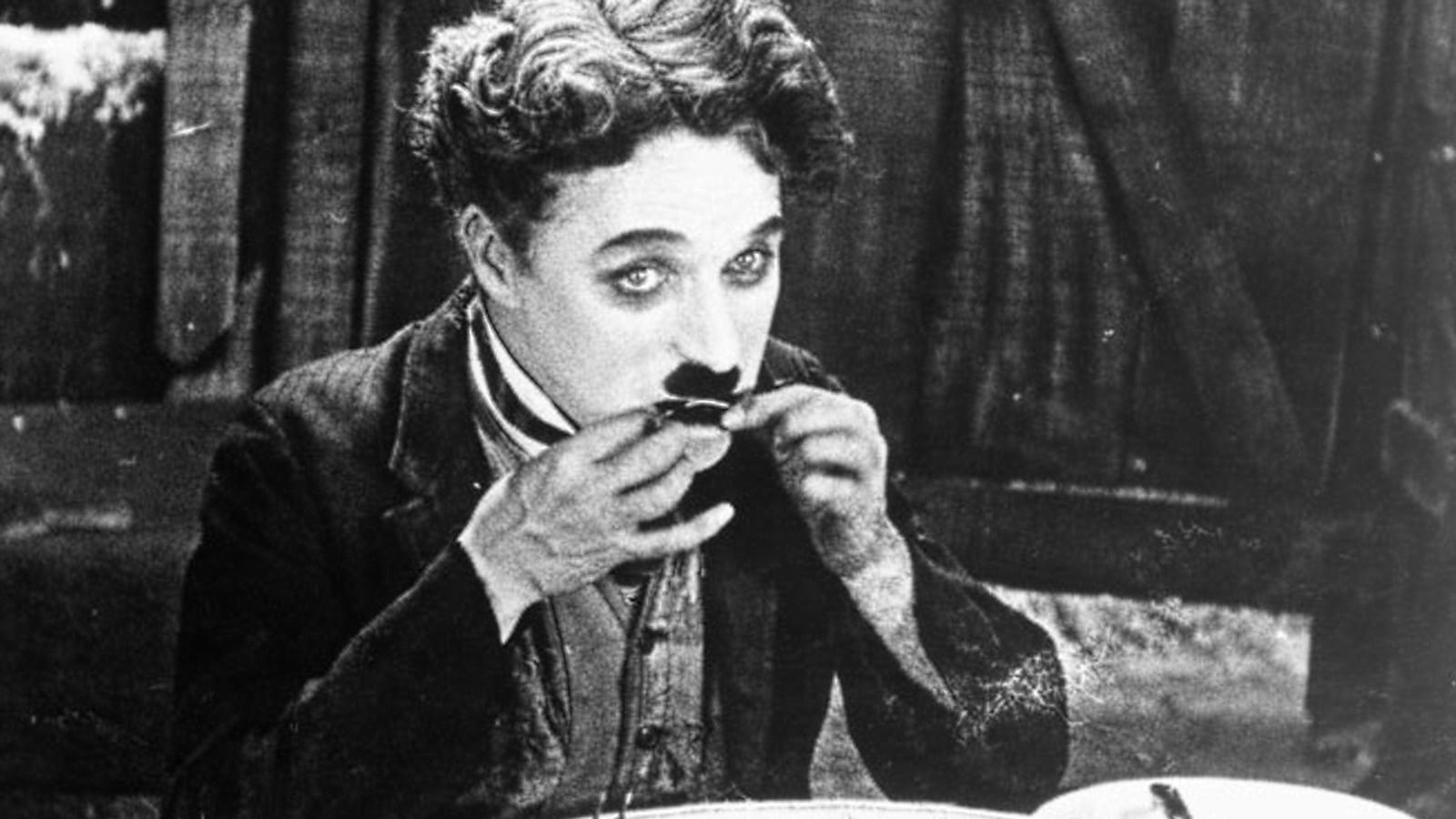
How Chaplin’s Tramp Became Someone We Could Feel For
Five shorts from 1914 and 1915 trace Chaplin’s Tramp from demanding attention to disappointment, responsibility and a rescue that belongs to a dream.
Chaplin’s early screen nuisance could be selfish, pushy and quite pleased with himself. Across the shorts of 1914 and 1915, that familiar figure acquired something more awkward to carry: feelings that a clever escape could not put right.
The hat makes recognition easy. Understanding the person underneath takes a little longer. If you arrive expecting a gentle outsider whom the world treats badly, early Chaplin can give you a surprise. Sometimes the world has a perfectly reasonable complaint.
I’d start with what Charlie wants, and what happens when he cannot have it. Five short films let us trace changes in his dealings with other people: demanding attention, exploiting someone, asking for mercy, recognising disappointment and imagining a different outcome. This is a comparison of the character’s possibilities across films, rather than one continuous fictional biography.
Spoilers: the endings of The New Janitor (1914), The Tramp (1915) and The Bank (1915) are discussed below.
A man determined to be in the picture
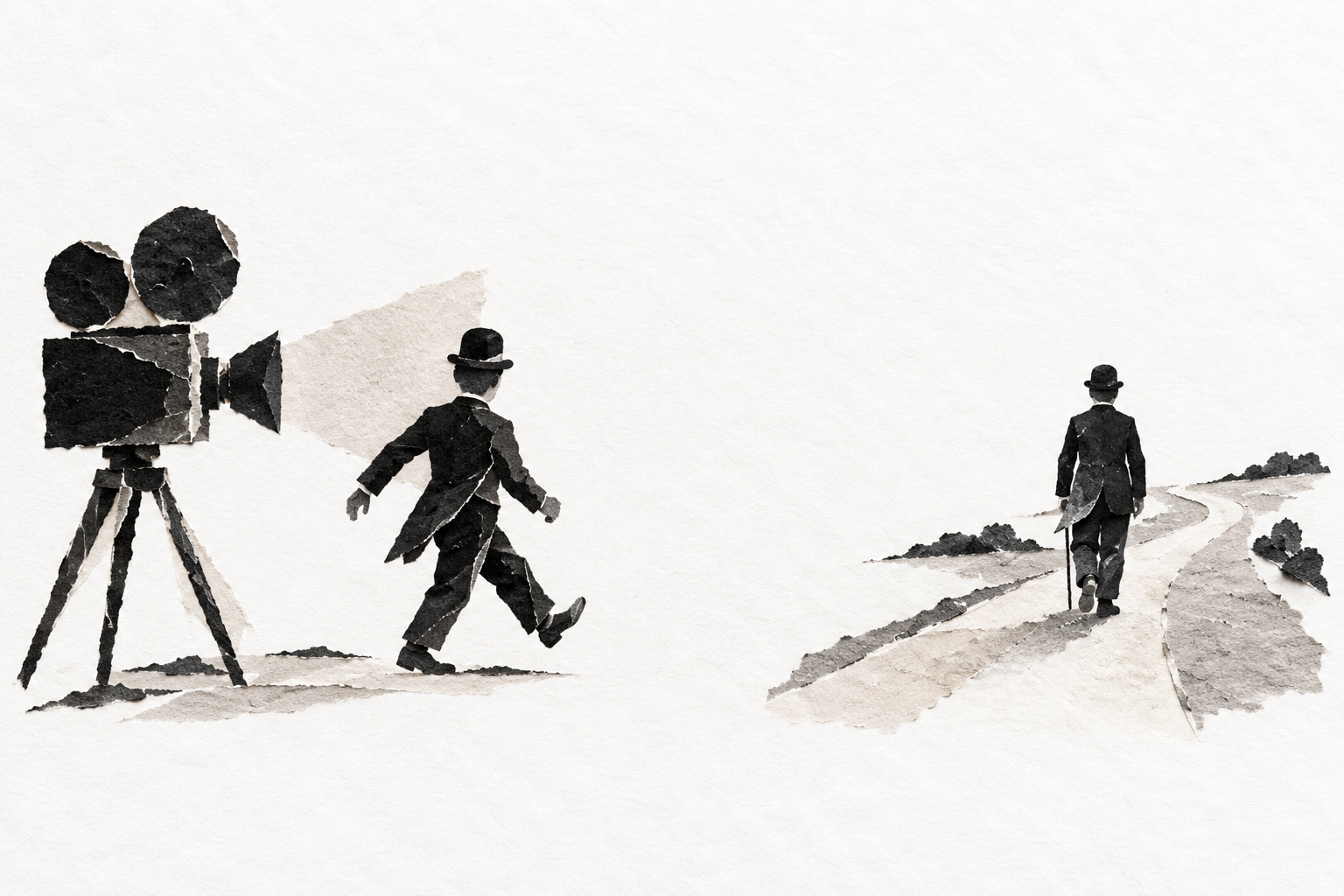
In Kid Auto Races at Venice (1914), a cameraman is trying to record a children’s car race. Charlie keeps getting in the way. The event supplies a setting; his insistence on occupying the picture supplies the comedy. The official film record identifies this as the first released film in which audiences saw the Tramp.
There is something satisfyingly impudent about that arrangement. Charlie has decided that being present entitles him to our attention. The camera crew’s business becomes a nuisance to his own little project of being noticed.
For our purposes, the useful question is who creates the difficulty. Here, he does. Being excluded from the picture may make him an outsider, but he is also obstructing somebody else’s work. You can enjoy his persistence without having to certify his innocence. Keep that troublesome appetite for attention in mind when we reach a film in which he chooses to go away.
Resourcefulness can be rather unpleasant
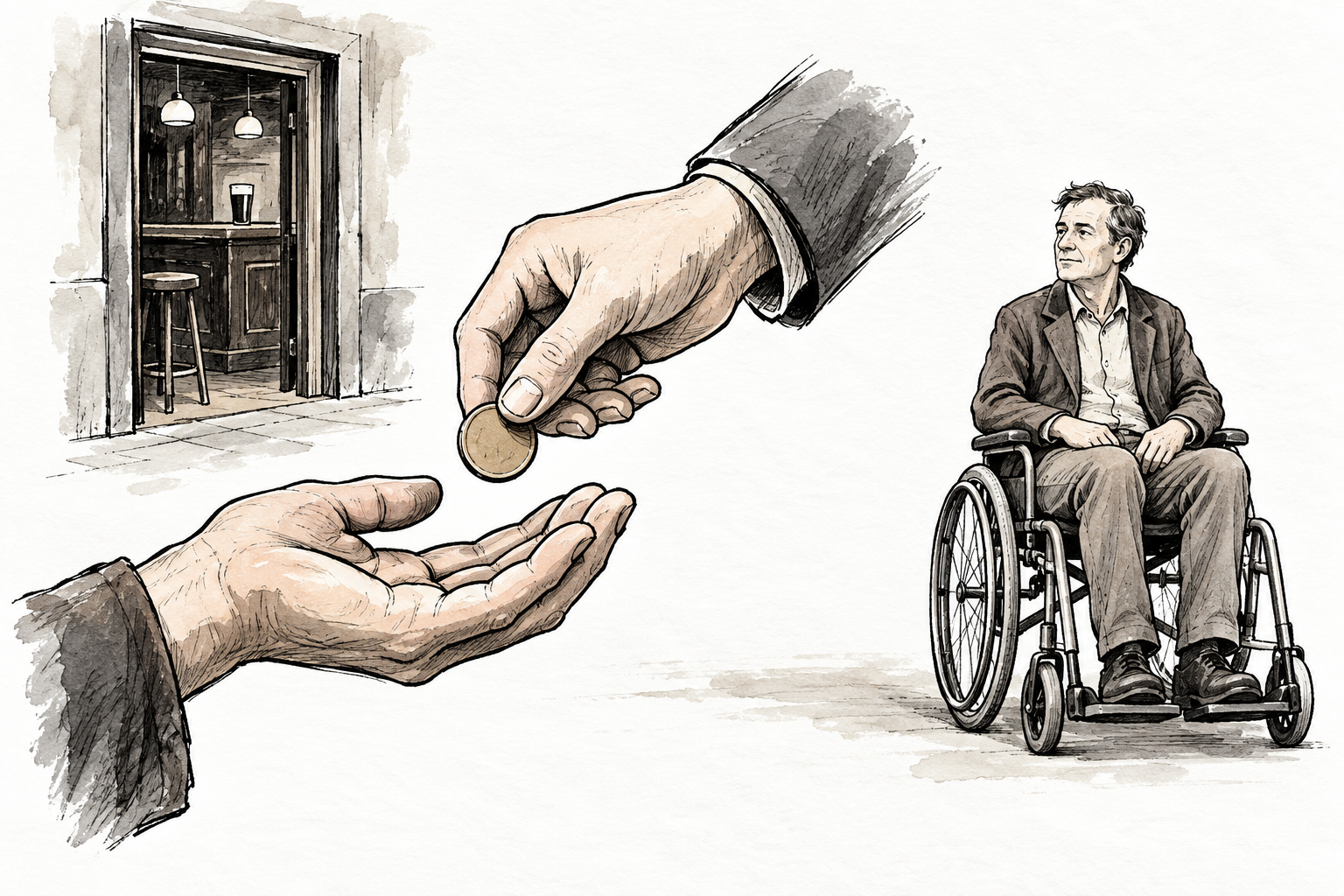
His New Profession (1914) makes the problem sharper. Employed to look after a man who uses a wheelchair, Charlie turns his charge into a means of collecting money, then spends the donation on a drink. The estate’s synopsis records both the exploitation and his abandonment of the job for the bar.
Here is ingenuity with someone else paying the price. The joke depends on Charlie finding an opportunity in the very responsibility he has been given. Looking after another person becomes a way of looking after himself.
That matters because resourcefulness can feel like an automatically lovable quality in a comic underdog. This example makes us ask what the resourcefulness is for. A character can be quick-witted and vulnerable to authority while still treating a more vulnerable person badly. The early roughness gives us something concrete to compare with his later capacity to help.
A comic appeal can have real weight
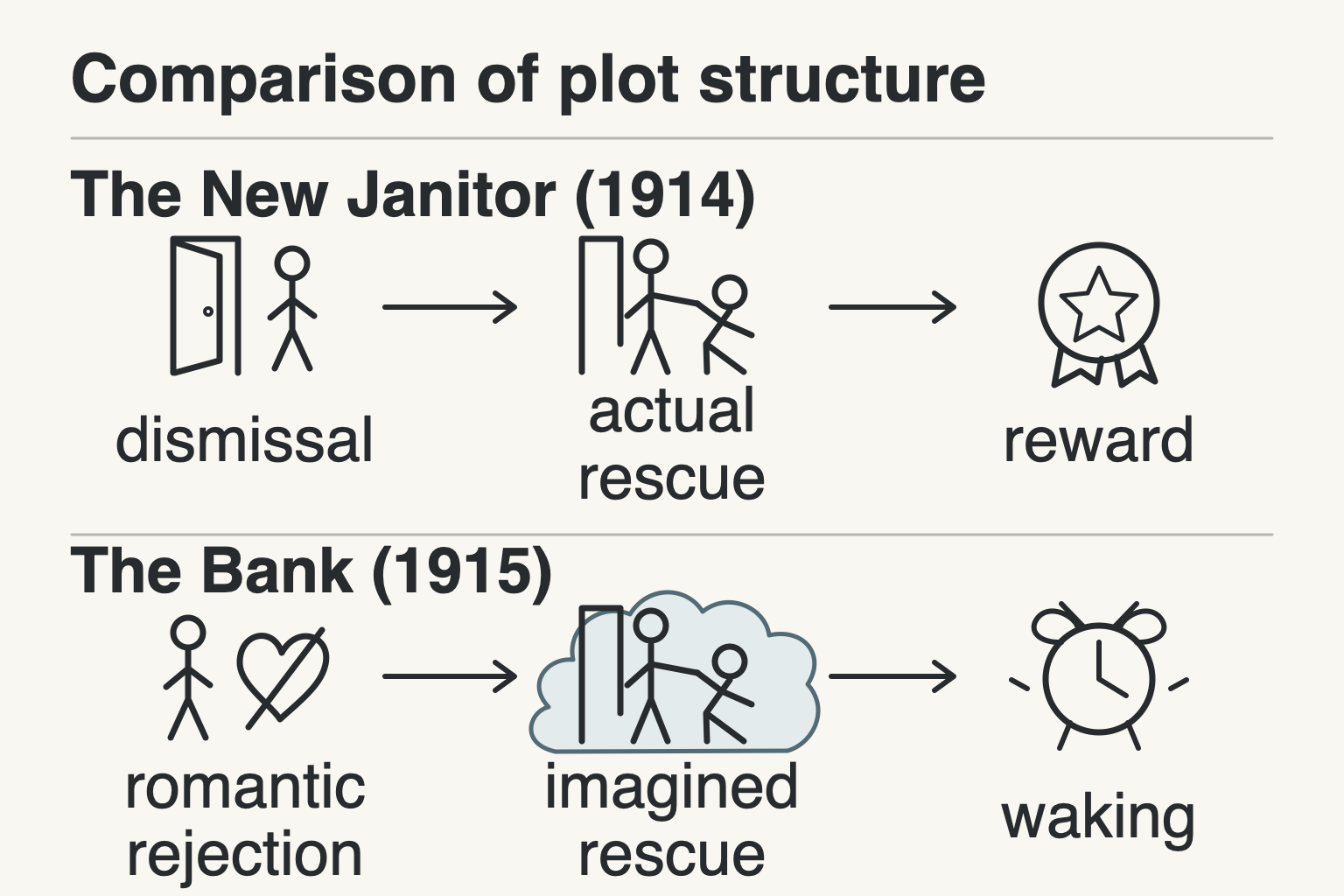
Then comes The New Janitor (1914). Charlie loses his job, returns when a secretary needs help, and foils a robbery. Its official account describes an experiment in combining sentiment with comedy. His usefulness earns him a reward; the ending restores his standing.
Chaplin later remembered a revealing rehearsal. While pleading to keep the job, he mimed having numerous children to support. He said that Dorothy Davenport, watching, began to cry, although he had intended the appeal comically. Jeffrey Vance reproduces this passage from My Autobiography in his Keystone history.
It is a recollection written much later, rather than a record of every viewer’s response. Still, it gives us Chaplin’s own account of discovering emotional force inside a comic performance. The same body that can make an inconvenience funny can make losing a livelihood matter.
So we already have a 1914 antecedent. The Tramp in 1915 did not suddenly introduce sadness into an entirely unfeeling character.
Helping does not guarantee belonging
In The Tramp (1915), Charlie protects a farmer’s daughter from thieves and helps defend the farm. He also mistakes her kindness for romantic love. When her sweetheart appears, he understands and leaves. The film’s official account records his farewell note and the closing image of him walking away alone, his back to the camera.
This changes what success can mean. He has genuinely helped. The hoped-for relationship still does not follow. Courage can deal with thieves; it cannot make another person return an affection she has never promised.
His departure is where I’d locate a particular kind of pride. That is a reading of his decision, rather than a label supplied by the film. He recognises the situation and removes himself. The young woman’s kindness remains kindness, even though he wanted it to mean more.
Compare that with the fellow pushing into the camera’s view. One insists on inclusion; the other can understand that staying will not give him what he wants. Leaving makes room for a loneliness that winning the immediate contest cannot cure.
The happy ending can retreat into a dream
The Bank (1915) offers a further turn. Charlie is again a janitor, in love with a secretary whose affections belong elsewhere. His flowers and note are rejected. He dreams of saving her during a robbery, then wakes. The official film record connects this story to both The New Janitor and Chaplin’s earlier work in Fred Karno’s dream-based sketch Jimmy the Fearless.
Put the two janitor films beside each other. A rescue that restores Charlie’s standing in the earlier story becomes something the later Charlie dreams about. His wish now helps organise the story we are shown. Waking changes the meaning of that apparent triumph.
There is no need to make him saintly for this to hurt. Wanting to be the hero in someone else’s life is an understandable vanity. The film gives that wish enough room for its collapse to count. We can recognise the self-flattery and still feel the disappointment. Those responses can share a seat.
Follow what the cleverness cannot fix
These films offer a useful way to look at a familiar character type taking shape. Ask who bears the cost of Charlie’s ingenuity, whether helping changes his place among other people, and what remains unresolved when the action stops.

The emotional range grows through those particular arrangements. A successful rescue can bring acceptance, leave romantic hopes unanswered, or turn out to have happened only in a dream. His wants become more legible, including wants that the story will not satisfy.
For a compact comparison, put Kid Auto Races at Venice beside The Tramp. Begin with a man who will not get out of the picture. End with one who takes himself away. The outline is familiar. What his leaving means has changed.
Sources and reading notes
Sources checked on 3 October 2026. The film records are authoritative estate descriptions. Chaplin’s recollection is primary personal testimony quoted within a later historical account; it is not a contemporary record of audience response. The comparisons of pride, responsibility and reward are editorial interpretations. No particular restoration or viewing edition is claimed.
- Kid Auto Races at Venice (1914). Official film record: camera obstruction and release history.
- His New Profession (1914). Official film record: Charlie exploits his charge to obtain a drink.
- The New Janitor (1914). Official film record: dismissal, rescue, reward and sentiment.
- Jeffrey Vance, Chaplin at Keystone: The Tramp is Born. Includes Chaplin’s retrospective rehearsal account from My Autobiography (London, 1964), p. 165, cited in note 14.
- The Tramp (1915). Official film record: mistaken affection, farewell note and departure.
- The Bank (1915). Official film record: rejected flowers, imagined rescue, waking and the Karno connection.
For the next unexpected question, follow the Journal in your RSS reader.
On screen
Films discussed
- The Tramp (1915) · Charlie Chaplin
Further reading
Read next in the Journal
Want a recommendation shaped around your evening? Ask Momo what to watch next →