See Films Differently Film craft
Minions and Silent Comedy: Why the Jokes Work Beyond Words
Why can Minions make sense without translation? Follow their looks, voices and mistakes alongside Chaplin’s The Gold Rush and Keaton’s One Week.
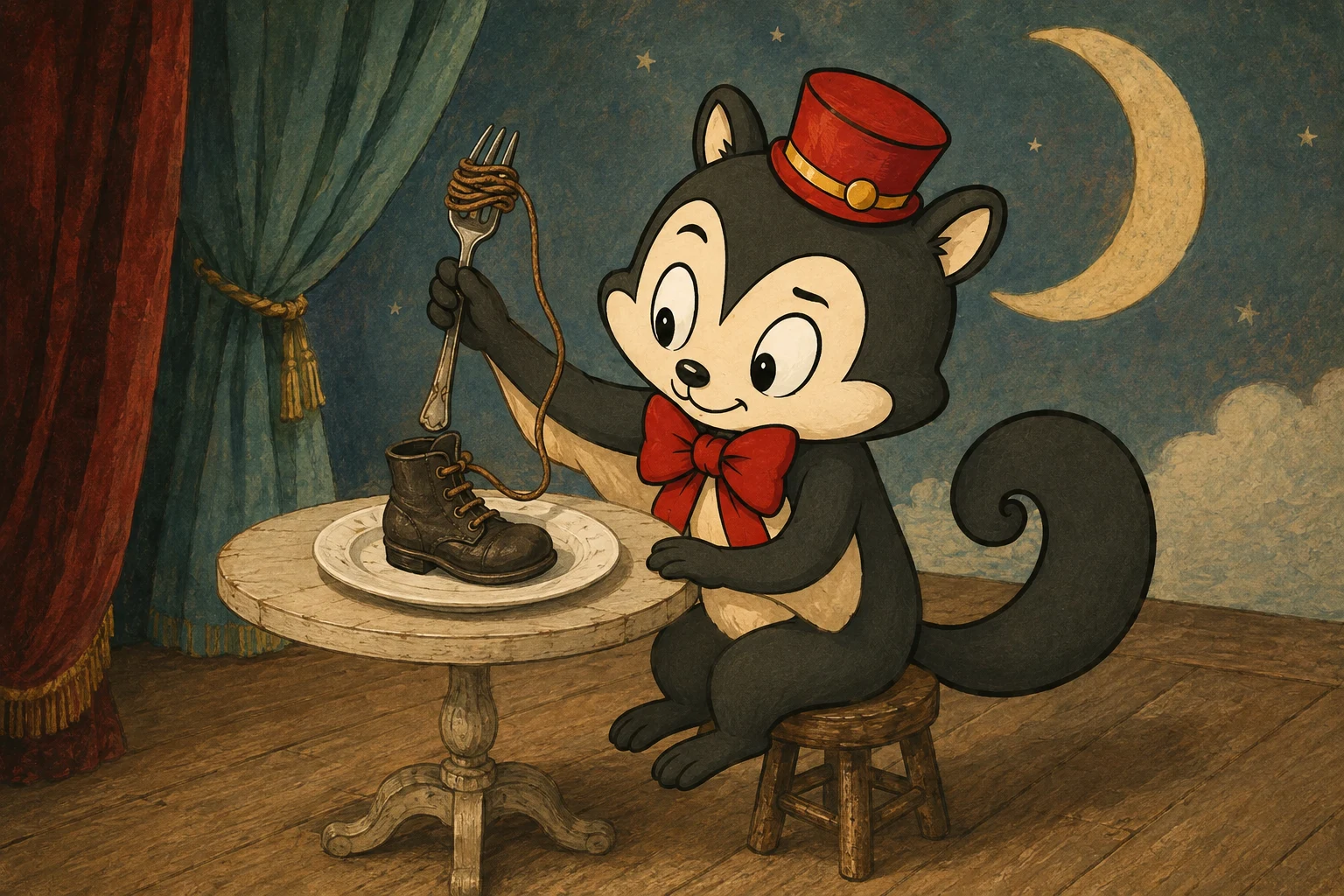
You can follow a Minion’s hunger, excitement or irritation without being able to translate the sentence coming out of its mouth. The joke gives you other things to work with: where the character looks, what it reaches for, how another character responds, and the sound of the exchange. Together, these can make a situation clear enough for you to anticipate an action—and enjoy what goes wrong with it.
Silent comedy often works this way. Chaplin and Keaton could build a joke around an intention we can see and a result we can recognise. The Minions share that approach, while adding voices whose pitch, rhythm and delivery are part of the performance. Understanding without a translation is different from watching without sound.
The connection is also one that the filmmakers acknowledge. In production-note remarks reported by The Credits, Minions co-director and voice performer Pierre Coffin names Charlie Chaplin and Buster Keaton as inspirations, and singles out The Gold Rush. His remarks concern the approach; the particular scene pairings here are Monocurator’s own comparisons. [1]
First, see what the character wants
In Minions (2015), Stuart becomes so hungry during the trio’s sea journey that Kevin and Bob appear to him as bananas. He rushes towards them with his arms out and his mouth open. The film lets us see the companions as Stuart sees them before returning to a view of the group: Kevin has his ordinary shape again, and Stuart is licking him while he tries to push Stuart away. Bob joins in by putting his mouth over Kevin’s forehead. [2]
The changing view does much of the explaining. Stuart sees a meal; Kevin is dealing with an unwanted attack. First the movement promises to satisfy Stuart’s appetite. Then the wider view shows how badly that appetite has misidentified its target. The outstretched arms and open mouth have a direction and a purpose, so the collision follows from something we already understand.
Kevin now has two companions to fend off. Watch the person receiving the attention as well as the person causing it: the attempt to get away gives the other body’s enthusiasm its comic resistance. A flurry of movement becomes an argument whose practical terms are clear.
The Gold Rush (1925) offers a close comparison. Snowbound and desperately hungry, Big Jim sees Chaplin’s prospector as a chicken. The human companion becomes food in somebody else’s eyes. The official Chaplin production history describes the effect as a combination of in-camera trick work and Chaplin’s performance in a chicken costume. [3]
Both films let hunger reorganise a relationship. A friend is suddenly something to eat. The similarity does not depend on the two creatures looking alike, or on a matching line of dialogue. It rests on the gap between one character’s desire and another character’s predicament.
A boot can become dinner without changing shape
Chaplin also finds a quieter way to make hunger visible. In the boot meal in The Gold Rush, the prospector boils his footwear, winds its laces around a fork as though they were spaghetti, and treats the nails like bones to be picked clean. [4]
The laces remain recognisably laces. His handling asks us to entertain another meaning alongside the first. The fork belongs to dinner; what is wrapped around it belongs on a foot. Each small action extends the unlikely meal, allowing the joke to develop beyond the initial discovery of what he is eating.
This differs from Stuart’s banana vision. There, the image briefly supplies the food his appetite wants. Here, the performance supplies the manners of dining while the boot stubbornly remains in view. Watch the hands and the care of the gesture. Desperation has produced an absurd meal, yet the prospector can still behave as though it deserves proper attention.
We can enjoy the ingenuity of the performance and still want him to have something better to eat. His careful table manners preserve a little dignity in a desperate situation.
When helping makes everything worse
The opening history of Minions supplies another kind of mismatch. For Dracula’s birthday, his helpers prepare a cake and open the curtains in daylight. The celebration exposes him to the sun, and he turns to dust. [5]
If you already know the convention that sunlight is fatal to a vampire, the curtains become worrying before the result arrives. An ordinary action associated with brightening a room is disastrously wrong for this guest. The Minions’ wish to please and their failure to consider what he needs occupy the same small piece of business.
Familiarity with vampire stories changes what you can anticipate. Someone encountering the convention for the first time may understand the accident only once it happens. The action is visible to both viewers; the knowledge they bring changes when it makes sense.
In One Week (1920), directed by Buster Keaton and Edward F. Cline, a newly married couple face a different problem with apparently helpful instructions. They receive a house to assemble, but a rejected suitor alters the numbers on its packing crates. The couple’s attempt to follow the system produces a house whose parts do not fit together as expected. [6] [7]
The audience knows something the builders do not. Following the numbers ought to bring them closer to a home; it keeps contributing to the mess. Film historian Daniel Eagan notes that the film withholds a full view of the house until it is finished, giving us smaller construction mishaps first. [6] We wait to discover the shape of the accumulated mistakes.
Dracula’s birthday goes wrong with one opening of a curtain. Keaton lets the construction mistakes accumulate, giving the consequences room to grow and the couple a worthwhile reason to persist. We may be ahead of them in understanding the sabotage, but wanting them to have a home keeps their effort from becoming merely foolish.
Listen to the voice as well as the words
Minionese is not simply a collection of sounds with no relation to language. Coffin has described drawing on words from different languages and choosing combinations for their melody. A recognisable word can give you a foothold, even when the surrounding speech cannot be translated into a neat sentence. [8]
The voice also helps distinguish the speaker. The production material discussed by The Credits describes Kevin’s more adult, admonishing delivery, Stuart’s casual manner and Bob’s excitable, easily frightened sounds. Coffin’s stated aim was to make situations and feelings legible through vocal inflection alongside physical action. [1]
Listen to how the other character answers. Does the delivery continue confidently while somebody else is trying to escape? Does a sharp response interrupt an eager approach? The voice can prolong an intention, register resistance or change the pace. Even when you miss the vocabulary, you may hear the difference between an invitation and an objection.
Silent films offer their own combinations of information. They could use intertitles, the separate cards that carry dialogue or narration, and screenings could include musical accompaniment. Neither words nor audible performance disappeared from the experience. [9] Our guides to intertitles and silent-film music explain those parts of the presentation.
For the comparisons here, The Gold Rush means the 1925 silent version, as reconstructed for later presentations. Chaplin’s 1942 reissue replaces the intertitles with his spoken commentary, adds his score and changes the edit. [3] Our version guide keeps those choices separate.
The body changes what a joke can do
The shared comic structure does not make animation and live action interchangeable. The banana vision can give Kevin and Bob different bodies within Stuart’s view. Chaplin’s chicken effect, meanwhile, combines a costumed performer with photographic trickery. The two films construct the impossible through different means. [2] [3]
Even the boot was a specially made prop: Jeffrey Vance’s account identifies liquorice boots and laces, with hard-candy nails. [4] Knowing that does not remove the performance. Chaplin still has to make the handling of those materials read as the handling of footwear—and then as eating.
Keaton’s relation to a physical set becomes particularly clear when the house in One Week spins during a storm. He tries to get back inside through a moving window, coordinating his approach with its motion. Eagan describes the bodily timing required; the International Buster Keaton Society identifies the set as a full-size house built on a turntable. [6] [7]

Here, a building that ought to provide shelter has become something he must catch. Look at the distance between the body and the opening, and at the moment when that distance can be crossed. The joke depends on an effort we can follow, even while the situation is wonderfully unreasonable. Keaton’s face is only one part of that effort; his position and timing carry much of it.
If the Minions’ enthusiasm and miscalculations are what you enjoy, One Week is a good next stop. Follow the couple’s attempt to build a home, then watch how entering it becomes a fresh problem. In The Gold Rush, give the boot meal time to unfold: notice what the fork promises, and what is actually on it.
References
- Bryan Abrams, ‘Here’s How They Created Minionese, the Language of the Minions’, The Credits, Motion Picture Association, 7 July 2015. Reports Coffin's production-note remarks on silent comedy, vocal inflection and character voices.
- Lorraine Elizabeth Dresch, “Ew, Ew, the Body!”: Submerged Racialization in American 21st-Century Children’s Animation, MA thesis in English, Virginia Tech, 30 April 2020, pp. 36–37. Scene description of the sea sequence's views and actions.
- David Robinson, ‘Filming The Gold Rush’, Charlie Chaplin official website, text copyright 2004 MK2 SA, ‘The Film’ section. Chicken effect and the 1942 reissue.
- Jeffrey Vance, ‘The Gold Rush’, San Francisco Silent Film Festival, The Little Tramp at 100 programme, 2014. Boot-meal actions, prop materials and reconstruction of the silent version.
- Eddie Pasa, ‘Minions’, DC Filmdom, 8 July 2015, on the birthday cake and curtains; ‘Minions’, Kids-In-Mind, ‘Violence/Gore’, on the sunlight and dust. The latter also corroborates the sea sequence's licking and head-sucking actions.
- Daniel Eagan, ‘One Week’, National Film Registry essay hosted by the Library of Congress, pp. 1–2, excerpted with permission from America’s Film Legacy, Bloomsbury Academic, 2009. Altered crate labels, the delayed view of the completed house and the moving-window action.
- ‘One Week’, International Buster Keaton Society, ‘Credits’ and ‘Trivia’. Film year, direction and the full-size house on a turntable.
- Simon Brew, ‘Pierre Coffin interview: Minions, bananas, the future’, Den of Geek, 25 June 2015. Coffin's explanation of drawing on languages and shaping the melody of Minionese.
- Ian Christie, ‘The peak of silent cinema’, Sight and Sound, BFI, 13 August 2020; originally part of the November 2013 issue. Introductory discussion of intertitles and musical accompaniment.
On screen
Films discussed
- Minions (2015) · Pierre Coffin and Kyle Balda
- The Gold Rush (1925) · Charlie Chaplin
- One Week (1920) · Edward F. Cline and Buster Keaton
Continue exploring on Monocurator
Want a recommendation shaped around your evening? Ask Momo what to watch next →