What to watch next
Movies Like 12 Angry Men: Three Different Kinds of Tension
Loved the arguments in 12 Angry Men? Choose your next film for group pressure, trapped company or conflicting testimony, with US viewing listings.
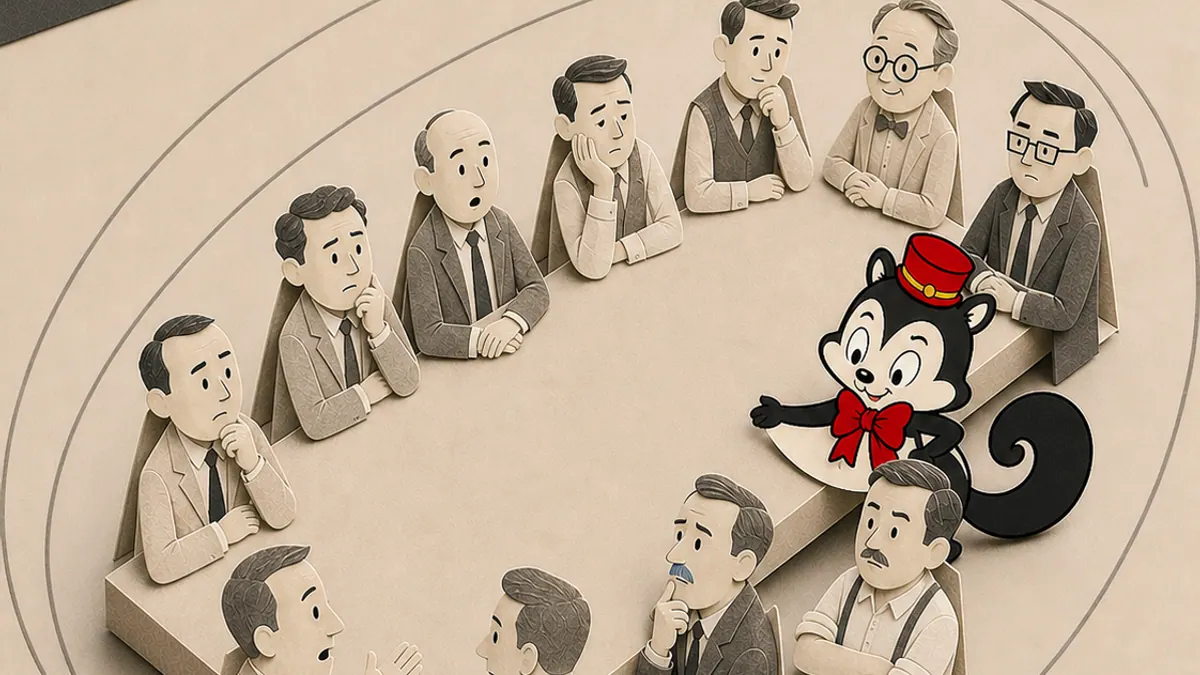
If the part of 12 Angry Men you loved was watching doubt struggle against a confident group, I’d start with The Ox-Bow Incident. If you mainly wanted the company to get more uncomfortable and the exit to get further away, try Lifeboat. And if every disputed detail sent you back over the evidence, choose Rashomon.
There. Three different ways to arrange an uneasy evening. Let’s find the one you actually want.
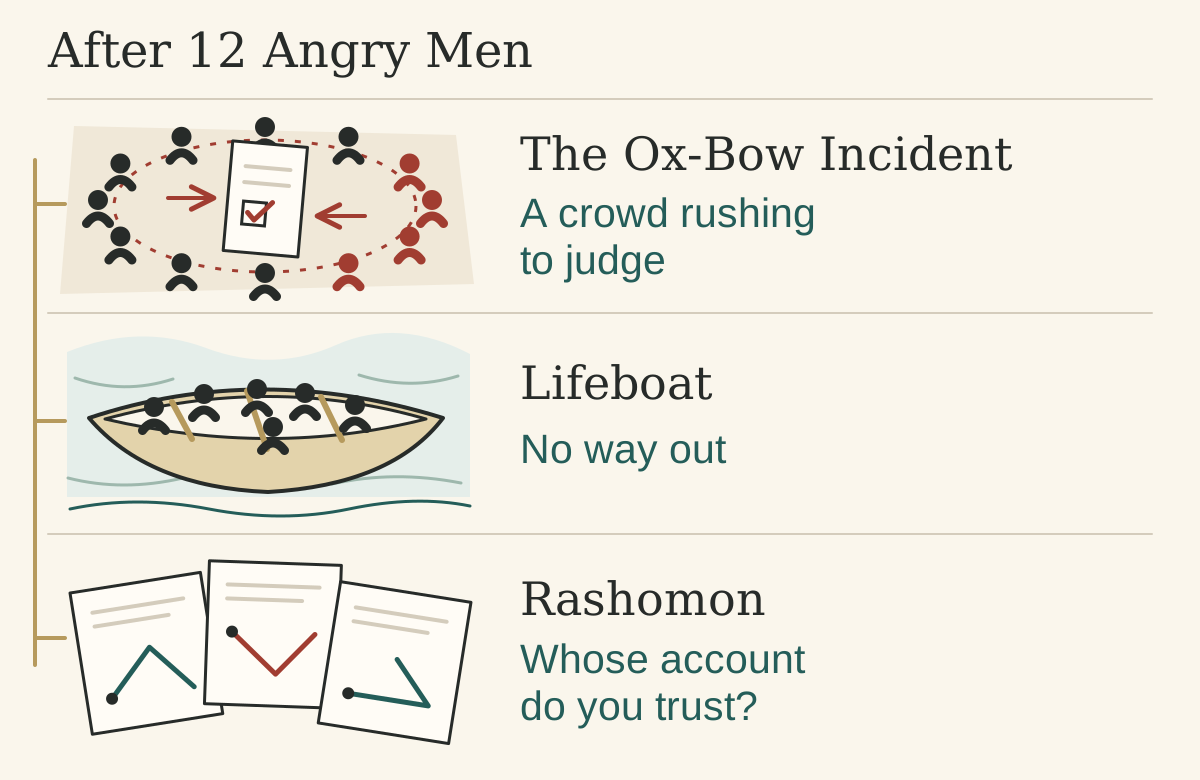
All three are black-and-white films, but their differences matter when choosing what to watch tonight.
| Choose | The important difference from 12 Angry Men |
|---|---|
| The Ox-Bow Incident (1943) | A western about a pursuing mob, outside the protections of jury deliberation. |
| Lifeboat (1944) | The group’s own survival is at stake, with injury and thirst adding physical urgency. |
| Rashomon (1950) | Conflicting stories become images; the film moves between a gate, an inquiry and the forest. |
The Ox-Bow Incident: when the group is in a hurry to be certain
In William A. Wellman’s western, a report of a local killing sends townspeople after the suspected killers. At the gathering, storekeeper Davies argues for waiting for the sheriff and judge. When Judge Tyler intervenes, members of the crowd complain that his justice takes too long. The AFI synopsis describes how those objections are brushed aside.
That’s the exchange I’d watch closely. Notice when checking what happened starts to sound, to the impatient group, like an irritating delay. Asking for time can be made to look like refusing to act. A crowd can be very busy without getting much closer to an answer.
This gives you the pressure of dissent that makes 12 Angry Men compelling, under much harsher conditions for anyone trying to slow the group down. There’s no formal jury room keeping everyone in a shared process. The characters travel out from town; the threat comes from collective action, rather than being physically locked together.
Choose it for the fear of a decision gathering momentum. It involves lynch-mob violence, and its short running time doesn’t make it light viewing.
US viewing: Rent or buy on Prime Video — listed at 75 minutes.
Lifeboat: when you have to live with the decision
Alfred Hitchcock puts survivors of a wartime sinking into a lifeboat, then adds a German survivor to their company. The majority votes to keep him aboard as a prisoner. Afterwards come disputes over leadership and whether to follow his advice about their course. These are separate decisions in the AFI account.
Everyone can have a view on what the group should do. That doesn’t give everyone the knowledge to judge a route across the sea. And somebody’s useful knowledge doesn’t settle whether you should trust them.
Watch who gains influence when the conversation moves from what seems right to what might keep them alive. Who gets a say, who knows enough, and who will bear the consequences?
This is my closest choice for the pleasure of people having to remain in one another’s company. An open horizon is surprisingly unhelpful when you’re stuck in a small boat. Injury and thirst affect the people making the decisions; the film includes death and suicide. It suits an appetite for confinement with real danger.
US viewing: Rent or buy on Google Play — listed at 96 minutes.
Rashomon: when seeing it doesn’t settle it
Akira Kurosawa’s film revisits a killing and a sexual assault through conflicting accounts. Its Criterion description sets out the premise.
Here the spoken stories become scenes you can see. I’d ask whose account you’re inside before treating an image as confirmation. Then watch how a character’s apparent courage, vulnerability or control changes when someone else tells the story. Seeing a version vividly is a different experience from having it independently verified.
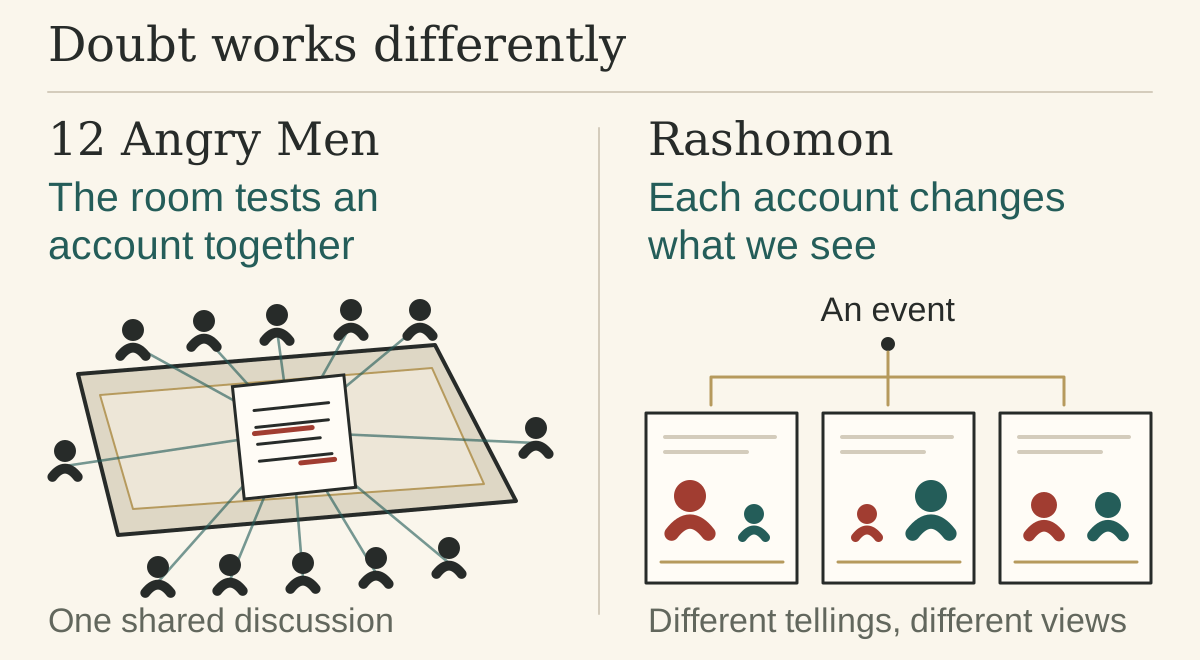
Critic Stephen Prince discusses the self-serving accounts and the film’s energetic forest imagery in “The Rashomon Effect”. Alexander Sesonske’s Criterion essay follows the movement between discussion at the ruined gate and events in the woods. Movement, light and performance do plenty of the arguing.
Choose it if testing testimony was your favourite part of 12 Angry Men. Keep an eye on the part each teller gives themselves in the story. I’d give the performances as much attention as the contradictions.
US viewing: Watch with a Criterion Channel subscription — about 88 minutes. The service is available in the US and Canada.
Viewing listings checked on 10 September 2026. Running times refer to those listings; availability may change.
On screen
Films discussed
- The Ox-Bow Incident (1943) · William A. Wellman
- Lifeboat (1944) · Alfred Hitchcock
- Rashomon (1950) · Akira Kurosawa
Continue exploring on Monocurator
Further reading
Read next in the Journal
Want a recommendation shaped around your evening? Ask Momo what to watch next →