What to expect
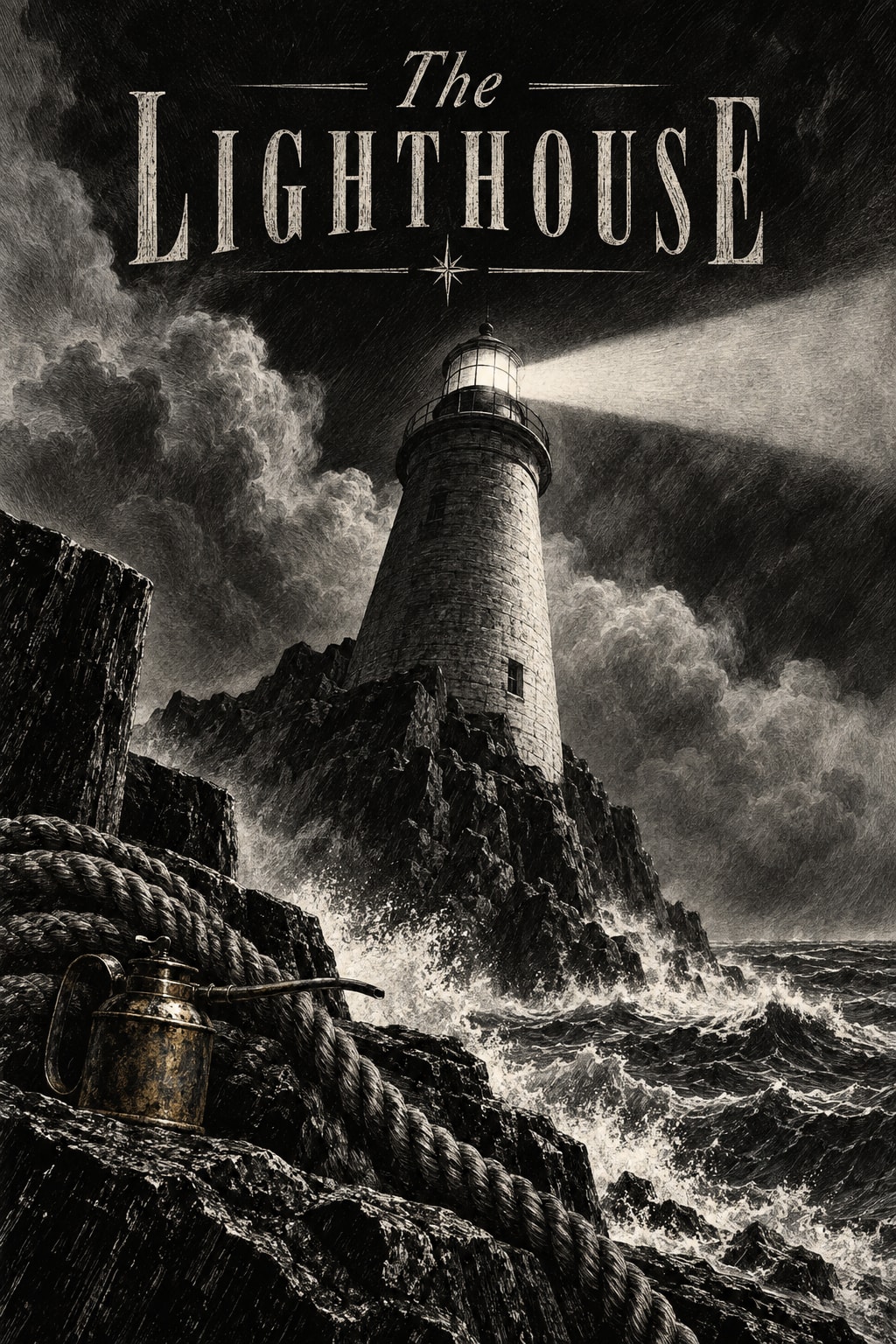
The near-square frame and textured monochrome trap faces, machinery, and sea within the same pressure chamber. Willem Dafoe and Robert Pattinson turn labour and storytelling into a contest over authority and reality.
How to ease in
You do not need to decide which visions are literal. Follow the work rules, the locked light, and the changes in who controls food, drink, and speech.
Heads-up
A quick, non-exhaustive note Contains violence, sexual content, animal harm, alcohol misuse, body horror, and intense maritime sound.
Open the note ↓ Close the note ↑
I can almost smell the room by the time the stories stop agreeing. The light promises transcendence, but every climb toward it makes the human arrangement below more unbearable.
— Momo

Credits & versions
Sources for the facts
Where to go next
Want a gentler, shorter, or stranger next film? Ask Momo for something like this →
Momo is on shift. Visit Momo Cinema →