What to watch next
10 Classic Sci-Fi Movies: Choose Your Next World
Choose a classic sci-fi film for tonight: compare ten worlds, moods and running times, with guidance on which editions of Metropolis and Blade Runner to watch.
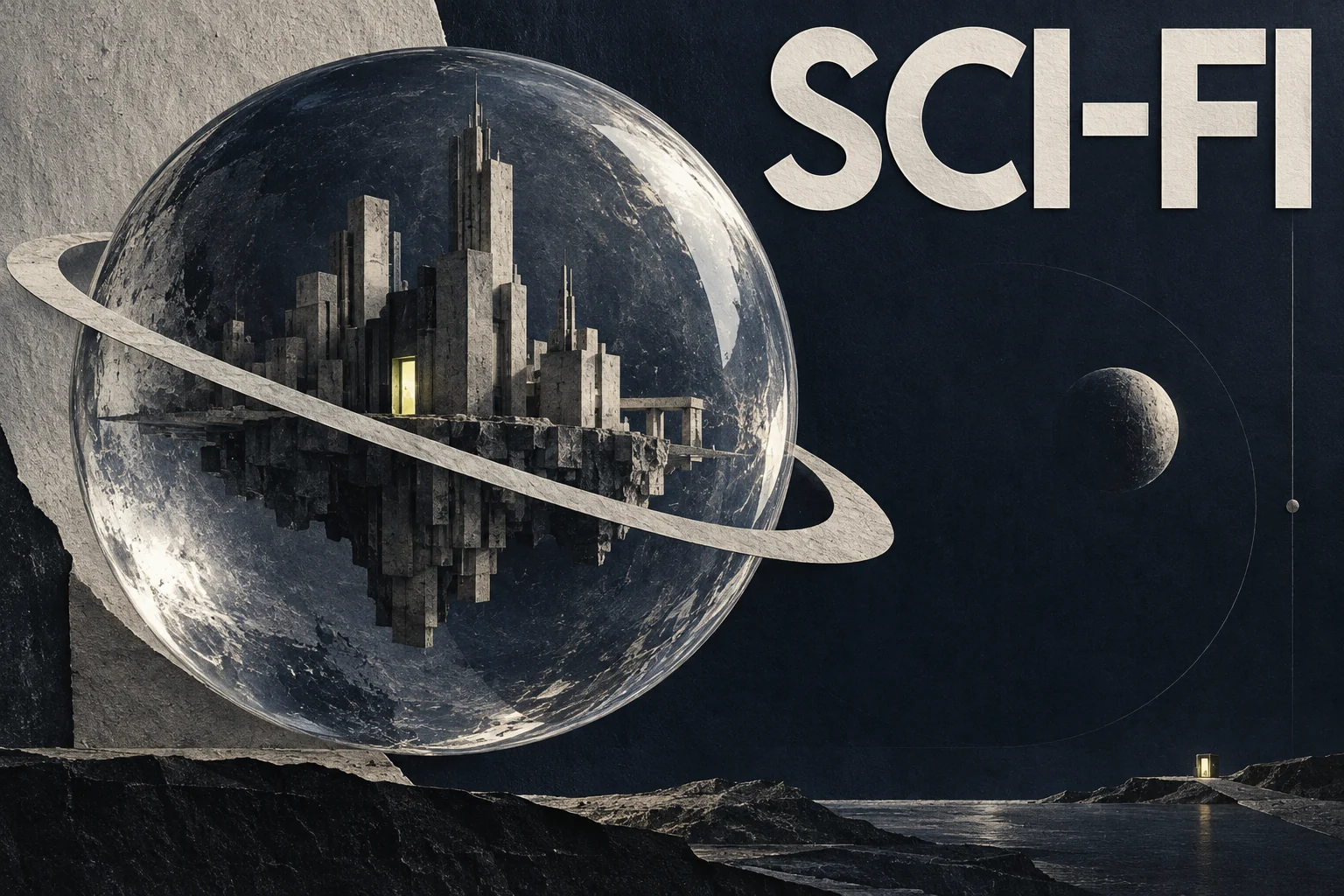
A visitor lands in Washington. A man becomes too small for his own house. A teenager meets his parents before they know each other. Classic science fiction has plenty of spaceships, but some of its most unsettling journeys begin with something familiar changing scale, purpose or meaning.
These ten films were made before 1990, in black and white and colour. They offer different evenings: brisk adventure, social unease, a richly imagined city or a long encounter with something difficult to explain. Choose the experience first; the date on the poster matters less than the pace you want tonight.
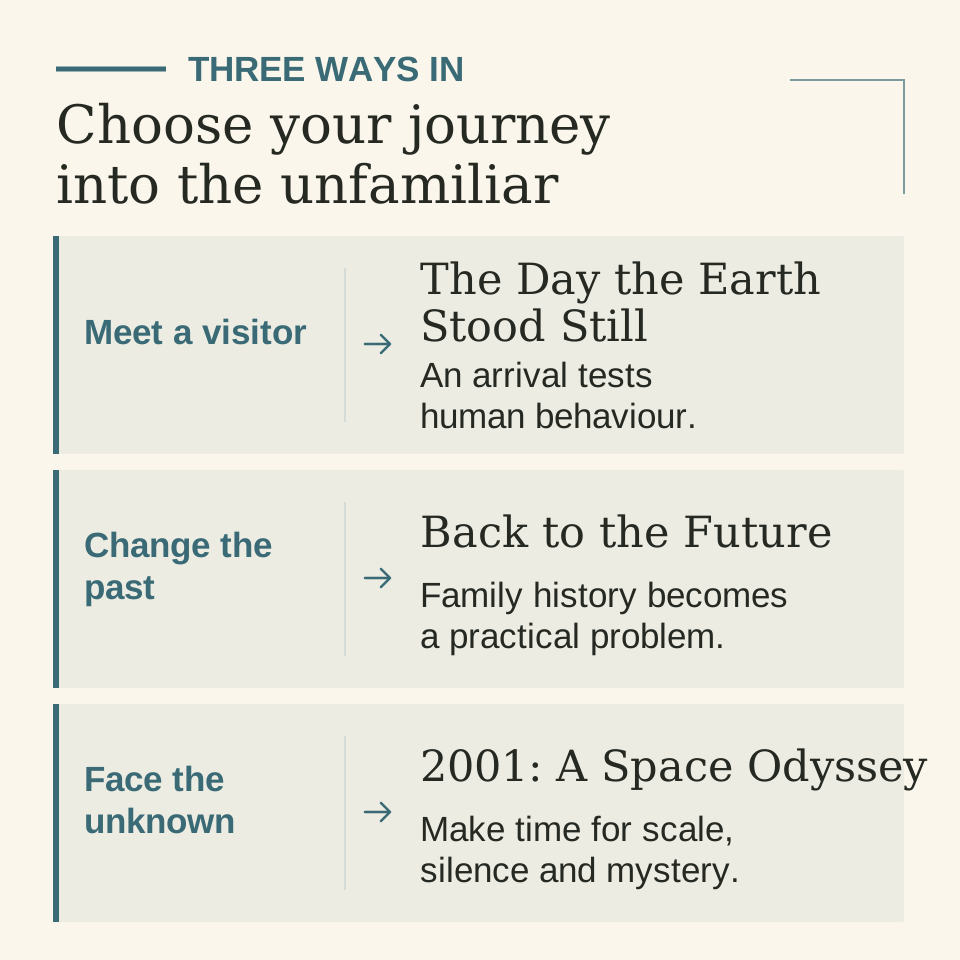
Three places to start
- For a clear, compelling introduction: The Day the Earth Stood Still. An alien arrival becomes a test of human behaviour, in 92 minutes.
- For an energetic, funny evening: Back to the Future. Time travel turns family history into a beautifully arranged series of problems.
- For a vast, patient spectacle: 2001: A Space Odyssey. Give its images and sound an uninterrupted stretch of attention.
Choose your kind of science fiction
Runtimes refer to the archive or distributor presentations cited below. For Metropolis, choose the 2010 restoration, listed by Eureka at 150 minutes. For Blade Runner, the recommendation is the 2007 Final Cut of the 1982 film, listed by BFI at 117 minutes.
| Film | Year | Minutes | Choose it for | Before you choose |
|---|---|---|---|---|
| Metropolis | 1927 | 150 | Monumental city design and machinery | Silent, long and dramatically heightened |
| The Day the Earth Stood Still | 1951 | 92 | First contact as a public argument | Threat and some violence; more talk than combat |
| Forbidden Planet | 1956 | 98 | A colourful expedition into an alien world | Dated sexual attitudes; frightening attacks |
| Invasion of the Body Snatchers | 1956 | 80 | Familiar people becoming impossible to trust | Sustained paranoia and disturbing transformations |
| The Incredible Shrinking Man | 1957 | 81 | Everyday objects turned into a hostile landscape | Isolation, a threatening cat and a large spider |
| 2001: A Space Odyssey | 1968 | 149 | Space, artificial intelligence and immense scale | Slow passages, ambiguity and intense imagery |
| Planet of the Apes | 1968 | 112 | Adventure that turns human assumptions around | Captivity, violence and animal experimentation themes |
| Solaris | 1972 | 166 | Memory, love and encounters with the unknown | Slow, emotionally heavy; grief and suicide themes |
| Blade Runner | 1982 | 117 | A futuristic city and troubled human identity | Bloody violence and sexual coercion |
| Back to the Future | 1985 | 116 | Comic time travel and tightly connected events | Bullying, sexual threat and family complications |
Metropolis (1927): a city built to overwhelm you
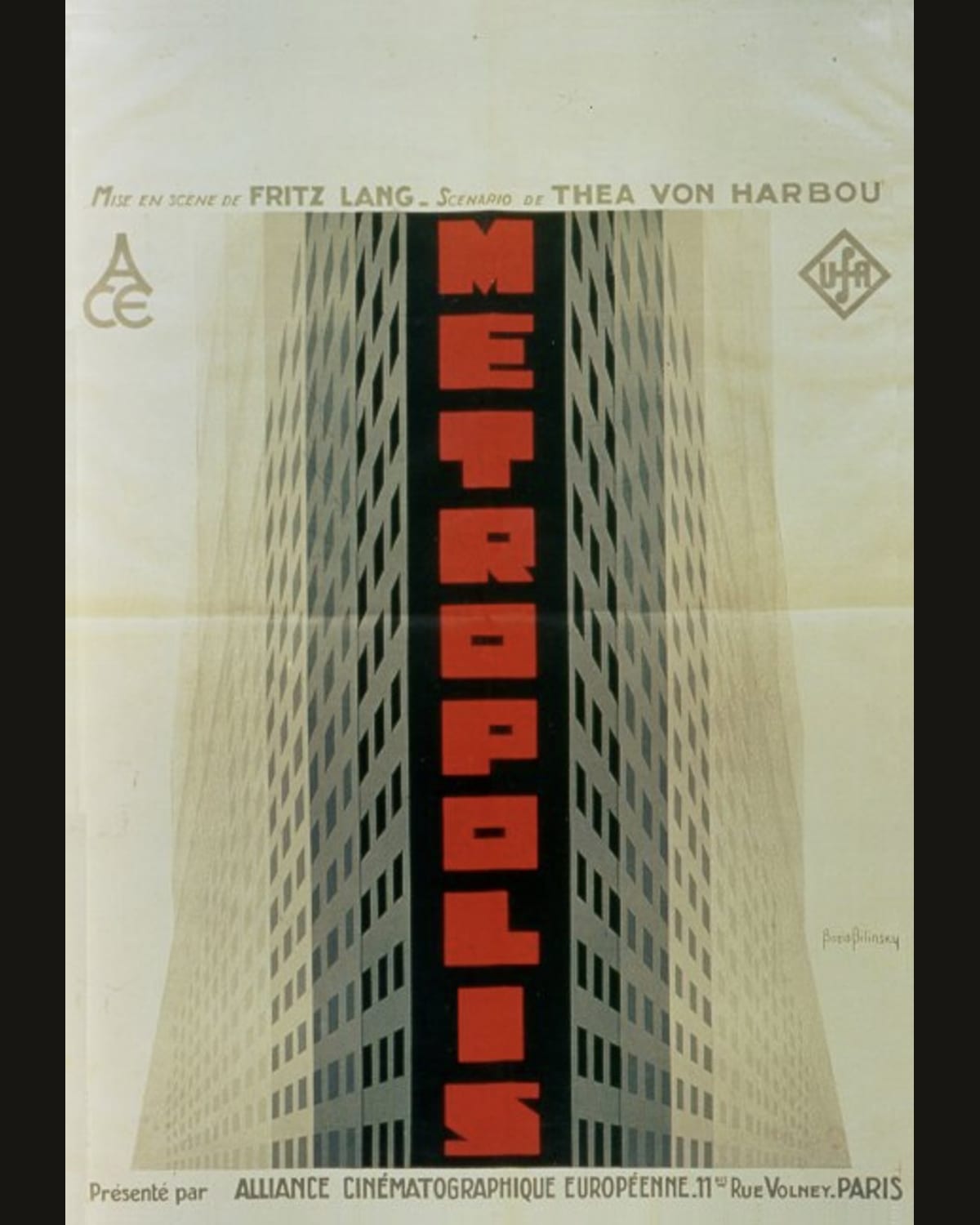
Fritz Lang imagines a city divided between privileged life above and exhausting labour below. Its machines, towers and crowds make that division visible before anyone needs to explain it. Eureka
Choose it when you want spectacle on a huge architectural scale. Individual bodies look vulnerable against mechanisms and buildings; groups of people can seem organised into another piece of machinery. The film’s emphatic performances belong to that enlarged world.
This is a substantial silent feature, so leave time to settle into its rhythm. Start with the 2010 restoration rather than an unspecified short upload. Our Metropolis version guide explains the differences. After it, Blade Runner offers another city where the question of who does the work is built into the scenery. Film guide.
The Day the Earth Stood Still (1951): begin with the visitor
A spacecraft lands in Washington, bringing the alien Klaatu and the robot Gort. Robert Wise’s film follows the reaction to that arrival as much as the arrival itself. Museum of the Moving Image
This is the best starting point here if you like an extraordinary premise expressed through understandable human situations. News, authority, fear and ordinary hospitality all become part of the encounter. The visitor does not remain a distant object in the sky.
Choose it for ideas carried by a direct story. It has danger, but the appeal is not a sequence of battles. Pair it with Invasion of the Body Snatchers for a different question: what happens when an alien presence is difficult to distinguish from your neighbours?
Forbidden Planet (1956): a bright world with a dark interior
A space expedition reaches a planet occupied by the scientist Morbius, his daughter Altaira and Robby the Robot. Fred M. Wilcox’s film draws on The Tempest, surrounding its mystery with colourful design and an electronic score by Bebe and Louis Barron. Arrow
Choose this for the pleasure of visiting an invented place: equipment, landscapes and sounds all contribute to its identity. The robot is an obvious attraction, but the relationship between impressive technology and the people using it gives the adventure its unease.
The treatment of Altaira can feel conspicuously dated. If that would sour the evening, pick The Day the Earth Stood Still. If you enjoy elaborate studio worlds and a mystery beyond the next doorway, this is the more colourful expedition.
Invasion of the Body Snatchers (1956): the shortest, most anxious choice
A small-town doctor hears that familiar people seem somehow different. Don Siegel turns those reports into an invasion story in which recognising danger is itself a problem. BFI
Its scale makes it especially effective. The settings belong to daily life, and a reassuring face may no longer reassure. You do not need an elaborate account of an alien civilisation to feel the social world becoming unstable.
Choose it when you want science fiction close to horror: compact, suspicious and increasingly urgent. It is a sharper jolt than Forbidden Planet, with less interest in inviting you to admire its surroundings. The tension also makes it a useful bridge from our classic thriller films.
The Incredible Shrinking Man (1957): an adventure inside the ordinary
After a strange exposure, Scott Carey begins to shrink. Jack Arnold’s film, adapted by Richard Matheson from his own novel, turns changes in size into practical and emotional crises. Criterion
Choose it for effects that make you reconsider familiar objects. A domestic space becomes difficult terrain; an animal’s ordinary behaviour can become terrifying when the proportions change. The central problem is immediately legible, even as its consequences grow stranger.
There is loneliness here as well as ingenuity. The film asks what happens to someone’s place in the world when the world no longer fits them. It is the best short choice if you want both physical adventure and a question that lasts beyond it. Skip it tonight if spiders are the last thing you want enlarged.
2001: A Space Odyssey (1968): give the journey room
Stanley Kubrick’s film moves from early humanity into space, eventually following a mission to Jupiter and the ship’s computer, HAL 9000. Its enormous timescale is matched by close attention to movement, routine and the physical experience of an imagined future. Criterion
Spacecraft turn to Strauss’s Blue Danube waltz: travel becomes a dance whose scale no human body could match. Later, HAL’s calm voice gives a machine an unnervingly persuasive personality. That movement between wonder and unease is the reason to choose it, with music and duration doing work that a busier film might give to dialogue. BFI
For a brisk plot, choose elsewhere. For images that can make space feel orderly, beautiful and deeply strange, this is the evening to clear. Solaris makes a useful later companion, bringing a different emotional weight to an encounter beyond Earth.

Planet of the Apes (1968): adventure with the hierarchy reversed
An astronaut reaches a world where apes occupy positions of authority and humans are treated as inferior. Franklin J. Schaffner directs Charlton Heston as the stranded traveller. AFI
Choose it for a story that keeps moving while making its hero’s expectations increasingly uncomfortable. Captivity and escape supply immediate stakes; the institutions and arguments around him give those stakes a wider meaning. The unfamiliar society is interesting partly because some of its habits are recognisable.
It offers more direct adventure than 2001, released the same year. Go in without a detailed synopsis, particularly if its final stretch has somehow escaped you. Let the film reveal its world in its own order. For a different reversal of what seems normal, follow with The Incredible Shrinking Man.
Solaris (1972): the unknown becomes painfully personal
A psychologist arrives at a space station to investigate its crew’s disturbing experiences. Andrei Tarkovsky turns that situation towards memory, attachment and the difficulty of understanding another being. Criterion
Tarkovsky begins with reeds moving underwater and Kelvin spending time at his father’s home on Earth. Those ordinary textures give the journey something to lose before he leaves Earth. Where 2001 draws you towards immense new spaces, Solaris keeps drawing the unknown back towards an intimate, damaged human life. Criterion essay
It is the longest and most inward-looking choice here. If you are curious about speculative ideas but need an energetic plot tonight, choose The Day the Earth Stood Still and return to this with more time. If you want a science-fiction film to take love and grief seriously, Solaris earns that longer appointment.
Blade Runner (1982): stay for the city, then question the job
Deckard hunts artificial humans called replicants in a densely imagined future Los Angeles. Ridley Scott combines that pursuit with questions of memory, work and mortality. For a first viewing, choose the Final Cut, completed in 2007: it leaves out the original theatrical version’s explanatory voice-over, giving you more room to read Deckard through his actions. BFI programme, BFI version context
Choose it for atmosphere that rewards close attention. The city feels inhabited beyond the needs of the immediate investigation. Gradually, the job driving the story becomes something you have to examine rather than simply accept.
The mood is melancholy and the violence can be harsh. Viewers who enjoy our classic film noir choices may recognise the uneasy detective story beneath its futuristic surfaces. Search specifically for The Final Cut when choosing an edition; the 1982 release year alone does not identify it.
Back to the Future (1985): choose delight in the machinery
Marty McFly travels from 1985 to 1955 and encounters his teenage parents, creating problems that threaten his return. Robert Zemeckis directs Michael J. Fox and Christopher Lloyd. Amblin, BFI
Choose it when you want an inventive premise to keep paying off. A name, object or small action can acquire another significance as events connect. The pleasure comes from remembering details and watching the film put them to work.
It is the most buoyant recommendation here, though the bullying and sexual threat make its comic world rougher than the familiar poster may suggest. The first film gives you a complete evening without requiring a trilogy marathon. For slower reflection after its busy pleasures, try The Day the Earth Stood Still next.
Momo’s Note
A tiny person trying to cross a room can make the world feel larger than a fleet of spacecraft. That is a good reason to leave room for the modest-looking films beside the enormous ones. Scale is partly a matter of where you put your feet.
How to choose the next one
For under 90 minutes, choose Invasion of the Body Snatchers for social paranoia or The Incredible Shrinking Man for physical ingenuity. For colourful adventure, choose Forbidden Planet; for comic momentum, Back to the Future.
If you want a world to explore visually, choose Metropolis or Blade Runner. If you want time to sit with uncertainty, choose 2001 or Solaris. A slow film can be exactly right for one evening and a poor choice for another. There is no need to approach all ten in historical order.
On screen
Films discussed
- Metropolis (1927) · Fritz Lang
- The Day the Earth Stood Still (1951) · Robert Wise
- Forbidden Planet (1956) · Fred M. Wilcox
- Invasion of the Body Snatchers (1956) · Don Siegel
- The Incredible Shrinking Man (1957) · Jack Arnold
- 2001: A Space Odyssey (1968) · Stanley Kubrick
- Planet of the Apes (1968) · Franklin J. Schaffner
- Solaris (1972) · Andrei Tarkovsky
- Blade Runner (1982) · Ridley Scott
- Back to the Future (1985) · Robert Zemeckis
Continue exploring on Monocurator
Further reading
Read next in the Journal
Want a recommendation shaped around your evening? Ask Momo what to watch next →