_Plakat_f%C3%BCr_den_Film_Metropolis_(3).jpg)
What to expect
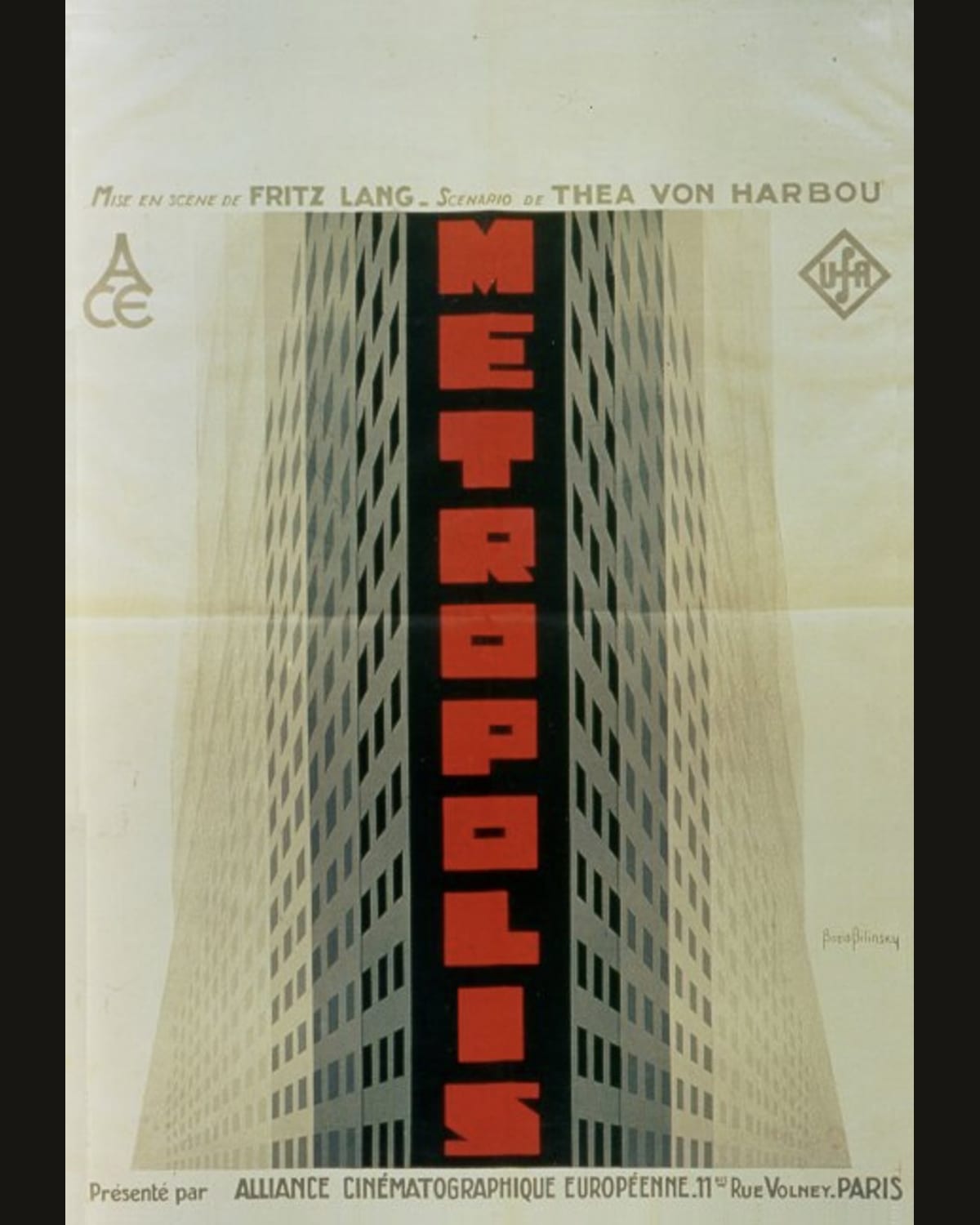
Metropolis imagines the modern city as both miracle and machine. Monumental buildings, choreographed crowds, and expressive sets turn a class conflict into a visual fable that can be understood before any intertitle appears. Its ideas are broad, but its images remain vivid: technology promises abundance, bodies pay the cost, and the future looks magnificent enough to make its dangers tempting.
How to ease in
Choose a restored edition and check the runtime, since shorter versions can make an already broad story feel abrupt. The class allegory is intentionally simple: the city above, the workers below, and a privileged young man who begins to see the connection. Follow the architecture and crowd movement when the plot grows busy; the film explains power most clearly through space.
Heads-up
A vast silent city of the future, still staggering.
The machines are enormous, but the detail I remember is the rhythm of bodies entering and leaving them. Metropolis is most persuasive when design becomes an argument: elevators, clocks, stairways, and crowds all tell us who controls time.
Open the note ↓
The machines are enormous, but the detail I remember is the rhythm of bodies entering and leaving them. Metropolis is most persuasive when design becomes an argument: elevators, clocks, stairways, and crowds all tell us who controls time. Its politics can be blunt, yet its city still feels like a future dreaming about us.
— Momo

Credits & versions
Version map
Ways to watch and read
| Action | Search destination |
|---|---|
| Watch | Check availability on JustWatch |
| Rent | Search rentals on Apple TV |
| Read | Search books on Bookshop.org |
U.S. search destinations · Links checked 2026-07-27 · Stock, editions, prices, and availability can change · Disclosure
Where to go next
Want a gentler, shorter, or stranger next film?
Ask Momo for something like this →
Momo is on shift. Visit Momo Cinema →