See Films Differently Seasonal doorway
Summer in Black-and-White Films: Sea Breezes and Days Off
Find summer in the sea breeze of Monsieur Hulot’s Holiday and a lakeside day in People on Sunday. Two black-and-white films to put you in a holiday mood.
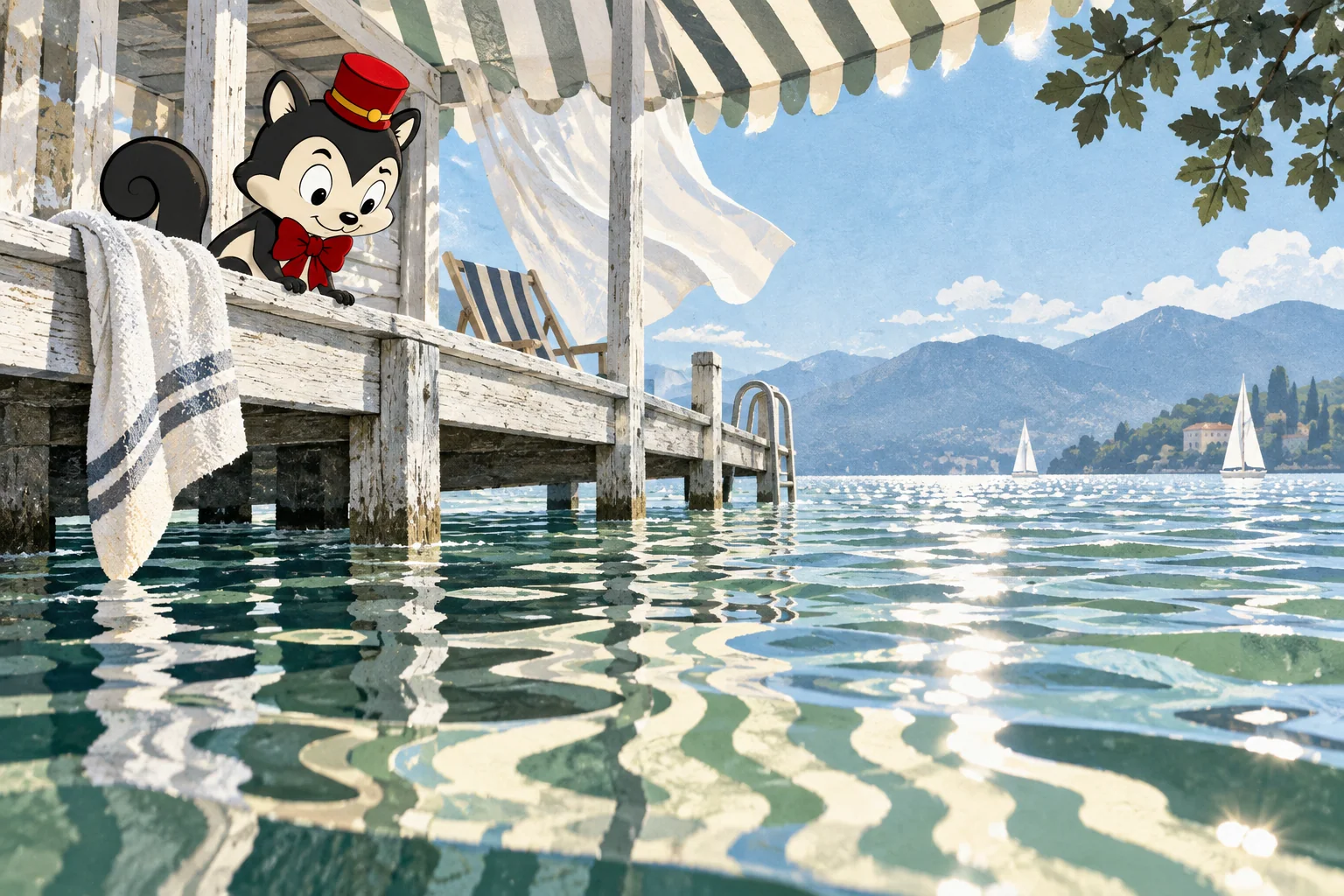
A blue sea is useful, but it isn’t the whole holiday. There is also the business of carrying things to the beach, finding somewhere to sit and deciding whether to swim. A summer day becomes recognisable through what people do with it.
That gives black-and-white films plenty to work with. Brightness, movement and sound can carry the season; so can the feeling that there is an afternoon available to waste. I’d start with Monsieur Hulot’s Holiday and People on Sunday. One takes us to the seaside, the other out of Berlin for a day by a lake. Neither needs the water to be blue before anyone can get into it.
Monsieur Hulot’s Holiday: a sea breeze with consequences
Jacques Tati’s Monsieur Hulot’s Holiday (1953) follows holidaymakers at a seaside hotel. Hulot disturbs their arrangements, but he shares the film with the other guests and their small routines. There is relatively little dialogue in this sound comedy, and plenty going on around whoever has caught your eye. [1] [2]
Take the hotel entrance. Hulot leaves the front door open; wind sweeps into the lobby and upsets the people and objects inside. [2] The breeze becomes something we can follow through its consequences. Outdoors and indoors are suddenly connected by more than a view through a doorway.
I like that as an invitation to look. A landscape can tell you where the hotel stands. This disturbance tells you what it is like to occupy it. The guests have brought their luggage and habits to the coast; the coast gets a say in the arrangements.

Sound offers another way in. On the beach, the lively sound of children enjoying themselves can accompany a view of adults looking bored or uncomfortable. There is more than one holiday happening in the same place. [3]
Listen for that difference while looking around the frame. The children’s activity and the adults’ difficulty settling into leisure can coexist. Summer has room for someone having a marvellous time and someone wondering when lunch is.
People on Sunday: a day off has its own scale
In People on Sunday (Menschen am Sonntag, 1930), directed by Robert Siodmak and Edgar G. Ulmer, young Berliners spend a day by a lake. Swimming, a picnic, music and a pedal boat fill out the outing; romantic interests shift along the way. [4]
Those activities give the day a shape without turning it into a grand adventure. Swimming uses the water differently from sitting beside it; a picnic gives the group a reason to stay in one place. Moving between them changes the distance between people as well as the scenery. You can follow the flirtation and enjoy the practical arrangements of being outside together.
Look at the water as a moving surface, too. In a monochrome image, its brightness and changing texture remain available even when its colour does not. Then return to the people: who is doing something, who has stopped, who is paying attention to someone else? The season registers through light and through the way an afternoon is being spent.
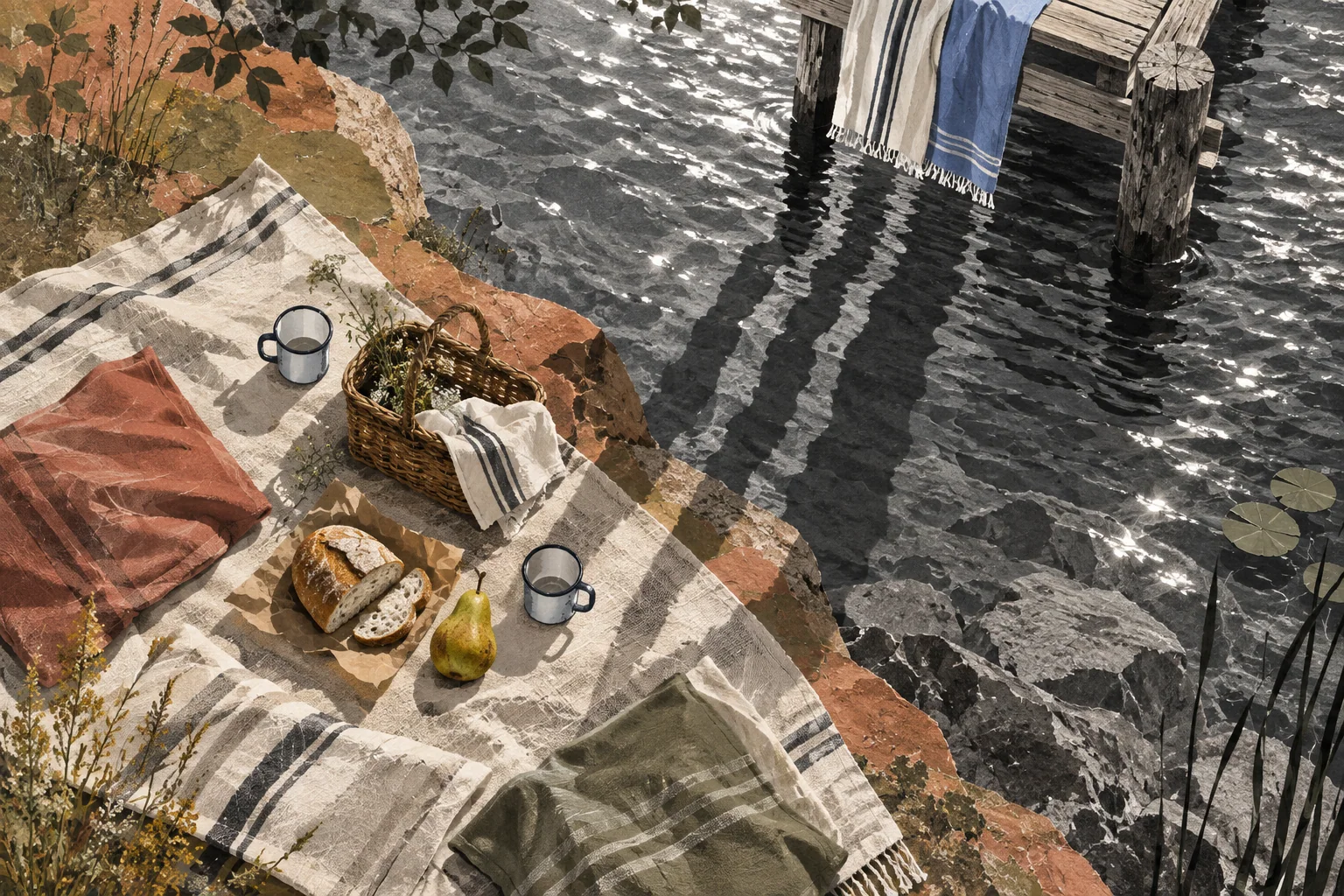
There is a useful difference from Hulot’s coastal stay. This is an outing fitted around working lives. The film introduces its nonprofessional performers through their occupations, then gives its characters time away from them. [4] The leisure has edges. The pleasure of a day off includes knowing how rarely there is a whole afternoon to do so little with.
As this is a silent film, the accompaniment changes with the presentation. Criterion’s edition, for example, offers two scores: one by the Mont Alto Orchestra and another by Elena Kats-Chernin. [5] The lake is part of the filmed outing; the music is another way of bringing that afternoon to us. There is more on how that works in our guide to silent-film accompaniment.
Pick the kind of summer you want
For a coastal comedy in which leisure never quite runs smoothly, choose Monsieur Hulot’s Holiday. Give its soundtrack as much attention as the figures moving through the hotel and along the beach. Tati revised the film: Criterion presents his 1978 rerelease alongside the original 1953 version. [1]
For an ordinary day out with swimming, flirtation and a little time to spare, choose People on Sunday. It is especially good company for the wish to get out of town without turning the escape into a major undertaking.
Start with whichever sounds like the better day off. You can follow the day’s small complications and still have time to notice the water.
References
- The Criterion Collection, Monsieur Hulot’s Holiday. Film information and the distinction between Tati’s 1978 rerelease and the original 1953 version.
- David Ehrenstein, ‘M. Hulot’s Holiday’, The Criterion Collection, 2004. The hotel guests and wind through the entrance.
- Jonathan Rosenbaum, ‘Jacques Tati: Composing in Sound and Image’, The Criterion Collection, 28 October 2014. The contrast between the beach sounds and the adults in the image is an observation by Michel Chion, discussed here by Rosenbaum.
- Noah Isenberg, ‘People on Sunday: Young People Like Us’, The Criterion Collection, 27 June 2011. The outing, leisure activities and introduction of the performers’ occupations.
- The Criterion Collection, People on Sunday. Film information and the two scores included in its edition.
On screen
Films discussed
- Monsieur Hulot’s Holiday (1953) · Jacques Tati
- People on Sunday (1930) · Robert Siodmak and Edgar G. Ulmer
Further reading
Read next in the Journal

Want a recommendation shaped around your evening? Ask Momo what to watch next →