See Films Differently Film history
What Did an Elevator Operator Do? A Job Inside the Lift
What an elevator operator did depended on the controls and the passengers. Otis records, a Smithsonian workplace and The Apartment show the differences.
An elevator operator took passengers between floors, with duties that depended on the lift’s controls. Some work involved judging the landing; other systems left the operator registering destinations and starting the car. [1]
So, if you’ve spotted someone working inside a lift in an old film, I’d start with a small question: which parts of the trip does this particular machine handle for them?
I’d look past the uniform to the controls. A passenger can say where they want to go without knowing how to bring a moving cabin to the right place.
Arriving at the floor was part of the problem
Otis’s 1940 company booklet describes accurate landings becoming difficult for operators at high speeds with changing loads. Its Micro-Drive, developed in 1915, automatically brought the cabin level with the landing and maintained that alignment as the load or cable stretch changed. [1]
Let’s separate reaching the right floor from lining up with it. You could be at the correct storey and still have an awkward step between the cabin and the building. Levelling deals with that second problem. The mechanism can take over this part of arrival while a person still has other work to do.
The booklet is a manufacturer explaining its own achievements. I’ll use it for the controls it describes, without adopting its heroic account of the entire industry.
Buttons could still need an operator
The same booklet describes Signal Control: the operator pressed buttons for passengers’ destinations, closed the door and started the car. It also describes Collective-Control, a button system for passengers to operate themselves, used in buildings including apartment houses and hospitals. [1]
A button, then, doesn’t settle the question. Who presses it? What happens afterwards? Registering a destination and carrying out the journey are different tasks. I’d want to know which duties the controls had taken over before deciding that an operator beside the panel was simply decorative.
Later developments changed the arrangement again. Otis’s present history records an optional recorded voice in 1948 Autotronic lifts that still had attendants. It dates the first installation of its high-speed, operator-free Autotronic system to 1950, at the Atlantic Refining Building in Dallas. [2]
I quite like that intermediate detail: a recorded voice welcoming passengers while a real attendant was still there. The replacement didn’t arrive as one neatly labelled button. Different parts of the service were being reassigned.
Those dates belong to specified Otis equipment. They don’t mark the day every operator, everywhere, left the cabin.
Someone passengers could ask
At the Smithsonian’s National Museum of Natural History, Sophie Lutterlough became the museum’s first woman elevator operator in 1943. With no information desk then, visitors asked her about the exhibits. She studied them during lunch breaks, improving the answers she could give. She later moved into insect preparation in 1957. [3]
Here’s work you won’t find explained by a floor button. The lift carried people through the building; Lutterlough helped them understand what was in it. Her knowledge was useful because visitors encountered someone they could ask.
That is one documented workplace, rather than a claim that every operator doubled as a museum guide. It does make me wary of describing the whole job by its most easily automated movement. We need to notice what passengers actually asked the person to do.
Fran has a rather different building to deal with
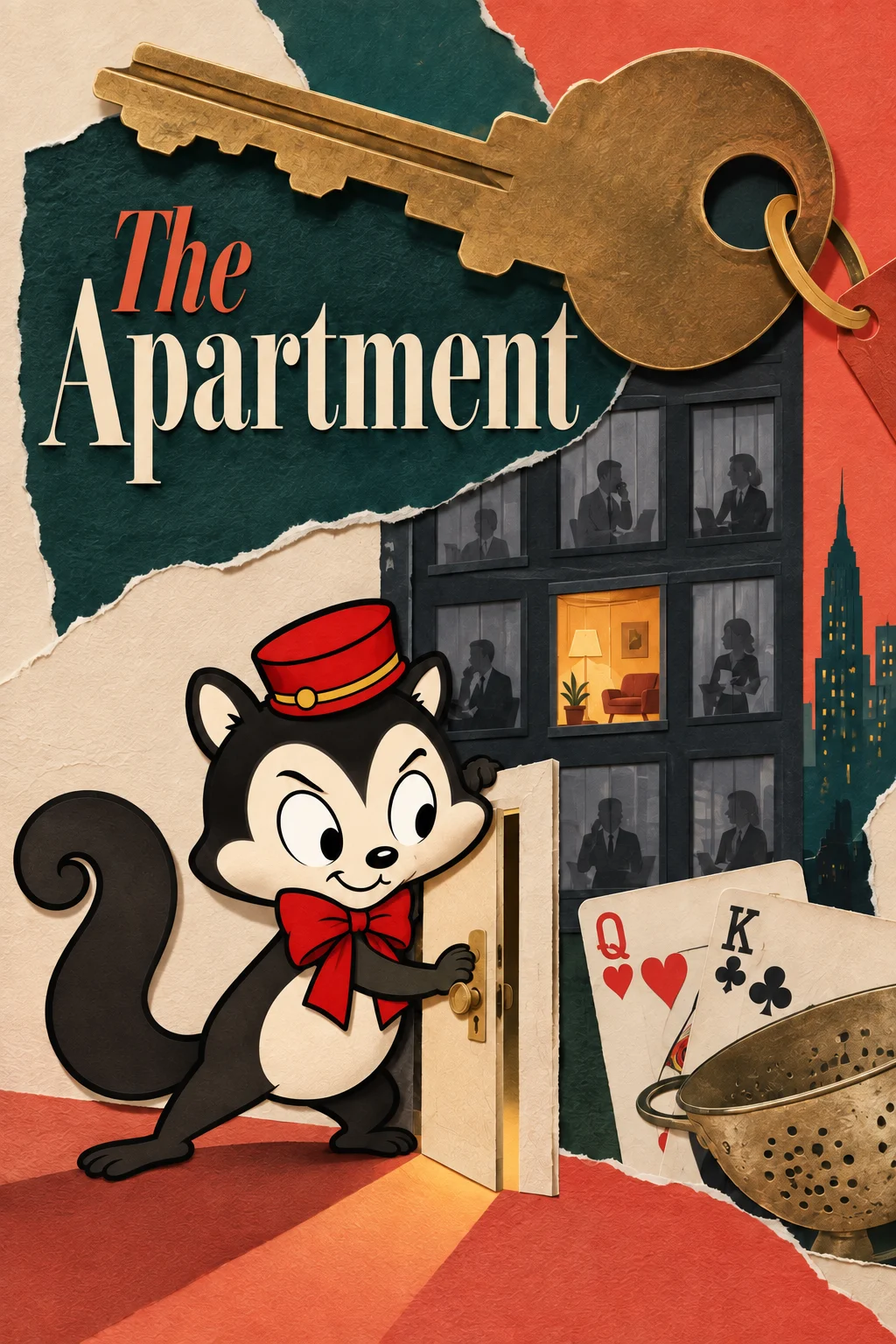
Now I can take you to Billy Wilder’s black-and-white The Apartment (1960). Shirley MacLaine plays Fran Kubelik, an elevator operator in the insurance company where Jack Lemmon’s Baxter works. [4][5]
AFI’s synopsis describes a morning when Baxter works up the nerve to talk to Fran. His ambition elsewhere in the building involves lending his apartment to executives who promise to help his career. [4] That is enough of the plot for this little trip; I’m keeping the later complications out of it.
Fran’s occupation gives us a specific way into that workplace. The person taking colleagues between floors is also someone Baxter wants to know. I find that a useful shift of attention: from the service he uses to the person doing the work.
I’m not identifying the film’s lift as any of the Otis systems above. A character’s job and a manufacturer’s technical description can illuminate different questions without proving they show the same equipment.
And there’s a connection I’m happy to keep: Baxter wants to rise in the company; Fran takes people between floors. Wilder has supplied me with a career metaphor that actually fits inside a lift.
References & Further Reading
The Otis booklet is a contemporary manufacturer’s account, read in its digitised text; its scanned illustrations were not inspected. The Smithsonian article is an institutional history. Film details and the bounded plot description were checked against AFI; the comparisons are Monocurator’s own.
- Otis Elevator Company. 87 Years of Vertical Transportation with Otis Elevators. New York: Otis Elevator Company, 1940. Digitised by Columbia University Libraries; PDF, PDF pages 7–9 (zero-based indices 6–8): Micro-Drive, Signal Control and Collective-Control. The booklet has no printed page numbers in the consulted text.
- Otis. “Otis History: Elevator History Timeline.” Entries for 1948 and 1950, n.d.
- Olivia Sayah. “‘It Won’t Be Easy to Leave after 40 Years’: Sophie Lutterlough’s Career at the National Museum of Natural History.” Smithsonian Institution Archives, 16 February 2016.
- American Film Institute. The Apartment. AFI Catalog of Feature Films: credits, physical properties and synopsis, n.d.
- AFI Silver Theatre and Cultural Center. The Apartment (1960). Film information and synopsis, n.d. Lists Billy Wilder, Shirley MacLaine, Fran’s occupation and the black-and-white format.
For the next unexpected question, follow the Journal in your RSS reader.
On screen
Films discussed
- The Apartment (1960) · Billy Wilder
Further reading
Read next in the Journal

Want a recommendation shaped around your evening? Ask Momo what to watch next →