See Films Differently Momo Notices
Who Did I Promise? When Expectations Start to Feel Like Obligations
You did it last time. Does that mean you owe it again? The Apartment and High Noon help separate expectations, promises and accepted responsibilities.
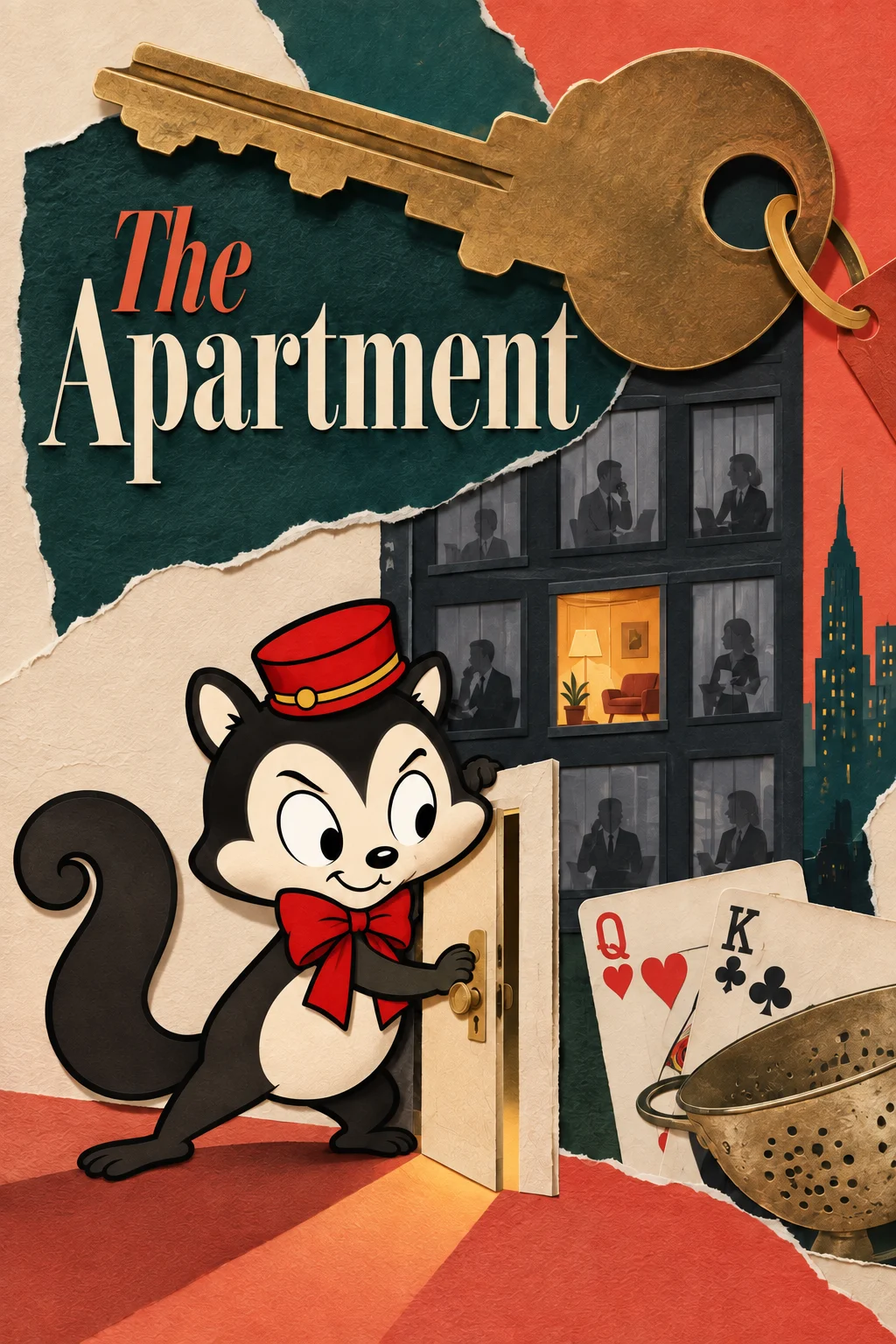
The gap between “you usually do it” and “you ought to do it”, with The Apartment and High Noon.
Suppose you have booked the restaurant for several meals with friends. Another evening is proposed. Nobody appoints an organiser. You have not volunteered. Yet you are already slightly tired of finding somewhere to eat.
You have not been asked, and somehow it already feels difficult to refuse.
Who did you promise? There is no obvious moment to point to. There is the memory of having done it before, followed by the atmosphere of doing it again.
The same reluctance to refuse can have different causes. Perhaps you accepted a role. Perhaps somebody rearranged their plans because of something you said. Perhaps everyone else has acquired a convenient habit, while you have acquired a job.
A key to somebody else’s convenience
In Billy Wilder’s The Apartment (1960), C. C. Baxter lends his flat to senior colleagues for their affairs, hoping to advance his career. When they are using it, he waits outside. Even getting an evening’s rest involves rearranging the bookings. [1]
This is a peculiar extension of office life. His pursuit of a better position at work keeps putting him out of his own home.
Treat Baxter as nothing more than a kind man being used, and some of the film’s uncomfortable interest disappears. He wants something. His colleagues are in a position to help him get it. His ambition and their authority belong to the same arrangement.
Repeated access makes the flat a dependable convenience for them. For its occupant, the same arrangement makes going home a matter of negotiation. One person’s reliable routine is another person’s uncertainty.
The film gives that imbalance an unusually concrete form: a key and a schedule for using a room. Even a friendly request can make it clear whose plans have to give way.
What does “expect” mean?
“I think you will do it” and “you would be wrong not to” are quite different claims.
The first predicts behaviour. The second makes a judgement about what you ought to do. There is another distinction between believing that people think you ought to act and having good reasons to agree with them.
Accounts of social norms distinguish expectations about other people’s behaviour, expectations about what others think one should do, and one’s own normative beliefs. [2] That vocabulary helps unpack an ordinary, slippery word.
If the same person usually books dinner, predicting that they will do it again may be sensible. A disappointed prediction is not, by itself, a broken promise. Nor does somebody’s irritation establish that their demand is fair.
But the absence of a formal promise does not settle everything either.
Did you give someone reason to rely on you?
Change the dinner example slightly. You said you would arrange the restaurant, and a friend cancelled their provisional booking because of it. Searching the conversation for the word “promise” would miss what happened between you.
Did they simply assume you would help? Did you encourage that assumption? Did they alter their plans as a result?
Philosophical accounts of promising give different weight to providing assurance, inducing reliance and the act of undertaking a commitment itself. [3] This version of the dinner example contains both an undertaking and a change of plan made in response to it.
Accepting a role matters too. If you agreed to organise this particular gathering, every call to the restaurant need not become a separate promise. Some tasks follow from the role you accepted. Whether the expectations attached to a role are morally justified remains a further question. [4]
Baxter’s colleagues can influence his promotion. That does not establish their entitlement to his front-door key. Having something to lose by refusing is different from owing someone compliance.
The man they tell to leave
Will Kane in Fred Zinnemann’s High Noon (1952) approaches obligation from another direction.
He has married Amy and resigned as marshal; his replacement has yet to arrive. News comes that Frank Miller, whom Kane once arrested, is returning on the noon train. The wedding guests urge the couple to leave. They set off, but Kane turns back. [5]
The order matters. He is not staying because everybody has begged him to. He returns against their immediate advice.
Leaving a role need not end its history at the same moment. Kane also believes Miller will pursue him if he runs. The danger concerns his own survival as well as the town. [5]
Pure duty is too tidy an explanation; so is anxiety about other people’s opinions. His marriage has begun too. Amy cannot be treated as somebody whose claim on his attention disappears when another responsibility becomes urgent.
And Kane asks for help. The question of what he owes the town has a counterpart: what does the town owe him? The BFI’s account of the film identifies both directions of responsibility. [6]
A person willing to carry a burden can draw our admiration. Their willingness does not explain why everybody else should be free of it.
What would actually break if I refused?
Return to the restaurant. Its stakes are rather smaller, but a vague feeling of obligation can still be made more specific:
What would actually break if I refused?
Someone may have changed their plans because you agreed to help. A task may have no replacement organiser. A deadline may be too close for an alternative. Or the only thing disturbed may be the convenience of always leaving it to the same person.
This is a question for examining the situation, not a complete moral test. An undertaking can matter even when breaking it produces no measurable loss. [3] Conversely, refusing an unfair demand can disrupt someone’s plans without making the demand fair. We need to ask who created the arrangement, and why maintaining it has become our responsibility.
Being responsible for this booking is different from having agreed to arrange the next one too. Finishing this task and sharing out the next, or finding another organiser in good time, may both be possibilities. What there is to discuss depends on whether this was a single undertaking or a continuing role.
The awkwardness may remain
An explanation may be reasonable and still leave you feeling bad. That feeling alone does not establish that the decision was wrong. Discussions of moral conflict recognise that a justified choice can leave regret or a reason to make amends. [7]
Baxter’s flat and the town Kane returns to are too different to be explained by a shared inability to say no. Dismissing every expectation would conceal the difference as thoroughly as accepting them all.
Another dinner is proposed. You found the restaurant last time. But remembering that you did it before is different from having agreed to do it again. Is the restaurant still undecided, or is the organiser undecided too? Some of that early weariness may come from not knowing which.
References & Further Reading
These sources support the film premises and conceptual distinctions. The everyday examples, comparisons and question about what would break are Monocurator’s own framing.
- American Film Institute, The Apartment, AFI Catalog. Film record and opening synopsis for the 1960 film.
- Cristina Bicchieri, Ryan Muldoon and Alessandro Sontuoso, ‘Social Norms’, The Stanford Encyclopedia of Philosophy, revised 19 December 2023, §§1–2, 5.
- Allen Habib, ‘Promises’, The Stanford Encyclopedia of Philosophy, revised 17 June 2022, §§1, 3.
- Diane Jeske, ‘Special Obligations’, The Stanford Encyclopedia of Philosophy, revised 6 August 2019, §§4–7.
- American Film Institute, High Noon, AFI Catalog. Film record and opening synopsis for the 1952 film.
- British Film Institute, High Noon (1952). Film introduction.
- Terrance McConnell, ‘Moral Dilemmas’, The Stanford Encyclopedia of Philosophy, revised 25 July 2022, §§2, 6.
The article discusses the films’ opening situations. Linked synopses include their endings.
For the next unexpected question, follow the Journal in your RSS reader.
On screen
Films discussed
- The Apartment (1960) · Billy Wilder
- High Noon (1952) · Fred Zinnemann
Further reading
Read next in the Journal
Want a recommendation shaped around your evening? Ask Momo what to watch next →