你将看到什么
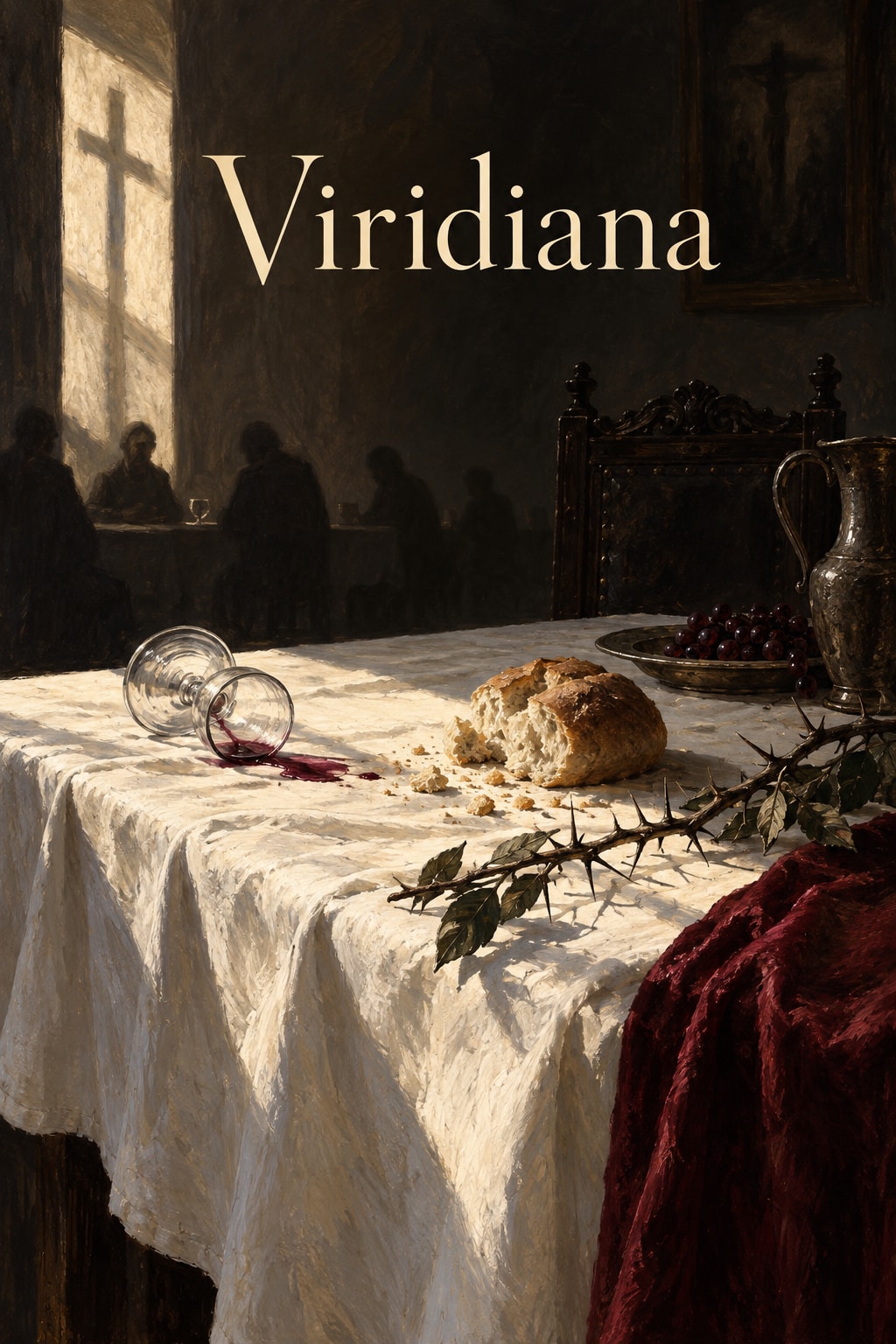
Viridiana returned Luis Buñuel to Spanish filmmaking with an attack on piety, property, desire, and the comforting image of charity. Silvia Pinal’s novice enters her uncle’s estate with an idealism that repeatedly meets exploitation and hypocrisy. Buñuel’s compositions remain controlled even as sacred imagery is rearranged into black comedy, most notoriously in the beggars’ banquet. The film won the Palme d’Or and was condemned by the Vatican and banned in Spain, but its provocation is not simple disbelief. It asks what happens when moral intention ignores power, appetite, and the dignity of the people it intends to save.
如何轻松入门
This is intentionally abrasive satire, not a reassuring lesson about helping others. Watch how objects and compositions associated with religion or high culture are quietly reassigned. The tonal shifts can feel cruel; Buñuel uses discomfort to prevent any character, including Viridiana, from occupying an uncomplicated moral position.
观影提醒
展开笔记 ↓ 收起笔记 ↑
Buñuel distrusts every arrangement that makes goodness look complete. Viridiana wants a life with clean moral lines, but the house keeps filling with other people’s needs and appetites. The film is harshest when an image becomes too perfectly charitable to be true.
— Momo

演职员与版本
- 摄影
- José Aguayo
版本概览
接下来去哪看
下一部想看更温和、更短,或更奇特的电影? 问问Momo,有没有类似的电影 → (以英语打开)
Momo正在值班。 前往Momo Cinema → (以英语打开)