See Films Differently Film craft
Why Do Silent Films Look Sped Up? Frame Rate Explained
Silent films can look too fast at the wrong frame rate. Learn how capture, projection and restoration shape motion—and why there was no single silent speed.
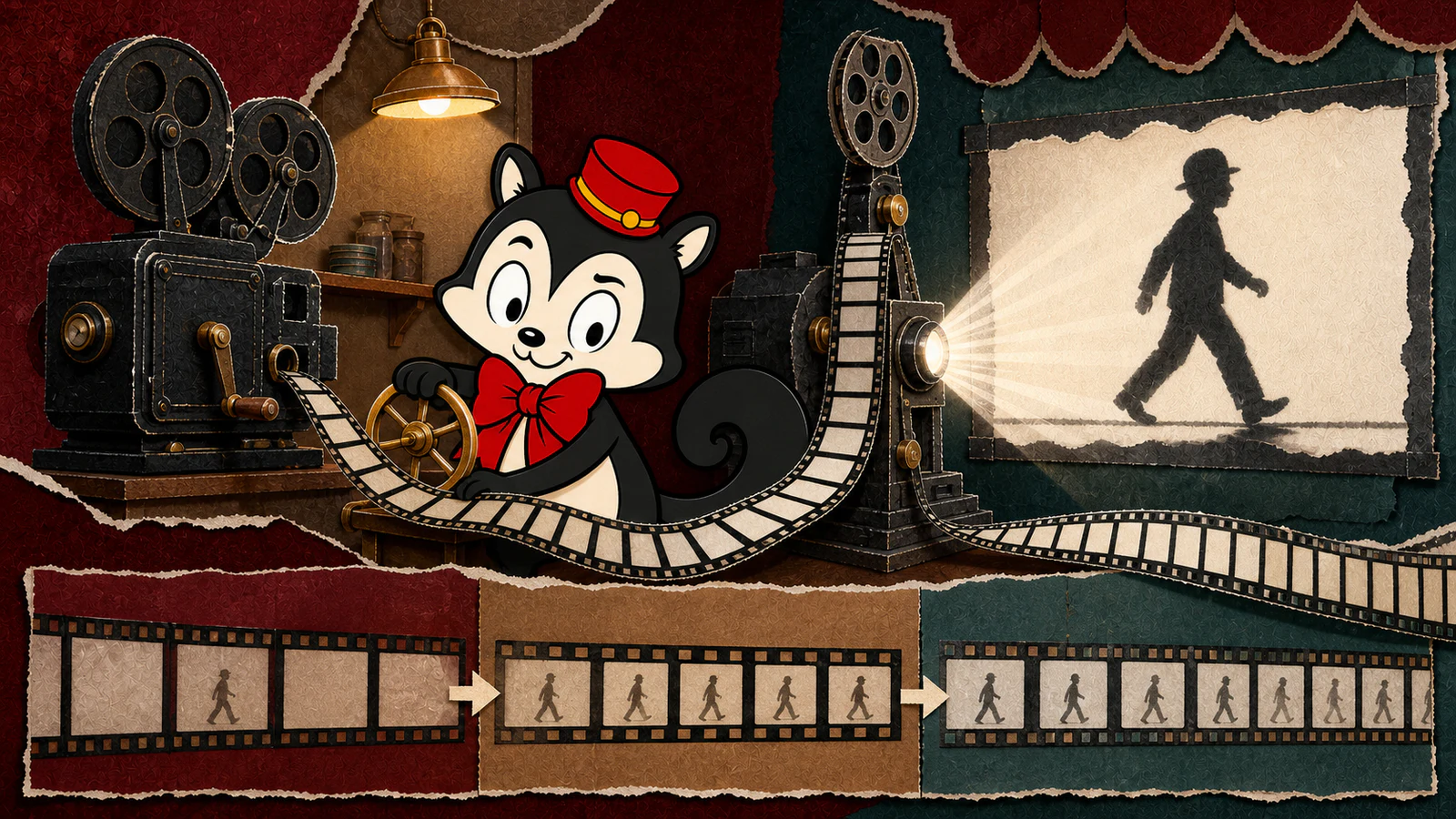
Silent films can look sped up when a copy presents their original frames faster than the rate chosen for filming or appropriate projection. But there was no single silent-film speed: the right tempo can differ by film, period, scene, version and surviving evidence.
That distinction matters. ‘Silent films were shot at 16 frames per second and now run at 24’ is a useful arithmetic example, not a history of the entire era. [1]
The 16-to-24 Example—Not the Rule
Imagine that 16 different original images are meant to occupy one second. If a transfer instead shows 24 different original images in one second, it moves through the strip one and a half times as quickly. The action appears at 1.5× speed, and the running time falls to two-thirds of the intended duration. FIAF uses this relationship to explain how the same sequence can be accelerated by presentation. [2]
The calculation is simple. Choosing the two numbers is not.
Silent-era cameras and projectors did not all run at one fixed rate. A film could be photographed at one speed, intended for another presentation speed, varied for an effect, or shown differently in another venue. A late silent film might also sit much closer to sound-era practice than an early short.
Try it: the same journey at two speeds
Momo takes four seconds to cross the stage. Record that journey at 16 frames per second, then project it at 24: the same images finish in 2⅔ seconds. Compare the two views, pause on a frame, or change the rates to see what stays the same.
Open the comparison in its own window. Nothing moves until you choose Play.
First Came Capture: How Quickly Were Images Recorded?
Capture speed is the number of images exposed during a second of real action. With a hand-cranked camera, the operator helped determine that rate—but ‘hand-cranked’ does not mean careless or random.
A 1913 technical manual treats even cranking as a skill to be practised. It describes speed indicators, timing against a watch and cameras that produced different numbers of frames for each turn of the handle. Its own 14-fps example belongs to its equipment and period; it is evidence of variation, not a replacement universal speed. [3]
The same manual describes a trick crank that deliberately reduced the number of captured images. When those images were presented at the usual rate, movement accelerated. Some fast motion was therefore a chosen effect, not damage inflicted by a later transfer. [3]
The Library of Congress offers another collection-specific reminder. Its early animation films were photographed with hand-cranked cameras at varying rates, generally around 22 fps within that collection, and their playback was adjusted during video mastering to approach natural motion. That 22-fps observation belongs to those films, not silent cinema as a whole. [13]
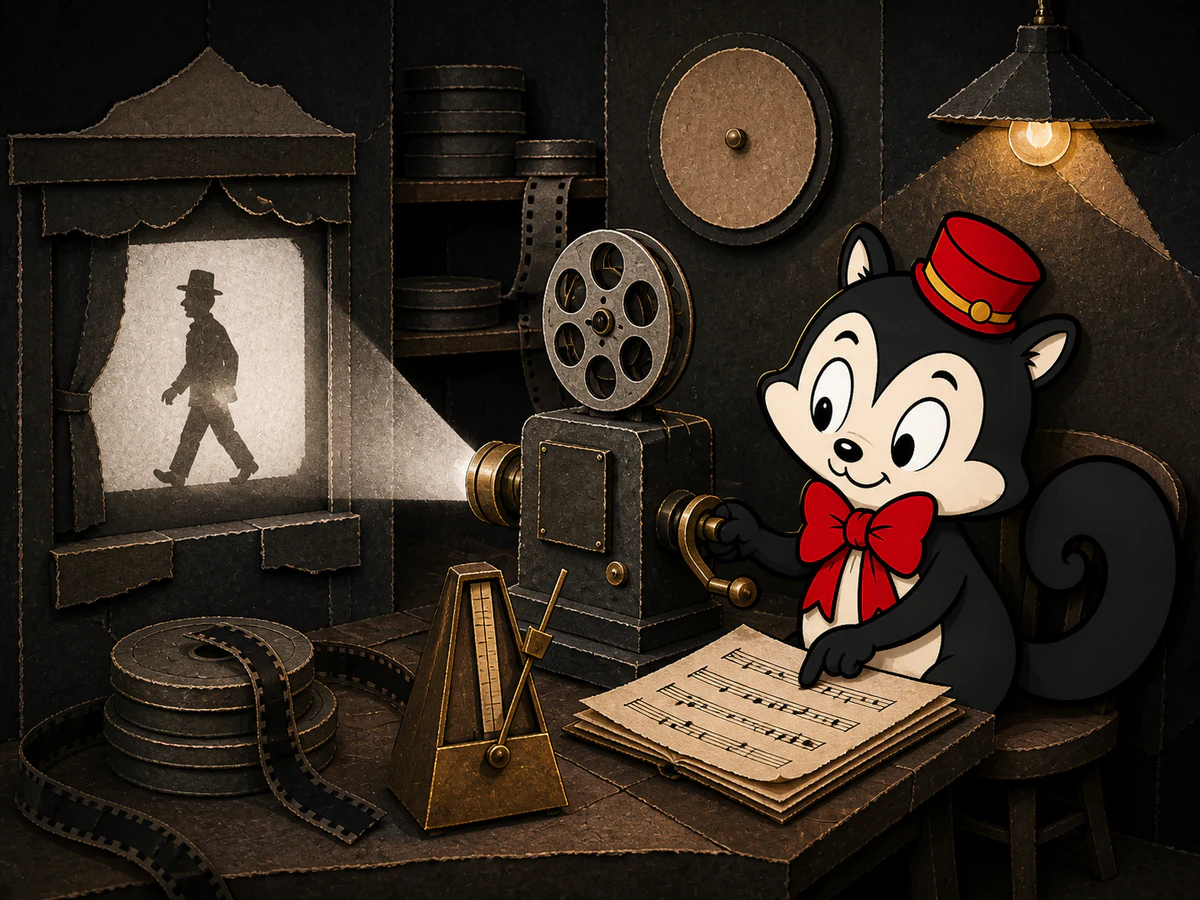
Then Came Projection: How Quickly Did the Audience See Them?
Projection speed is a second decision. Period manuals show that early projectionists did more than press play.
Frank H. Richardson’s 1910 handbook says that matching camera and projector speed was the theoretical principle, then describes operators changing speed in response to different scenes. By the 1916 edition, Richardson argues strongly for lifelike movement while acknowledging that other practitioners favoured extra speed for greater energy. He also describes commercial pressure to hurry a programme. [4] [5]
These are records of a United States trade debate, not instructions followed in every country or cinema. They do establish two useful limits: projection could be interpretive, and contemporaries themselves disagreed about the best result.
This is why ‘the correct speed’ is not always identical to the camera rate. The historically appropriate presentation may also reflect intended rhythm, scene-specific choices and the evidence attached to a particular version.
What Changed When Sound Arrived?
A silent image could tolerate flexible presentation in a way that synchronised recorded sound could not. Once picture and sound had to remain together, their time relationship needed to be stable. The sound era embedded 24 fps as the regular cinema standard, but that standard did not retroactively settle how every silent film should move. [1] [2]
This later standard helped create a modern problem. A silent film prepared for a lower rate could be copied or broadcast one original frame per modern frame. The new system would run reliably—just reliably too fast.
What a Modern Transfer Actually Has to Decide
A frame-by-frame scan preserves a sequence of images; it does not, by itself, decide how long each image should remain on screen. FIAF therefore describes such scans as speed-independent and warns that every delivery format still needs a presentation decision. [8]
A digital file labelled 24 fps is not automatically wrong. A restorer can repeat selected original frames so that fewer than 24 different source images advance during each second. The BFI’s Battleship Potemkin case study shows how frame duplication can carry a selected slower motion rate inside a fixed-rate Blu-ray presentation. [7]
Repeating an original frame is different from inventing a new one. FIAF accepts duplication as a compromise that retains historical images, although its cadence can create visible judder. It advises against motion interpolation that generates intermediate pictures which never existed in the film. [9]
Four symptoms are worth keeping separate:
- Fast motion: too little screen time is assigned to the original frames.
- Judder: the cadence becomes uneven while one rate is fitted into another.
- Image weave or instability: the picture moves because of capture, film transport, damage or alignment.
- Flicker: the exposure, shutter or light-interruption cycle becomes visible.
Correcting one does not automatically correct the others.
How Does a Restorer Choose a Speed?
Restoration begins with evidence, not a universal preset. The BFI identifies speed, original length and version identity as linked research questions. FIAF likewise expects archives to support variable-speed presentation and to approach the film as closely as possible to its intended form. [10] [14]
The evidence can include contemporary documentation, film length, musical material, the structure of the surviving version and how motion reads across the film. Sometimes it gives a strong answer. The Austrian Film Museum used a 1920 musical cue sheet to select 19 fps for its restoration of Blind Husbands. [12]
Musical evidence can also overturn an initial instruction. Preparing an October 1992 Library of Congress screening of the 1928 version of The Circus, Gillian Anderson initially worked to the Chaplin estate’s requested 24 fps. Parts of the reconstructed accompaniment proved unplayable at that pace. The surviving music and a review by archivist David Francis led to a change to 20 fps, followed by a new video transfer and resynchronisation. That decision belongs to this reconstruction and screening; it does not establish one correct speed for every version of The Circus. [6]
Sometimes uncertainty remains. In one Library of Congress project, no contemporary record fixed the precise rate, so the archive selected 16 fps because the movement looked most convincing there—and said openly that this was the basis of the choice. [11]
Those cases are not contradictory. They show why a good restoration documents what is known, what was inferred and which version the decision belongs to.
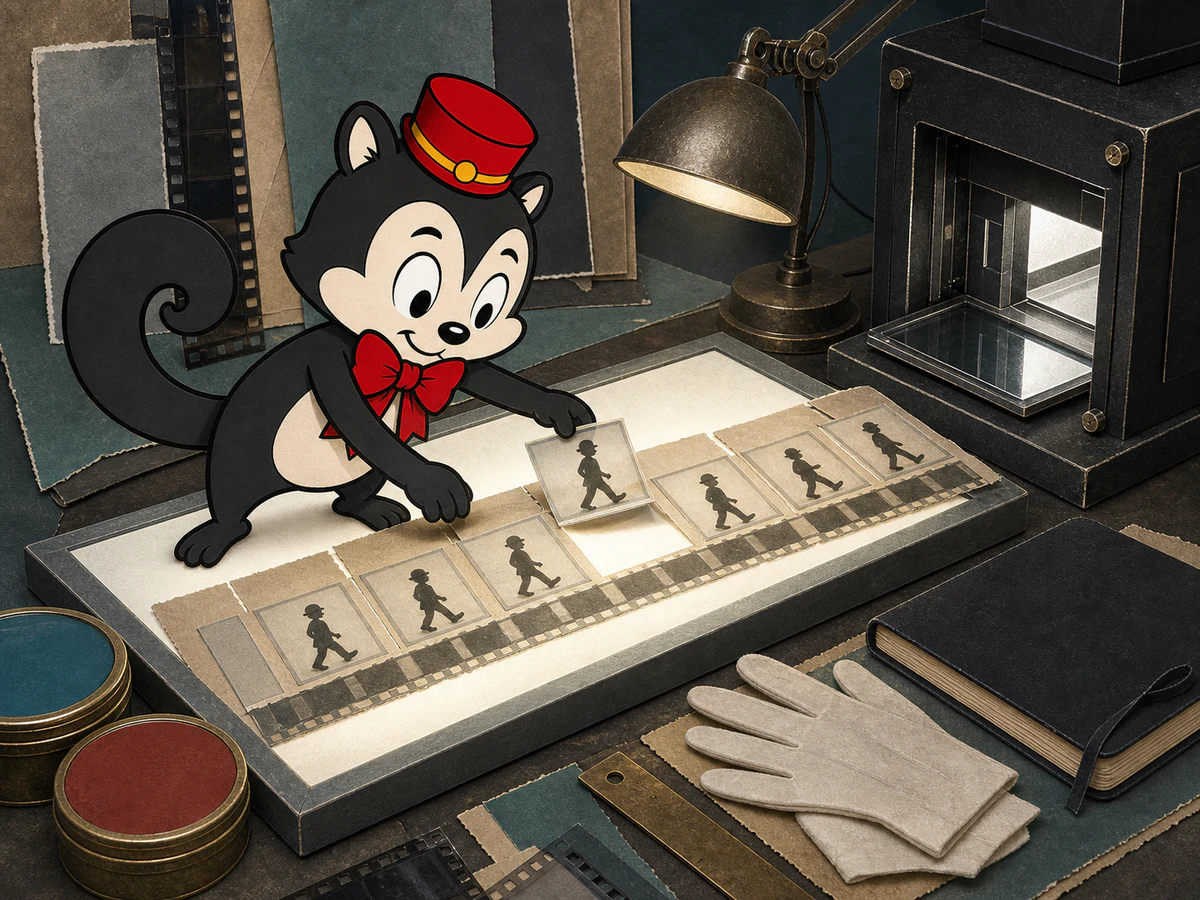
How to Choose a Trustworthy Modern Version
You do not need to solve the archival problem yourself. Before watching or buying, check for:
- A named restoration or responsible archive. ‘HD’, ‘4K’ or ‘remastered’ says nothing by itself about motion speed.
- A stated frame rate or documented runtime. Treat it as evidence tied to that presentation, not a universal value for the title.
- Restoration notes. Look for the surviving element, version, documentary evidence and any acknowledged uncertainty.
- Movement across the whole film. One chase may be intentionally fast; faces, walking and sustained gestures reveal more than a single spectacular scene.
- The presentation, not only its metadata. A 24-fps file can preserve a slower selected rate through repeated frames.
For title-specific choices, use the separate guides to Metropolis, Nosferatu and The Gold Rush. They own those edition decisions. The Classic Film Runtime Evidence Index keeps named presentation records separate, while the silent-film Trail owns the beginner viewing sequence.
Frequently Asked Questions
Were all silent films shot at 16 fps?
No. Sixteen fps is a familiar reference and a useful example, but capture and projection varied by film, period, equipment, scene, venue and version. Some late silent films were presented at or near 24 fps.
Were silent films intentionally sped up?
Sometimes. Filmmakers could reduce capture speed to accelerate movement during projection, and projectionists could vary presentation speed. That does not mean every fast-looking copy reflects an original choice.
Why do silent films sometimes look jerky or choppy as well as fast?
Fast motion and jerkiness are not the same fault. Uneven frame duplication can produce judder; film movement, damage or alignment can make the image weave; and the shutter cycle can create flicker. A copy can show one of these problems without the others.
Can restoration always recover the exact correct speed?
No. Documentation may identify a rate closely, but sometimes it is absent or applies to only one version. Restorers then combine surviving evidence with informed judgement and should state the uncertainty.
Does a 24-fps digital file prove that a silent film is running too fast?
No. It may repeat original frames to simulate a selected lower presentation rate. What matters is how quickly different source frames advance, not the container number alone.
The shape of the picture has its own history. Why old movies look square explains 4:3, Academy ratio and the black bars that preserve a narrower frame on a widescreen display.
References
Correction, 6 September 2026: an earlier paragraph cited the estate’s initial 24-fps instruction for The Circus without the subsequent change to 20 fps. The account above now includes that decision and its screening context.
These sources support the technical and historical claims above. The viewing checklist and distinctions between symptoms are Monocurator’s synthesis of the qualified evidence.
- ‘Appendix G. Glossary’, Library of Congress.
- Film Preservation, FIAF Technical Commission.
- Motion-picture work, American School of Correspondence, 1913.
- F. H. Richardson, Motion Picture Handbook, 1910, ‘Speed’ section.
- F. H. Richardson, Motion Picture Handbook, 1916, ‘Speed of Projector’ section.
- ‘The Music of “The Circus”’, Library of Congress.
- Michael Brooke, ‘How do you solve a problem like Potemkin?’, British Film Institute.
- Digitisation for Film Archives: Assorted Complications, FIAF Technical Commission.
- The Digital Statement, Part III, FIAF Technical Commission.
- Bryony Dixon, ‘Restoring Hitchcock #1: How a Film Restoration Begins’, British Film Institute.
- Mike Mashon, ‘The Sound of Silents’, Library of Congress.
- ‘Restoration Blind Husbands’, Austrian Film Museum.
- ‘Digitizing the Collection: Origins of American Animation’, Library of Congress.
- A Handbook for Film Archives, FIAF.
Continue exploring on Monocurator

Want a recommendation shaped around your evening? Ask Momo what to watch next →