See Films Differently · Nº 01
Why Rebecca (1940) Turns Murder into an Accident
Why did Hitchcock’s Rebecca change murder into an accident? Follow the Production Code dispute and the questions left after Maxim explains the death.
Journal topic
Essays connecting how to watch with cinema and the act of looking.
See Films Differently · Nº 01
Why did Hitchcock’s Rebecca change murder into an accident? Follow the Production Code dispute and the questions left after Maxim explains the death.
See Films Differently · Nº 02
The film Norma watches is Queen Kelly. See how Gloria Swanson’s real performance becomes a fictional star’s past, with a modern Minions comparison.
See Films Differently · Nº 03
Read No Longer Human? Watch The Face of Another next, and compare Yōzō’s account of clowning with the way Teshigahara shows one man under two appearances.
See Films Differently · Nº 04
Why does PlayTime’s doorman keep opening a broken door? Separate the passage from the gesture with Don Norman’s distinction between affordances and signifiers.
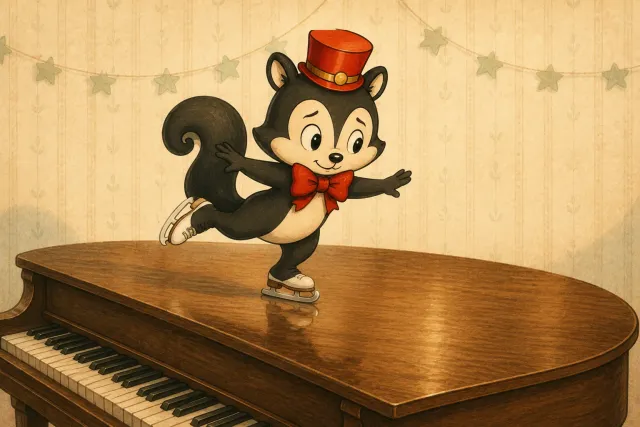
See Films Differently · Nº 05
Love Toy Story? Discover A Christmas Dream, an eleven-minute black-and-white short where an old rag doll turns a piano into music, skating and play.
See Films Differently · Nº 06
Neff confesses, Gillis mocks himself, and Harry Lime jokes about his victims. Read how wit admits failure, manages sympathy and evades responsibility.
See Films Differently · Nº 07
Why can Minions make sense without translation? Follow their looks, voices and mistakes alongside Chaplin’s The Gold Rush and Keaton’s One Week.

See Films Differently · Nº 08
Why can an old film's shopfronts and passing traffic become as absorbing as its story? Look again with People on Sunday and A Trip Down Market Street.
See Films Differently · Nº 09
What is deep focus in film? Learn how it differs from shallow focus, deep-space staging and rack focus, with clear examples from Citizen Kane.
What to watch next · Nº 10
Choose a black-and-white horror film for tonight: classic monsters, ghost stories or a zombie siege. Compare eight films by mood, runtime and intensity.
See Films Differently · Nº 11
Nitrate is the flammable plastic base of much early cinema. Learn how it differs from safety film, why films disappear, and what restoration can preserve.
See Films Differently · Nº 12
Blue night scenes and amber interiors often belong to a silent film’s original presentation. Compare tinting with toning and learn why restorations differ.
See Films Differently · Nº 13
Intertitles are text cards inserted between film images. See how they differ from subtitles, convey dialogue or narration, and change the rhythm of silent films.
See Films Differently · Nº 14
Why old films look square, what 4:3 and Academy ratio mean, and why the black bars on your TV may be keeping the whole picture intact.
See Films Differently · Nº 15
Hear the difference between an old-film accent, a performance and a recording, with Cary Grant, Katharine Hepburn and two comedies from 1940.
See Films Differently · Nº 16
What does pre-Code Hollywood mean? Understand the Hays Code, the change in 1934, and the dialogue, endings and restored versions of three films.
See Films Differently · Nº 17
Rashomon draws on two Akutagawa stories. Compare In a Grove with the gate story, and see how Kurosawa changes both — including the film’s ending.
See Films Differently · Nº 18
Birdman joins separate takes to look continuous. Compare its hidden cuts with Rope and Touch of Evil, and see what long takes do with space, time and suspense.
See Films Differently · Nº 19
A Dutch angle rolls the camera sideways. See how it differs from a pan or tilt, and how The Third Man and Batman use canted framing for different effects.
Director doorway · Nº 20
Compare six black-and-white Hitchcock films by runtime, mood, and scare level. Start with The 39 Steps; choose Psycho if you want horror.
See Films Differently · Nº 21
The Third Man uses Dutch angles — a deliberately tilted camera — to make postwar Vienna feel unstable. See how crooked shots alter space, trust and moral balance.